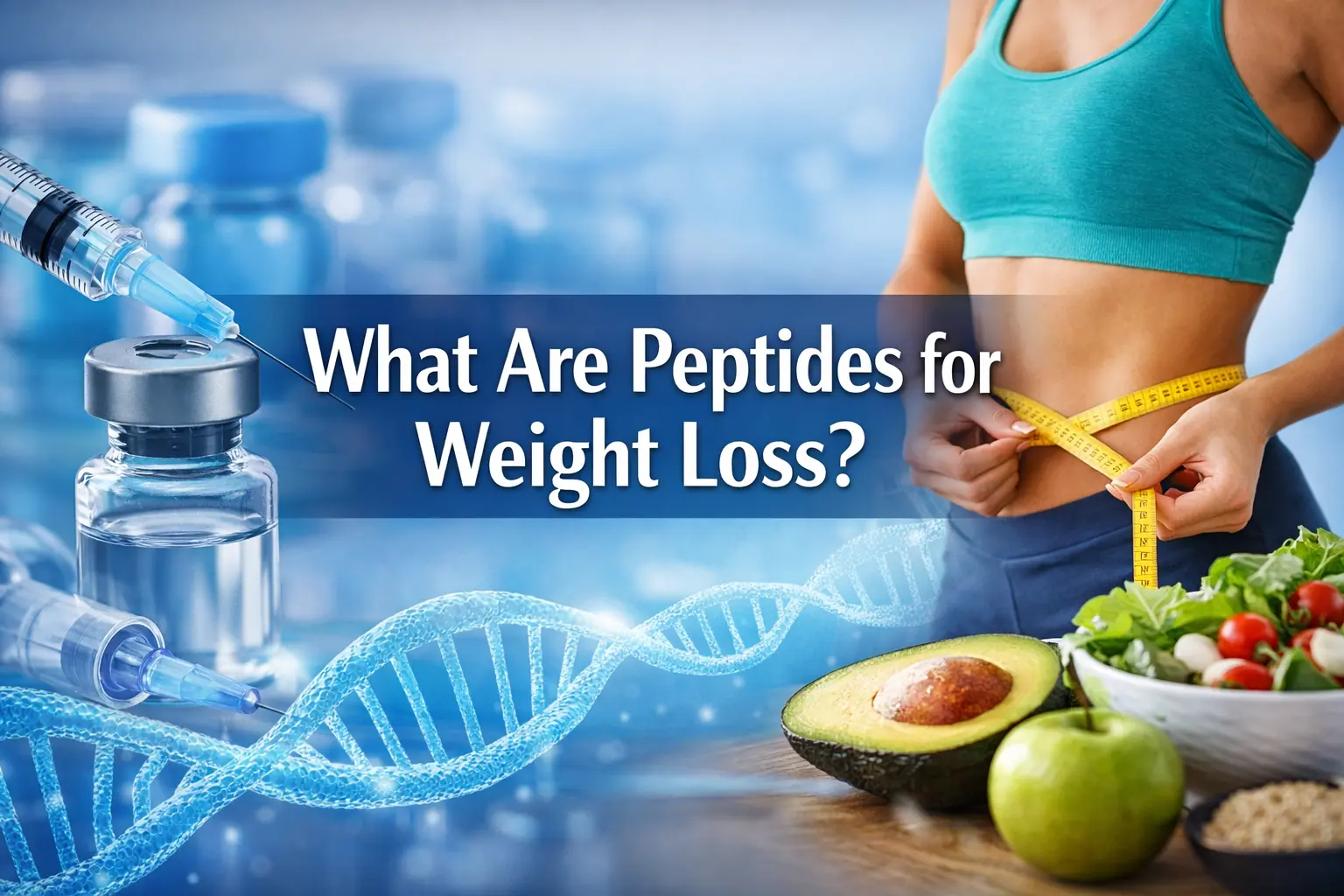
Peptides for weight loss are short chains of amino acids that act as signaling molecules in the body.
Certain peptides help regulate appetite, metabolism, fat burning, and blood sugar levels.
Some peptide therapies support weight loss by reducing hunger, improving metabolic function, or helping the body break down stored fat.
Because peptides influence hormones and metabolic pathways, they have become an important topic in modern weight management.
When used under medical supervision and combined with healthy lifestyle habits, certain peptides may help support sustainable weight loss.
SEE HOW PEPTIDE THERAPY CAN HELP YOUR WEIGHT LOSS JOURNEY
What Are Peptides?
Peptides are small chains of amino acids, which are the building blocks of proteins.
They occur naturally in the body and help regulate many biological processes, including hormone signaling, metabolism, immune function, and tissue repair.
The body produces peptides that act as messengers between cells.
These signaling molecules help control important functions such as hunger, energy balance, and fat storage.
Medical peptides are designed to mimic or influence these natural processes.
When administered in a clinical setting, they can interact with specific receptors in the body to influence metabolic and hormonal pathways related to weight management.
How Peptides Help With Weight Loss
Different peptides support weight loss through several biological mechanisms.
Rather than working in only one way, many peptides influence multiple systems that regulate hunger, metabolism, and energy balance.
Appetite Regulation
Some peptides influence hormones that control hunger and fullness.
These peptides signal the brain that the body has eaten enough food, which may help people feel satisfied with smaller portions.
Reducing hunger signals can make it easier to maintain a calorie deficit without feeling constantly hungry.
Blood Sugar and Insulin Regulation
Certain peptides help stabilize blood sugar levels and improve insulin response.
Stable blood sugar can reduce cravings, prevent energy crashes, and support healthier metabolic function.
Better glucose regulation may also help the body use energy more efficiently.
Fat Metabolism
Some peptides influence how the body breaks down stored fat.
This process, known as lipolysis, allows fat cells to release stored energy that the body can use as fuel.
Supporting fat metabolism may help the body burn stored fat more effectively.
Hormone and Metabolic Support
Certain peptides stimulate natural hormone production that influences body composition.
Hormones such as growth hormone play a role in metabolism, muscle maintenance, and fat utilization.
Supporting these hormonal pathways may help improve body composition during weight loss.
Types of Peptides Used for Weight Loss
Weight loss peptides are often grouped into categories based on how they affect the body.
Appetite-Regulating Peptides
These peptides primarily work by influencing hunger signals and satiety hormones.
They help reduce appetite and increase feelings of fullness after meals.
Many modern weight-loss treatments fall into this category because appetite regulation plays a major role in calorie intake.
Metabolism-Supporting Peptides
Some peptides support metabolic activity and fat metabolism.
These peptides may encourage the body to break down stored fat while supporting energy balance.
They are often used alongside healthy lifestyle habits to improve overall metabolic function.
Growth Hormone–Stimulating Peptides
Certain peptides stimulate the release of growth hormone from the pituitary gland.
Growth hormone influences body composition, metabolism, and muscle maintenance.
By supporting hormone balance, these peptides may help improve lean body mass while reducing fat mass.
Best Peptides for Weight Loss
Several peptides are commonly associated with weight management.
Each works in a different way to influence appetite, metabolism, or body composition.
| Peptide | How It Works | Main Benefit |
| Semaglutide | Mimics GLP-1 hormone | Reduces appetite and improves blood sugar control |
| Tirzepatide | Activates GLP-1 and GIP receptors | Strong appetite suppression and metabolic effects |
| AOD-9604 | Targets fat metabolism | May support fat breakdown |
| CJC-1295 | Stimulates growth hormone | Supports metabolism and recovery |
| Ipamorelin | Increases GH release | May support lean muscle and fat loss |
Do Peptides Actually Work for Weight Loss?
Peptides may support weight loss when used as part of a comprehensive health strategy that includes proper nutrition, physical activity, and medical guidance.
Because peptides target different metabolic pathways, their effectiveness may vary depending on a person’s health profile, hormone balance, and lifestyle habits.
For many individuals, peptides are not intended to replace healthy habits but to support the body’s natural metabolic regulation.
Benefits of Peptides for Weight Loss
Peptide-based treatments may offer several potential advantages for individuals who struggle with traditional weight-loss methods.
| Potential Benefit | Explanation |
| Appetite control | Some peptides reduce hunger signals and increase feelings of fullness |
| Metabolic support | Peptides may influence how the body burns fat and regulates energy |
| Blood sugar balance | Certain peptides help stabilize glucose levels and reduce cravings |
| Muscle preservation | Some peptides help maintain lean muscle while the body loses fat |
| Sustainable weight loss | When combined with healthy habits, peptides may support gradual and steady progress |
Peptides vs Traditional Weight Loss Methods
Traditional weight loss often focuses on reducing calorie intake and increasing physical activity.
Peptide-based approaches may support these efforts by influencing biological processes that affect hunger and metabolism.
| Approach | How It Works |
| Diet and exercise | Creates a calorie deficit by reducing intake and increasing energy expenditure |
| Medications | Target appetite hormones or metabolic pathways |
| Peptide-based treatments | Influence hormonal signals related to appetite, metabolism, and fat breakdown |
Are Peptides Safe for Weight Loss?
Peptides can be safe when prescribed and monitored by qualified healthcare providers.
Medical supervision helps ensure the appropriate peptide, dosage, and treatment plan are selected for each individual.
As with many treatments, some people may experience side effects depending on the specific peptide used and their individual response.
| Possible Side Effect | Description |
| Nausea | Some peptides that affect digestion may cause temporary stomach discomfort |
| Digestive changes | Slower stomach emptying may lead to bloating or fullness |
| Fatigue | The body may need time to adjust to metabolic changes |
| Injection site irritation | Mild redness or irritation may occur at the injection site |
Healthcare providers typically monitor patients closely to minimize potential risks and adjust treatment when necessary.
How Fast Do Peptides Work for Weight Loss?
The timeline for results can vary depending on the peptide used, an individual’s metabolism, and lifestyle habits.
Some people may notice appetite changes within the first few weeks, while measurable weight changes may take longer as the body gradually adapts to metabolic changes.
Because sustainable weight loss typically occurs gradually, peptide-supported programs often focus on steady progress rather than rapid weight reduction.
Are Peptides the Same as GLP-1 Treatments?
Some peptides used for weight management mimic naturally occurring hormones involved in appetite and metabolism.
One group of peptides mimics hormones that help regulate hunger signals and blood sugar balance.
However, not all peptides work the same way.
Some influence appetite, while others affect metabolic activity or hormone signaling that impacts body composition.
Understanding the differences between these peptide types can help patients and providers choose an approach that aligns with their health goals.
Who May Be a Candidate for Peptide Therapy?
Peptide-based approaches to weight management may be considered for individuals who:
- Have struggled to lose weight through lifestyle changes alone
- Experience metabolic challenges such as insulin resistance
- Want medical guidance for a structured weight management plan
- Are interested in treatments that support appetite regulation and metabolic health
A healthcare provider can evaluate a person’s medical history, goals, and health profile to determine whether peptide-based treatment may be appropriate.
Weight Loss Still Requires a Holistic Approach
While peptides may support weight management, they work best when combined with sustainable lifestyle habits.
Important factors include:
- balanced nutrition
- regular physical activity
- adequate sleep
- stress management
- ongoing medical guidance
These lifestyle factors help create a foundation for long-term metabolic health and sustainable weight management.
How PRIME Medicine Supports Weight Management
At PRIME Medicine, weight management programs are designed to address the underlying factors that influence metabolism, appetite, and overall health.
Rather than relying on a one-size-fits-all approach, care plans are personalized to each individual.
By focusing on metabolic health, hormone balance, and sustainable lifestyle changes, PRIME Medicine works with patients to support long-term progress with peptide therapy.
Final Thoughts
Peptides for weight loss are compounds that influence biological processes related to appetite, metabolism, and energy balance.
Some peptides help regulate hunger hormones, while others support fat metabolism or hormone signaling related to body composition.
When used under medical supervision and combined with healthy lifestyle habits, peptide-based treatments may help support sustainable weight management.
Understanding how peptides work allows individuals to explore weight-loss strategies with greater confidence and make informed decisions about their long-term health.
FAQs:
Do peptides for weight loss really work?
Peptides for weight loss may support weight management by influencing appetite, metabolism, and blood sugar regulation. Some peptides help reduce hunger signals, while others affect how the body breaks down stored fat. When used under medical supervision and combined with healthy habits such as balanced nutrition and regular physical activity, certain peptides may help support gradual and sustainable weight loss.
What are the side effects of taking peptides?
Like many medical treatments, peptides may have potential side effects depending on the specific compound and individual response. Some people may experience nausea, digestive changes, fatigue, or mild irritation at the injection site. Not everyone experiences these effects, and healthcare providers typically monitor treatment closely to help reduce risks and adjust care if needed.
What is the best peptide for weight loss?
The best peptide for weight loss depends on a person’s health profile, metabolic needs, and treatment goals. Some peptides are designed to help regulate appetite, while others focus on metabolic support or hormone balance. A healthcare provider can help determine which approach may be most appropriate based on medical history and weight management goals.
Do peptides get rid of belly fat?
Peptides do not target fat loss in only one specific area of the body. Instead, they influence processes such as appetite regulation, metabolism, and fat breakdown throughout the body. As the body burns stored fat, some individuals may notice changes in areas where fat is commonly stored, including the abdomen.
What to avoid while taking peptides?
When using peptide-based treatments, it is often recommended to avoid habits that may interfere with metabolic health. This may include highly processed foods, excessive sugar intake, and inconsistent eating patterns. Maintaining balanced nutrition, staying hydrated, getting enough sleep, and following medical guidance can help support the effectiveness of treatment.
How fast do you lose weight on peptides?
Weight loss timelines vary depending on the specific peptide used, a person’s metabolism, and lifestyle habits. Some people notice appetite changes within the first few weeks, while visible weight changes may occur gradually over several weeks or months. Sustainable weight loss programs typically focus on steady progress rather than rapid results.