
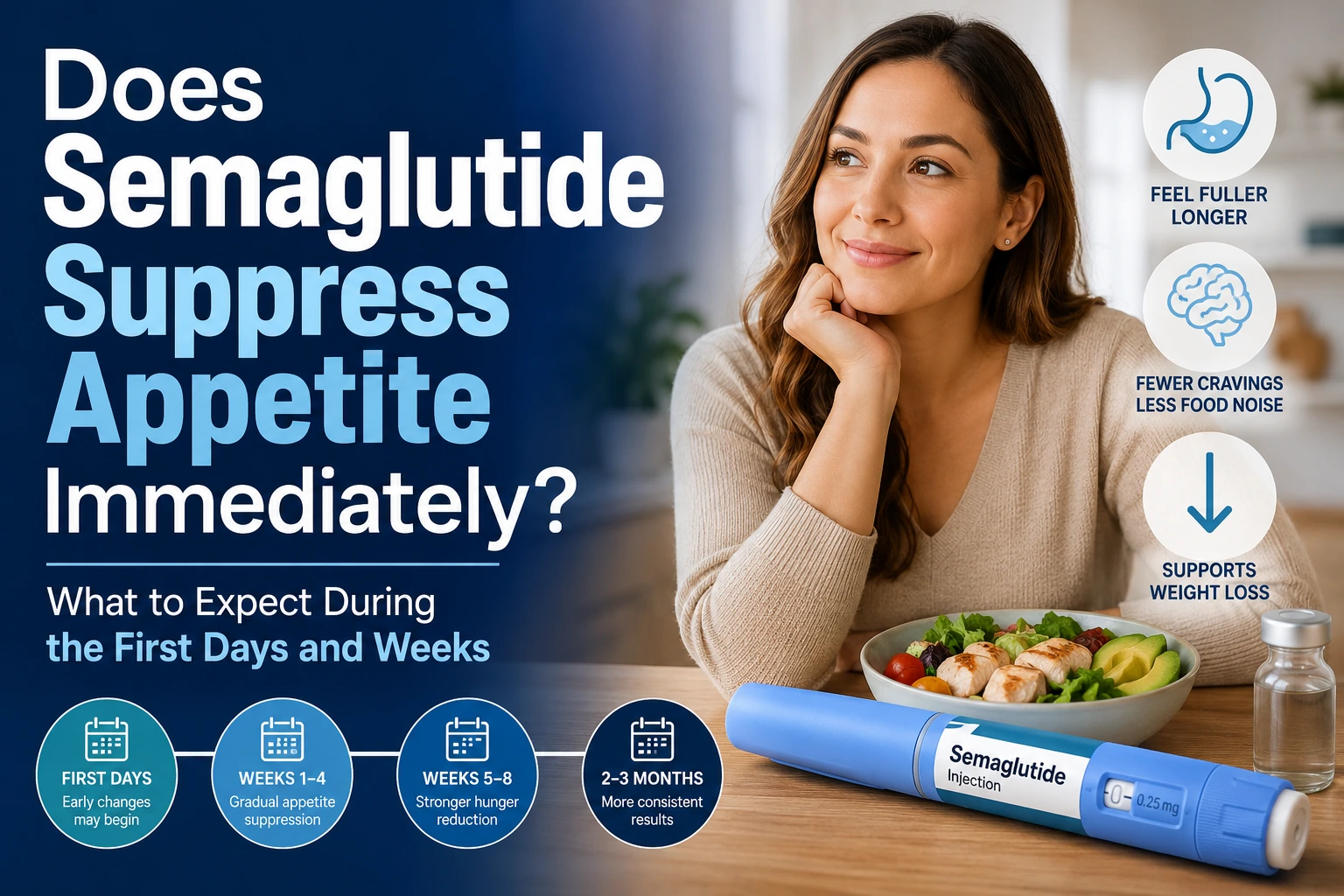
Woman sitting beside a healthy meal and semaglutide injection pen with text overlay reading “Does Semaglutide Suppress Appetite Immediately? What to Expect During the First Days and Weeks” alongside graphics about fullness cravings and weight loss support.

Does Semaglutide Suppress Appetite Immediately?

If you are starting semaglutide for weight loss, you may be wondering how quickly it will reduce your appetite.

Some people notice they feel fuller within the first few days after their first injection.

Others may not experience major appetite suppression until several weeks later.

The timeline can vary depending on dosage, metabolism, eating habits, and how the body responds to treatment.

Semaglutide is designed to work gradually over time.

While some individuals feel reduced hunger early on, stronger appetite suppression often develops as the medication builds in the body and dosage increases.

Understanding what is normal during the first few weeks can help set realistic expectations and make the process less frustrating.


SEE HOW SEMAGLUTIDE CAN HELP YOUR WEIGHT LOSS JOURNEY


Does Semaglutide Suppress Appetite Immediately?

Semaglutide can begin affecting appetite fairly quickly for some people, but it does not work instantly for everyone.

Some patients report:

  • Feeling full sooner during meals
  • Reduced interest in snacking
  • Smaller portion sizes naturally
  • Fewer cravings for sweets or fast food
  • Less urge to overeat

These changes can happen within the first few days for certain individuals.

However, many people notice a slower and more gradual shift in appetite over several weeks.

This is common because semaglutide treatment usually starts at a low dose.

The lower starting dose helps reduce side effects while allowing the body time to adjust.

As the dosage gradually increases, appetite suppression often becomes stronger and more noticeable.


How Semaglutide Works for Appetite Suppression

Semaglutide belongs to a class of medications called GLP-1 receptor agonists.

These medications mimic a natural hormone involved in appetite regulation, digestion, and blood sugar control.

Semaglutide may help support weight loss by:

  • Slowing stomach emptying
  • Increasing feelings of fullness
  • Reducing cravings
  • Helping control portion sizes
  • Supporting better appetite regulation

Many people also notice fewer thoughts about food throughout the day.

This is commonly called reducing “food noise.”

Instead of constantly thinking about meals, snacks, or cravings, some individuals feel more mentally in control around food.


How Long Does Semaglutide Take to Suppress Appetite?

The timeline varies from person to person.

Some individuals notice appetite suppression quickly, while others may need several weeks before they feel major changes in hunger or cravings.

Here is a general timeline many patients experience while taking semaglutide:

Timeframe What Some People Notice
First Few Days Mild fullness smaller portions or fewer cravings for some individuals
Weeks 1-4 Gradual appetite suppression and improved portion control
Weeks 5-8 Stronger hunger reduction as dosage increases
2-3 Months More consistent appetite control and weight loss support

Not everyone responds at the same speed.

Some people feel reduced hunger almost immediately, while others notice subtle changes at first that gradually become stronger over time.


SEE IF SEMAGLUTIDE IS RIGHT FOR YOU


What Appetite Suppression Feels Like on Semaglutide

Appetite suppression does not always mean you completely lose your appetite.

For many people, it feels more like:

  • Feeling satisfied faster during meals
  • Staying full longer after eating
  • Less emotional eating
  • Reduced cravings between meals
  • Fewer urges to snack late at night
  • Thinking about food less often

Some individuals also notice that highly processed or sugary foods become less appealing.

Others simply realize they are no longer constantly hungry throughout the day.


Why Some People Do Not Feel Appetite Suppression Right Away

If you do not notice immediate appetite suppression, it does not necessarily mean semaglutide is not working.

Several factors can affect how quickly the medication works.

Low Starting Dose

Most semaglutide treatment plans begin with a lower introductory dose to help minimize digestive side effects such as nausea or bloating.

Because of this, appetite suppression may initially feel mild.

Your Body Needs Time to Adjust

Some individuals respond very quickly while others need several weeks before noticing major appetite changes.

This difference is normal.

Lifestyle and Food Choices

Sleep quality, stress levels, hydration, protein intake, and eating habits can all influence appetite regulation while taking semaglutide.

Individual Metabolism

Hormones, insulin resistance, activity level, and overall metabolic health may also affect how quickly semaglutide suppresses appetite.


Why Am I Still Hungry on Semaglutide?

Many people worry semaglutide is not working if they still feel hungry during the early stages of treatment.

In many cases, this is completely normal.

You may still feel hungry because:

  • Your dosage is still low
  • Your body is adapting to the medication
  • You are not yet at a maintenance dose
  • Your eating habits still need adjustment
  • Stress or poor sleep is increasing hunger hormones

Semaglutide is not meant to completely eliminate hunger.

Instead, it is designed to help regulate appetite and reduce excessive cravings or overeating.

For many people, the effects become stronger with time and dosage adjustments.


Does Semaglutide Reduce Food Cravings and Food Noise?

One of the biggest changes many people notice with semaglutide is a reduction in “food noise.”

Food noise refers to constant thoughts about food, cravings, or urges to snack even when you are not physically hungry.

Many patients report:

  • Less emotional eating
  • Fewer obsessive thoughts about food
  • Reduced late-night cravings
  • Better control around snacks and desserts
  • Less urge to graze throughout the day

For some individuals, this mental shift can feel just as important as the physical appetite suppression itself.


What Can Affect How Fast Semaglutide Works?

Several factors can influence how quickly semaglutide suppresses appetite and supports weight loss.

These may include:

  • Starting dosage
  • Dosage increases over time
  • Diet quality
  • Protein intake
  • Sleep quality
  • Stress levels
  • Physical activity
  • Underlying health conditions

A personalized treatment plan can help improve long-term success and make appetite regulation more manageable.


How Long Does It Take to Lose Weight on Semaglutide?

Some people notice small changes within the first few weeks, especially if appetite suppression develops early.

For others, weight loss becomes more noticeable after:

  • Dosage increases
  • Cravings improve
  • Portion sizes naturally decrease
  • Healthy eating habits become easier to maintain

Weight loss with semaglutide is usually gradual rather than immediate.

Consistency with treatment, nutrition, and lifestyle habits often plays a major role in long-term results.


When to Talk to a Medical Provider

It may help to speak with a medical provider if:

  • Appetite suppression never improves
  • You continue struggling with severe cravings
  • You are unable to tolerate side effects
  • You have concerns about your dosage
  • You are not seeing progress after several weeks
  • You have questions about your treatment plan

A provider can help determine whether adjustments may be needed.


CONTACT US


How PRIME Medicine Can Help With Semaglutide

PRIME Medicine offers personalized medical weight loss programs designed to support long-term health and sustainable results.

Treatment plans may include support for:

  • Semaglutide therapy
  • Appetite management
  • Nutrition guidance
  • Lifestyle changes
  • Metabolic health
  • Long-term weight management

The team at PRIME Medicine works closely with patients to create individualized treatment plans based on their goals, symptoms, and overall health history.


SCHEDULE A CONSULTATION TODAY


FAQ: Does Semaglutide Suppress Appetite Immediately

How quickly does semaglutide curb hunger?

Some people notice reduced hunger within the first few days of starting semaglutide, while others may need several weeks before appetite suppression becomes more noticeable. The timeline can vary depending on dosage, metabolism, eating habits, and how the body responds to treatment.

What happens in the first week on semaglutide?

During the first week on semaglutide, some individuals notice mild appetite suppression, earlier fullness during meals, or fewer cravings. Others may experience little change initially because the starting dose is intentionally low. Mild digestive side effects such as nausea, bloating, or constipation can also occur during the adjustment period.

How fast can you lose 20 pounds on semaglutide?

Weight loss on semaglutide varies from person to person. Studies show some individuals may lose 20 pounds within a few months, while others experience slower progress. Factors like dosage, nutrition, activity level, sleep, and consistency with treatment all affect the rate of weight loss.

What are the first signs of semaglutide working?

Early signs semaglutide may be working can include reduced appetite, smaller portion sizes, fewer cravings, feeling full longer after meals, and less interest in snacking. Some individuals may also notice gradual weight loss within the first several weeks.

How long does semaglutide take to work?

Semaglutide begins working in the body shortly after the first injection, but noticeable changes in appetite and weight loss can take time. Some people experience reduced hunger within the first few days, while others may need several weeks before appetite suppression becomes more noticeable. Weight loss results are usually gradual and often improve as the dosage increases over time.

How long can I stay on semaglutide?

The length of time someone stays on semaglutide depends on their health goals, medical history, weight management needs, and how well they tolerate treatment. Some individuals use semaglutide for several months, while others may continue longer under medical supervision as part of a long-term weight management plan.

What are the side effects of semaglutide?

The most common side effects of semaglutide are digestive symptoms such as nausea, bloating, constipation, diarrhea, vomiting, and stomach discomfort. Some people also experience reduced appetite, fatigue, or mild headaches during the adjustment period. Side effects are often more noticeable when first starting treatment or after dosage increases and may improve over time for many individuals.


Share the Post:

Facebook
Twitter
LinkedIn
X

Leave a Reply

Your email address will not be published. Required fields are marked *

Related Posts

Retatrutide and Alcohol: Can You Drink While Taking Retatrutide?

If you are using retatrutide or learning about it as part of a medically guided weight management plan, you may be wondering whether alcohol is still okay.

The short answer is that alcohol may not be off-limits for every person, but it can make retatrutide side effects more likely and may feel different than it did before.

Retatrutide acts on hormone pathways involved in appetite, digestion, blood sugar, and metabolism.

Alcohol also affects digestion, hydration, sleep, blood sugar, appetite, and decision-making around food.

When the two overlap, some people may notice stronger nausea, lower alcohol tolerance, worse hangovers, or less interest in drinking.

This does not mean everyone will react the same way.

It does mean alcohol is worth discussing with a medical provider, especially if you are increasing your dose, having side effects, drinking frequently, or managing blood sugar, liver, gallbladder, or digestive concerns.


SEE IF RETATRUTIDE IS RIGHT FOR YOU


Quick Answer: Is Alcohol Safe on Retatrutide?

Some people may tolerate an occasional drink while taking retatrutide, but alcohol should be approached carefully.

Alcohol can worsen nausea, reflux, dehydration, dizziness, blood sugar swings, and poor food tolerance.

It may also make weight loss harder by adding calories, disrupting sleep, and increasing the chance of late-night snacking.

The safest approach is to avoid heavy drinking and ask your provider what is appropriate for your health history, side effects, medications, and goals.


What Is Retatrutide?

Retatrutide is a triple hormone receptor agonist, meaning it acts on GIP, GLP-1, and glucagon receptors.

These pathways are involved in appetite signaling, food intake, blood sugar regulation, energy balance, and body weight.

In phase 2 clinical research, retatrutide was studied for obesity and produced significant weight reduction over 24 and 48 weeks.

Because retatrutide affects appetite and digestion, many of the most common side effects are gastrointestinal.

Nausea, vomiting, diarrhea, constipation, bloating, reflux, and reduced appetite may occur, especially during dose changes.

Published phase 2 research reported that the most common adverse events in retatrutide groups were gastrointestinal, dose-related, and mostly mild to moderate in severity.

That matters when talking about alcohol because alcohol can irritate the stomach, worsen dehydration, disrupt sleep, and make nausea more likely.


Can You Drink Alcohol While Taking Retatrutide?

Some people may be able to have an occasional drink while taking retatrutide, but alcohol is not something to ignore.

A single glass of wine with food may feel very different from multiple drinks on an empty stomach, especially if your appetite is reduced or you are still adjusting to treatment.

Alcohol may be more difficult to tolerate if you have nausea, vomiting, reflux, dehydration, dizziness, poor food intake, or blood sugar changes.

Your usual alcohol tolerance may also change if you are eating less, losing weight, or drinking less often than before.

You should be especially cautious if you have a history of pancreatitis, gallbladder disease, liver disease, diabetes, frequent low blood sugar, heavy alcohol use, or medications that should not be mixed with alcohol.


Retatrutide and Alcohol: Common Concerns

Alcohol Concern Why It May Matter on Retatrutide What to Consider
Nausea or vomiting Retatrutide can cause digestive side effects, and alcohol may irritate the stomach. Avoid alcohol if you are already nauseous or having trouble keeping food down.
Reflux or bloating Alcohol can worsen reflux and may feel worse when digestion is slower. Carbonated drinks, beer, and sugary cocktails may be harder to tolerate.
Dehydration Alcohol can increase fluid loss, and reduced appetite may mean you are drinking less water. Hydrate before and after drinking, and avoid alcohol if you are vomiting or having diarrhea.
Dizziness or low tolerance Eating less, losing weight, or drinking less often can make alcohol feel stronger. Do not assume your old tolerance still applies.
Blood sugar swings Alcohol can affect glucose regulation, especially with low food intake. Be cautious if you have diabetes, hypoglycemia risk, or symptoms like shakiness or confusion.
Weight loss slowdown Alcohol adds calories and can disrupt sleep, appetite control, and consistency. Frequent drinking can work against metabolic and weight management goals.


Why Alcohol May Feel Different on Retatrutide

Many people using GLP-1 or related metabolic therapies report that alcohol feels different.

Some say they lose interest in drinking.

Others say alcohol tastes worse, causes nausea faster, or leads to worse next-day symptoms.

There are a few possible reasons for this.

First, retatrutide may affect digestion and appetite.

If you eat less than usual, alcohol may feel stronger or more irritating.

Drinking on an empty stomach can increase the chance of dizziness, nausea, and poor coordination.

Second, changes in digestion can make the timing of alcohol’s effects feel less predictable.

You may not feel the same response at the same pace you used to.


Retatrutide and Alcohol Side Effects

Alcohol may make retatrutide-related side effects worse.

This is one of the main reasons many clinicians advise limiting or avoiding alcohol, especially early on or during dose changes.

Nausea and Vomiting

Nausea is one of the most common side effects associated with retatrutide and similar metabolic therapies.

Alcohol can irritate the stomach lining and may make nausea worse.

Drinking on an empty stomach can add to the problem.

If you are already dealing with nausea, reflux, or vomiting, alcohol is more likely to make you feel worse.

Reflux, Bloating, and Indigestion

Retatrutide can affect digestion and fullness.

Alcohol can relax the lower esophageal sphincter, irritate the stomach, and trigger reflux.

Together, that may lead to more burping, burning, bloating, fullness, or discomfort after drinking.

Carbonated alcoholic drinks may be especially uncomfortable for people who already feel bloated or overly full.

Dehydration and Headaches

Alcohol can contribute to dehydration.

Retatrutide-related nausea, vomiting, diarrhea, or reduced food and fluid intake can also increase the risk of dehydration.

When these overlap, headaches, dizziness, fatigue, dry mouth, and next-day “hangover” symptoms may feel worse.

Dizziness and Lower Tolerance

Some people feel that alcohol affects them faster while taking appetite-regulating medications.

This may be related to eating less, losing weight, drinking less often, or being more sensitive to dehydration.

This does not mean retatrutide automatically makes alcohol stronger for everyone.

It does mean your usual tolerance may not be a reliable guide.

Blood Sugar Swings

Alcohol can affect blood sugar regulation, especially when drinking without enough food.

For people with diabetes, insulin resistance, or medications that affect blood sugar, this is worth taking seriously.

Symptoms such as shakiness, sweating, confusion, dizziness, weakness, or faintness after drinking should not be ignored.


Can Alcohol Interfere With Weight Loss Results?

Alcohol can make weight loss harder, even if it does not directly “block” retatrutide.

Alcohol can affect results in several ways.

It adds extra calories without much fullness.

It can lower food inhibitions and increase snacking.

It may worsen sleep quality, reduce workout recovery, increase dehydration, and make it harder to stay consistent with protein, hydration, and meal timing.

For many people, the bigger issue is not one occasional drink.

It is the pattern around drinking: skipped meals, late-night eating, poor sleep, reduced movement the next day, and more cravings.

If your goal is fat loss, metabolic improvement, or better appetite control, frequent alcohol use can work against those goals.


GET THE MOST OUT OF YOUR WEIGHT LOSS JOURNEY


Does Retatrutide Reduce Alcohol Cravings?

Some people taking GLP-1 or related therapies report that they simply do not want alcohol as much.

They may drink less, stop before finishing a drink, or feel less interested in the reward of alcohol.

This is an active area of research.

One clinical trial found that low-dose semaglutide reduced alcohol craving and some drinking outcomes in adults with alcohol use disorder.

The researchers noted that larger clinical trials are needed to better understand the role of GLP-1 receptor agonists in alcohol-related conditions.

Retatrutide-specific human research on alcohol cravings is still limited.

The available animal research suggests retatrutide may alter alcohol-related internal cues, but animal findings should not be treated as direct proof of how people will respond.

The practical takeaway is this: if you notice less interest in alcohol while taking retatrutide, you are not alone.

But retatrutide should not be viewed as a treatment for alcohol use disorder.

If alcohol use feels hard to control, that deserves direct medical support.


Does Retatrutide Make You Drunk Faster?

There is not enough human evidence to say that retatrutide directly makes someone drunk faster.

However, some people may feel alcohol more strongly because of related factors.

You may feel more affected by alcohol if you are eating less than usual, drinking on an empty stomach, losing weight, dehydrated, drinking less often than before, or taking other medications that interact with alcohol.

Digestive side effects can also make alcohol harder to tolerate.

If you already feel nauseous, bloated, lightheaded, or overly full, drinking alcohol may make those symptoms worse.

Because tolerance can change, it is smart to avoid assuming that your previous drinking habits will feel the same.


Is Any Alcohol Better on Retatrutide?

No type of alcohol is truly risk-free while taking retatrutide.

That said, some choices may be easier to tolerate than others.

For example, a small serving of wine or a simple mixed drink with food may be easier on the stomach than sugary cocktails, heavy beer, or carbonated drinks.

Drinks high in sugar may also make blood sugar swings, cravings, or next-day fatigue worse for some people.

The bigger factor is usually not the type of alcohol.

It is the amount, timing, food intake, hydration, and your current side effects.

If your provider says occasional alcohol is reasonable for you, it may help to drink slowly, have alcohol with food, hydrate before and after, avoid drinking during dose increases, and stop drinking if you feel sick, dizzy, flushed, or unusually impaired.

You should also avoid driving if alcohol affects you differently than expected.


When Should You Avoid Alcohol Completely?

Alcohol may be a poor fit while taking retatrutide if you are already having side effects or have certain medical risks.

You should be especially cautious and speak with a provider if you have persistent nausea or vomiting, severe reflux, abdominal pain, a history of pancreatitis, gallbladder disease, liver disease, diabetes, low blood sugar episodes, frequent dehydration, a history of alcohol use disorder, alcohol withdrawal symptoms, or medications that should not be mixed with alcohol.

Alcohol should also be avoided if you cannot keep fluids down, feel faint, or are having significant digestive symptoms.


When to Seek Medical Help

Most mild nausea or indigestion after alcohol may improve with hydration, rest, and avoiding further alcohol.

But some symptoms need medical attention.

Seek medical help if you develop severe or persistent abdominal pain, repeated vomiting, signs of dehydration, fainting, confusion, yellowing of the skin or eyes, dark urine with abdominal pain, chest pain, shortness of breath, severe dizziness, severe weakness, or symptoms of alcohol withdrawal.

Severe abdominal pain that spreads to the back, especially with vomiting, should be taken seriously.


What to Ask Your Provider Before Drinking on Retatrutide

Before drinking alcohol while taking retatrutide, it is worth having a direct conversation with your clinician.

You do not need to guess or rely on social media anecdotes.

Helpful questions include:

  • Is alcohol safe for me based on my health history?
  • Should I avoid alcohol during dose increases?
  • Are my liver, kidney, blood sugar, or gallbladder markers a concern?
  • Could alcohol worsen my current side effects?
  • Do any of my medications interact with alcohol?
  • How much alcohol would be considered too much for my situation?
  • What symptoms should make me stop drinking or call the office?

This is where personalized care matters.

Two people may take the same medication and have very different alcohol tolerance, side effects, lab results, and risk factors.


CONTACT US


Retatrutide and Alcohol: The Bottom Line

Alcohol and retatrutide can be a difficult combination for some people.

Alcohol may worsen nausea, reflux, bloating, dehydration, dizziness, headaches, and blood sugar swings.

It may also interfere with weight loss progress by affecting calories, sleep, appetite, and consistency.

Early research on GLP-1-related therapies and alcohol cravings is promising, but retatrutide should not be treated as a solution for alcohol use disorder.

If you are using retatrutide or considering a medically guided metabolic health plan, talk with a qualified provider about alcohol, side effects, lab markers, and your personal risk factors.

Occasional alcohol may be reasonable for some people, but heavy drinking is not a good match for a plan focused on metabolic health, appetite regulation, and long-term weight management.

At PRIME Medicine in Corona Del Mar, care is centered around personalized health history, symptoms, lab testing, lifestyle, and long-term goals.

For patients throughout Orange County, alcohol tolerance, appetite changes, side effects, and metabolic health concerns are all important details to review as part of a thoughtful treatment plan.


SCHEDULE A CONSULTATION


FAQs: Retatrutide and Alcohol

Can I drink alcohol while taking retatrutide?

Some people may be able to drink occasionally while taking retatrutide, but alcohol can increase the risk of nausea, reflux, vomiting, dehydration, dizziness, and poor food tolerance. It is best to ask your provider what is appropriate based on your health history, medications, goals, and current side effects.

What happens if you drink alcohol on retatrutide?

You may feel normal, or you may notice stronger side effects than expected. Some people report nausea, bloating, reflux, lower tolerance, worse hangovers, or less interest in alcohol. Alcohol can also make it harder to stay consistent with hydration, nutrition, sleep, and weight management goals.

Can retatrutide reduce alcohol cravings?

Some people report lower alcohol cravings while using medications that affect GLP-1-related pathways. Early research suggests this area is worth studying, but retatrutide-specific human evidence is limited. Retatrutide should not be treated as a stand-alone approach for alcohol cravings or alcohol use disorder.

Can alcohol make retatrutide nausea worse?

Yes, alcohol can make nausea worse. Retatrutide commonly affects the digestive system, and alcohol can irritate the stomach, worsen reflux, and increase dehydration. If you already feel nauseous, it is usually better to avoid alcohol.

Does alcohol affect retatrutide weight loss results?

Alcohol may interfere with weight loss progress indirectly. It adds calories, can disrupt sleep, may increase snacking, and can make it harder to stay consistent with meals, hydration, protein intake, and exercise. Occasional alcohol may have less impact than frequent or heavy drinking.

Is Tirzepatide a Peptide?

If you’ve been researching weight loss treatments, metabolic health, or peptide therapy, you’ve probably come across the question: Is tirzepatide a peptide?

The answer is yes.

Tirzepatide is a synthetic peptide medication made from a chain of amino acids that mimics naturally occurring hormones involved in appetite regulation, blood sugar control, and metabolism.

While tirzepatide is widely known for supporting weight loss and metabolic health, many people don’t realize that its effectiveness is directly related to its peptide structure.

Understanding what a peptide is and how tirzepatide works can help clarify why this medication has become such an important advancement in metabolic medicine.

In this guide, you’ll learn what peptides are, why tirzepatide is classified as a peptide, how it works in the body, and how it compares to other peptide therapies and weight loss medications.


SEE HOW TIRZEPATIDE CAN HELP YOUR WEIGHT LOSS JOURNEY


Is Tirzepatide a Peptide? The Short Answer

Yes, tirzepatide is a peptide.

Tirzepatide is a synthetic peptide composed of 39 amino acids.

It was specifically designed to mimic the actions of naturally occurring hormones that help regulate appetite, insulin secretion, blood sugar levels, and energy balance.

Because it is made from amino acids linked together by peptide bonds, tirzepatide meets the scientific definition of a peptide.

Its structure allows it to interact with specific receptors involved in metabolic health and weight regulation.


What Is Tirzepatide?

Tirzepatide is a medication that belongs to a class of drugs known as dual GIP and GLP-1 receptor agonists.

Unlike traditional GLP-1 medications that activate a single hormone pathway, tirzepatide works by targeting two important metabolic hormones:

  • Glucose-dependent insulinotropic polypeptide (GIP)
  • Glucagon-like peptide-1 (GLP-1)

These hormones play a role in:

  • Appetite control
  • Hunger signaling
  • Blood sugar regulation
  • Insulin production
  • Energy utilization
  • Metabolic function

By activating both pathways, tirzepatide helps support a more comprehensive metabolic response than medications that target GLP-1 receptors alone.


What Is a Peptide?

Peptides are short chains of amino acids linked together by peptide bonds.

Amino acids are often called the building blocks of proteins.

The primary difference between peptides and proteins is their size.

Peptides contain fewer amino acids, while proteins are generally larger and more complex.

Peptides naturally occur throughout the body and act as signaling molecules that help cells communicate with one another.

They regulate countless biological processes, including:

  • Metabolism
  • Growth
  • Tissue repair
  • Hormone production
  • Appetite regulation
  • Immune function

Many hormones are peptides, including:

  • Insulin
  • Glucagon
  • Oxytocin
  • GLP-1
  • Growth hormone-releasing hormones

Because peptides can target specific receptors and pathways, researchers frequently use them to develop therapies designed to support particular physiological functions.


Why Is Tirzepatide Considered a Peptide?

Tirzepatide is classified as a peptide because of both its structure and function.

Structurally, tirzepatide consists of a sequence of 39 amino acids connected through peptide bonds.

Functionally, it behaves like naturally occurring peptide hormones by interacting with receptors that regulate metabolism, appetite, and insulin secretion.

Unlike many traditional medications that are synthesized from small chemical compounds, peptide medications are designed to mimic biological messengers already found within the body.

This peptide-based design allows tirzepatide to communicate with specific receptors and trigger targeted metabolic responses.


How Tirzepatide Works in the Body

The effectiveness of tirzepatide comes from its ability to activate two hormone pathways involved in metabolic regulation.

GLP-1 Receptor Activity

GLP-1 is a hormone released by the digestive system after eating.

When GLP-1 receptors are activated, the body may:

  • Feel fuller sooner
  • Stay satisfied longer
  • Slow stomach emptying
  • Improve insulin secretion
  • Reduce appetite

These effects can help decrease calorie intake and support blood sugar management.

GIP Receptor Activity

Tirzepatide also activates receptors for glucose-dependent insulinotropic polypeptide, commonly known as GIP.

GIP plays a role in:

  • Glucose metabolism
  • Insulin release
  • Energy utilization
  • Nutrient processing

Researchers believe the addition of GIP activity may contribute to the enhanced metabolic effects seen with tirzepatide.

Why Dual Receptor Activation Matters

Most medications in this category activate only GLP-1 receptors.

Tirzepatide’s dual-action mechanism allows it to engage both GIP and GLP-1 receptors simultaneously.

This broader approach helps influence multiple pathways involved in hunger, satiety, insulin response, and overall metabolic function.


Is Tirzepatide a GLP-1 Peptide?

Not exactly.

Tirzepatide does activate GLP-1 receptors, but it is not considered a traditional GLP-1 receptor agonist because it also activates GIP receptors.

This distinction is important because tirzepatide works through two complementary hormone pathways instead of one.

For that reason, many experts classify tirzepatide as a dual GIP and GLP-1 receptor agonist rather than simply a GLP-1 medication.


Tirzepatide Peptide Structure Explained

One of the reasons tirzepatide has attracted so much attention is its sophisticated peptide design.

Scientists engineered tirzepatide to mimic naturally occurring incretin hormones while remaining active in the body for extended periods.

Its molecular structure includes modifications that help:

  • Increase stability
  • Extend half-life
  • Resist rapid breakdown
  • Support once-weekly administration
  • Maintain receptor activity between doses

Without these structural modifications, the peptide would be cleared from the body much more quickly and require significantly more frequent dosing.

This engineered design is one of the key reasons tirzepatide can provide sustained metabolic effects throughout the week.


Is Tirzepatide Considered Peptide Therapy?

Many patients searching for tirzepatide also wonder whether it falls under the category of peptide therapy.

Technically, the answer is yes.

Because tirzepatide is a peptide-based medication, many healthcare providers include it within broader discussions about peptide therapy.

However, peptide therapy is a broad term that can include many different compounds with different purposes.

Some peptide therapies focus on:

  • Recovery and healing
  • Growth hormone support
  • Muscle development
  • Hormone optimization
  • Anti-aging strategies

Tirzepatide is unique because it primarily focuses on metabolic health, appetite regulation, and weight management.


How Tirzepatide Differs From Other Peptides

Not all peptides work the same way.

Different peptides target different biological systems and produce different effects.

Although these compounds are all peptides, they are designed to influence very different biological processes.


Tirzepatide vs Semaglutide

Tirzepatide and semaglutide are often compared because both are peptide-based medications used to support weight management and metabolic health.

However, they work differently.

Tirzepatide

  • Activates both GIP and GLP-1 receptors
  • Targets two metabolic pathways
  • Supports appetite regulation and metabolic function
  • Classified as a dual receptor agonist

Semaglutide

  • Activates GLP-1 receptors only
  • Targets a single metabolic pathway
  • Supports appetite regulation and blood sugar control
  • Classified as a GLP-1 receptor agonist

Both medications are peptides, but tirzepatide’s dual-receptor activity makes its mechanism of action distinct.


Why Are Peptides Used for Weight Loss?

Many people searching for weight loss peptides are surprised to learn that hormones involved in hunger and metabolism are naturally occurring peptides.

Researchers often develop peptide-based medications because peptides can interact with highly specific receptors throughout the body.

In the case of tirzepatide, its peptide structure allows it to communicate directly with pathways involved in:

  • Appetite control
  • Satiety signaling
  • Insulin response
  • Glucose regulation
  • Energy metabolism

This targeted activity is one reason peptide-based therapies have become increasingly important in the field of metabolic medicine.


Benefits of Tirzepatide’s Peptide Structure

The peptide design of tirzepatide offers several unique advantages.

Targeted Receptor Activity

Peptides can be engineered to interact with specific receptors, allowing for highly targeted biological effects.

Biological Compatibility

Because peptides mimic naturally occurring hormones, they work alongside existing physiological pathways.

Longer Duration of Action

Structural modifications help tirzepatide remain active for extended periods, supporting convenient once-weekly dosing.

Dual Hormone Support

Its unique peptide structure allows it to activate both GIP and GLP-1 receptors simultaneously.

Metabolic Regulation

The combination of targeted receptor activity and prolonged action helps support appetite regulation and metabolic health.


Who May Be a Candidate for Tirzepatide?

Tirzepatide may be appropriate for adults seeking medical support for weight management or metabolic health concerns.

A healthcare provider can evaluate factors such as:

  • Current health status
  • Medical history
  • Weight loss goals
  • Existing medications
  • Metabolic conditions

The best treatment approach will depend on an individual’s specific health needs and goals.


SEE IF TIRZEPATIDE IS RIGHT FOR YOU


Final Thoughts: Is Tirzepatide a Peptide

So, is tirzepatide a peptide?

Yes.

Tirzepatide is a synthetic peptide composed of 39 amino acids that was engineered to mimic naturally occurring hormones involved in metabolism, appetite regulation, and blood sugar control.

Its peptide structure enables it to activate both GIP and GLP-1 receptors, making it different from traditional GLP-1 medications and many other peptide therapies.

Whether you’re researching peptide therapy for weight loss, or learning more about metabolic health, understanding that tirzepatide is a peptide helps explain how it works and why it has become such an important tool in modern metabolic medicine.


SCHEDULE A CONSULTATION


FAQs: Is Tirzepatide a Peptide

Is tirzepatide considered a peptide?

Yes, tirzepatide is considered a peptide because it is made from a chain of 39 amino acids linked together by peptide bonds. Its structure allows it to mimic naturally occurring hormones involved in metabolism, appetite regulation, and blood sugar control.

What type of peptide is tirzepatide?

Tirzepatide is a synthetic peptide and a dual GIP and GLP-1 receptor agonist. It was engineered to activate two hormone pathways that help regulate hunger, insulin release, and metabolic function.

Is tirzepatide a GLP-1 peptide?

Tirzepatide acts on GLP-1 receptors, but it is not solely a GLP-1 peptide. Unlike traditional GLP-1 medications, tirzepatide also activates GIP receptors, giving it a dual-action mechanism.

Why is tirzepatide called a peptide?

Tirzepatide is called a peptide because it consists of amino acids connected by peptide bonds. This structure fits the scientific definition of a peptide and enables it to function similarly to naturally occurring peptide hormones.

How does tirzepatide help with weight loss?

Tirzepatide helps regulate appetite and feelings of fullness by activating GIP and GLP-1 receptors. These effects can help reduce calorie intake and support healthy weight management when combined with lifestyle changes.

What is the difference between tirzepatide and semaglutide?

Both tirzepatide and semaglutide are peptide-based medications, but tirzepatide activates both GIP and GLP-1 receptors, while semaglutide targets only GLP-1 receptors. This difference gives tirzepatide a unique mechanism of action.

Are all weight loss peptides the same?

No. Weight loss peptides can work through different pathways in the body. Some target appetite regulation and metabolism, while others focus on growth hormone production, recovery, or body composition. Tirzepatide specifically targets GIP and GLP-1 receptors to support metabolic health and weight management.

Can tirzepatide be used for metabolic health?

Yes, tirzepatide was designed to support metabolic health by helping regulate blood sugar levels, insulin response, appetite, and energy balance. A healthcare provider can determine whether it may be appropriate based on an individual’s health goals and medical history.

Does Tirzepatide Affect Your Period?

If you’ve recently started tirzepatide and noticed changes in your menstrual cycle, you’re not alone.

Many women report experiencing late periods, missed periods, spotting, heavier bleeding, lighter bleeding, or changes in cycle length after starting tirzepatide.

These changes can be surprising, especially if your periods were previously regular.

So, does tirzepatide affect your period?

Yes, it can.

Some women experience menstrual changes while taking tirzepatide.

However, these changes are usually linked to weight loss, hormonal shifts, improved insulin sensitivity, changes in ovulation, and underlying conditions such as polycystic ovary syndrome (PCOS) rather than the medication directly affecting the menstrual cycle itself.

For many women, these changes are temporary and improve as the body adapts.

In this guide, we’ll explain why tirzepatide may affect your period, what types of menstrual changes women commonly report, how tirzepatide may influence fertility and ovulation, and when it’s time to speak with a healthcare provider.


SEE IF TIRZEPATIDE IS RIGHT FOR YOU


Can Tirzepatide Affect Your Period?

Yes, tirzepatide may affect your period indirectly.

While menstrual cycle changes are not among the most commonly reported side effects, women taking tirzepatide have reported:

  • Late periods
  • Missed periods
  • Irregular cycles
  • Spotting between periods
  • Heavier bleeding
  • Lighter bleeding
  • Changes in cycle length
  • Early periods

The menstrual cycle is influenced by many factors, including body weight, hormone levels, nutrition, stress, insulin sensitivity, and overall health.

Because tirzepatide can affect several of these areas, changes in your cycle may occur as your body adjusts.

Not everyone experiences menstrual changes, and the effects can vary significantly from person to person.


Why Tirzepatide May Cause Changes in Your Menstrual Cycle

Several factors may explain why your period changes after starting tirzepatide.

Rapid Weight Loss Can Affect Hormones

One of the most common reasons for menstrual changes is weight loss itself.

Fat tissue plays an important role in hormone production, particularly estrogen.

Studies show when significant weight loss occurs, hormone levels may shift as the body adapts to changes in body composition.

These hormonal changes can influence:

  • Ovulation
  • Menstrual regularity
  • Cycle length
  • Bleeding patterns

Women who lose weight quickly may experience temporary disruptions in their menstrual cycle before hormones stabilize.

Improved Insulin Sensitivity Can Change Hormone Balance

Tirzepatide helps improve insulin sensitivity and supports better blood sugar regulation.

Insulin plays a role in reproductive hormone function and ovarian health.

When insulin resistance improves, hormone signaling may change as well.

For some women, especially those with insulin resistance or PCOS, these improvements can lead to noticeable changes in menstrual cycles.

Changes in Ovulation Timing

Ovulation determines when a menstrual period occurs.

As weight loss and hormonal changes take place, ovulation timing may shift.

Some women begin ovulating more consistently, while others experience temporary disruptions before their cycles regulate.

Changes in ovulation may lead to:

  • Late periods
  • Early periods
  • Longer cycles
  • Shorter cycles
  • Changes in menstrual flow

Reduced Calorie Intake

Many people naturally eat less while taking tirzepatide because appetite is reduced.

Although this can support weight loss goals, significant reductions in calorie intake can sometimes affect reproductive hormone production.

When the body experiences a substantial energy deficit, menstrual changes may occur as hormone levels adapt.


What Period Changes Do Women Report While Taking Tirzepatide?

Women’s experiences vary, but some menstrual changes appear more frequently than others.

While these changes can be frustrating, they’re often temporary and may improve as your body adjusts to treatment.


Can Tirzepatide Make Your Period Late?

A late period is one of the most commonly reported menstrual changes among women taking tirzepatide.

Weight loss, hormonal adjustments, and changes in ovulation timing can all affect when your period arrives.

If your period is a few days or even a couple of weeks late shortly after starting tirzepatide, hormonal adaptation may be part of the explanation.

However, if pregnancy is possible, it’s important to take a pregnancy test rather than assuming tirzepatide is the cause.


Can Tirzepatide Cause a Missed Period?

Yes, some women report missed periods while taking tirzepatide.

A missed period can occur for several reasons, including:

  • Rapid weight loss
  • Significant calorie reduction
  • Hormonal changes
  • Increased physical activity
  • Stress
  • Pregnancy

Because missed periods can have many causes, it’s important to consider the full picture rather than automatically attributing the change to tirzepatide.

If you miss more than one menstrual cycle or develop additional symptoms, speak with a healthcare provider for further evaluation.


Can Tirzepatide Make Your Period Come Early?

Some women report getting their periods earlier than expected after starting tirzepatide.

This may occur when hormonal changes influence ovulation timing.

Since ovulation determines when menstruation begins, changes in ovulation can sometimes cause a shorter cycle.

Although early periods appear to be less commonly reported than missed or delayed periods, they can still occur as the body adjusts.


Does Tirzepatide Affect Ovulation?

Tirzepatide does not directly target ovulation, but it may influence factors that affect how and when ovulation occurs.

Weight loss, improved insulin sensitivity, and hormonal changes can all impact ovarian function.

For some women, this may lead to:

  • More consistent ovulation
  • Improved cycle predictability
  • Better hormone regulation

For others, temporary cycle disruptions may occur before things stabilize.

Because ovulation and menstruation are closely linked, changes in ovulation are often responsible for many of the menstrual changes women notice while taking tirzepatide.


Tirzepatide and PCOS

Women with PCOS may notice more significant menstrual changes while taking tirzepatide.

PCOS is often associated with:

  • Insulin resistance
  • Irregular periods
  • Infrequent ovulation
  • Hormonal imbalances
  • Difficulty becoming pregnant

Because tirzepatide addresses insulin resistance and supports weight loss, some women with PCOS experience improvements in menstrual regularity over time.

In some cases, women who previously went months without a period begin having more consistent cycles as their metabolic health improves.

However, hormonal adjustments may cause temporary irregularities before cycles become more predictable.


Can Tirzepatide Affect Fertility?

One important topic many women don’t initially consider is fertility.

Tirzepatide is not a fertility medication.

However, some women may become more fertile as a result of the metabolic improvements associated with treatment.

As weight decreases and insulin sensitivity improves, some women experience:

  • More regular ovulation
  • Improved menstrual regularity
  • Better hormonal balance
  • Increased chances of conception

This is particularly relevant for women with PCOS who previously experienced irregular ovulation.

If you’re sexually active and pregnancy is not part of your plan, it’s important to discuss contraception with your healthcare provider.


Expert Perspective: Why Menstrual Changes May Be a Sign Your Body Is Adjusting

At PRIME Medicine, we often see women become concerned when they notice unexpected changes in their menstrual cycle after starting a weight loss medication.

In many cases, these changes are not a sign that something is wrong.

Instead, they may reflect the body’s response to weight loss, hormonal adjustments, improved insulin sensitivity, and changes in ovulation.

For women who have struggled with insulin resistance, obesity, or PCOS, improvements in metabolic health can sometimes lead to significant changes in reproductive hormones and menstrual patterns.

That said, every woman is different.

Persistent, severe, or concerning symptoms should always be discussed with a qualified healthcare provider.


How Long Do Menstrual Changes Last on Tirzepatide?

There is no universal timeline, but menstrual changes often occur during periods of active weight loss and hormonal adjustment.

Many women notice changes within the first few months after starting treatment.

Individual experiences vary based on age, hormone levels, underlying health conditions, and the amount of weight lost.


When Should You Be Concerned About Period Changes?

Mild menstrual changes are often temporary and may not require medical treatment.

However, you should contact a healthcare provider if you experience:

  • Multiple missed periods
  • Extremely heavy bleeding
  • Severe pelvic pain
  • Persistent spotting between periods
  • Symptoms of anemia
  • Significant worsening of symptoms
  • Possible pregnancy

A healthcare professional can help determine whether changes are related to tirzepatide, weight loss, hormone fluctuations, or another medical condition.


Tips for Managing Menstrual Changes While Taking Tirzepatide

If you’ve noticed changes in your menstrual cycle, there are several steps you can take to support your overall health.

Track Your Cycle

Using a period-tracking app or calendar can help identify patterns and provide valuable information during medical appointments.

Prioritize Balanced Nutrition

Getting adequate protein, healthy fats, vitamins, and minerals helps support hormone production and overall wellness.

Stay Hydrated

Proper hydration supports overall health and may help reduce symptoms associated with hormonal fluctuations.

Monitor Changes Over Time

Pay attention to changes in:

  • Cycle length
  • Menstrual flow
  • Spotting
  • Cramping
  • Ovulation symptoms

Monitoring these details can help you understand whether your cycle is stabilizing.

Stay Connected With Your Healthcare Provider

If menstrual changes continue for several months or become concerning, your provider can help determine whether additional evaluation is needed.


CONTACT US


The Bottom Line: Does Tirzepatide Affect Your Period

So, does tirzepatide affect your period?

It can.

Some women experience late periods, missed periods, early periods, spotting, heavier bleeding, lighter bleeding, or other menstrual changes while taking tirzepatide.

In most cases, these changes are thought to be related to weight loss, hormonal adjustments, improved insulin sensitivity, and changes in ovulation rather than a direct effect of the medication on the menstrual cycle.

For many women, these changes are temporary and improve as the body adapts.

If you’re experiencing persistent menstrual irregularities, severe symptoms, or concerns about fertility, speaking with a qualified healthcare provider can help you understand what’s happening and determine the best next steps for your health.


SCHEDULE A CONSULTATION


FAQs: Does Tirzepatide Affect Your Period

Can weight loss injections affect your period?

Yes, weight loss injections may affect your period in some cases. Changes in body weight, insulin sensitivity, hormone levels, and calorie intake can all influence the menstrual cycle. Some women report experiencing missed periods, delayed periods, spotting, or changes in menstrual flow while losing weight with medications such as tirzepatide.

Does tirzepatide affect your fertility?

Tirzepatide is not a fertility medication, but it may indirectly affect fertility. As weight loss occurs and insulin sensitivity improves, some women may experience more regular ovulation and menstrual cycles. This can potentially increase fertility, particularly in women with conditions such as PCOS that are associated with irregular ovulation.

Can tirzepatide cause a missed period?

Yes, some women report missed periods while taking tirzepatide. In many cases, this may be related to rapid weight loss, hormonal changes, shifts in ovulation timing, or reduced calorie intake rather than a direct effect of the medication itself. If pregnancy is possible or multiple periods are missed, it’s important to speak with a healthcare provider.

Does tirzepatide affect female hormones?

Tirzepatide does not directly target female reproductive hormones. However, it can influence factors that affect hormone balance, including body weight, insulin levels, and metabolic health. As these changes occur, some women may notice temporary changes in their menstrual cycle or ovulation patterns.

What should I ask my doctor about tirzepatide and periods?

If you’re experiencing menstrual changes while taking tirzepatide, consider asking whether your symptoms are related to weight loss, hormone fluctuations, ovulation changes, or an underlying condition such as PCOS. You may also want to discuss fertility, contraception, missed periods, heavy bleeding, and whether any additional testing is recommended.

How do you get your period back after weight loss?

If weight loss has contributed to changes in your menstrual cycle, restoring adequate nutrition, maintaining a healthy weight, managing stress, and supporting overall hormone health may help your period return. Because every situation is different, it’s important to work with a healthcare provider if your period has stopped or become significantly irregular.