
Semaglutide injection pen and oral tablets beside breakfast foods, water, and clock with overlay text “Should I Take Semaglutide on an Empty Stomach? What You Need to Know.”

Should I Take Semaglutide on an Empty Stomach?

If you are taking semaglutide or planning to start, you may be wondering whether it needs to be taken on an empty stomach.

The answer depends on whether you are using oral semaglutide or injectable semaglutide, because each form is absorbed differently in the body.

Taking semaglutide correctly helps ensure proper absorption, improves effectiveness, and supports consistent weight loss and metabolic health results.


GET THE MOST OUT OF YOUR SEMAGLUTIDE TREATMENT


Quick Answer


  • Oral semaglutide must be taken on an empty stomach
  • Wait at least 30 minutes before eating or drinking anything other than water
  • Injectable semaglutide does not require an empty stomach
  • Food does not affect injectable semaglutide absorption or effectiveness


Should I Take Semaglutide on an Empty Stomach?


Yes, oral semaglutide must be taken on an empty stomach at least 30 minutes before eating, drinking, or taking other medications.

Injectable semaglutide does not require an empty stomach and can be taken with or without food.

This difference exists because oral semaglutide is absorbed through the stomach, while injectable semaglutide is absorbed through fatty tissue under the skin and enters the bloodstream directly.

Understanding which form you are using ensures you get the full benefit of the medication.


Oral vs Injectable Semaglutide: Why Timing Matters


Semaglutide is available in two main forms:

  • Oral semaglutide: taken as a tablet
  • Injectable semaglutide: taken as a weekly injection

Each form has different timing instructions because of how the body absorbs the medication.


Why Oral Semaglutide Must Be Taken on an Empty Stomach


Oral semaglutide is absorbed through the lining of your stomach.

For this process to work properly, the stomach must be empty.

Food, beverages, and other medications can interfere with absorption by:

  • Blocking contact between the medication and stomach lining
  • Changing stomach acidity
  • Moving the medication too quickly through the digestive system
  • Reducing the amount of medication absorbed

When absorption is reduced, the medication may be less effective at controlling appetite, improving blood sugar, and supporting weight loss.

Taking oral semaglutide on an empty stomach helps ensure consistent and reliable absorption.


How Semaglutide Is Absorbed in the Body


The way semaglutide enters your bloodstream depends on whether you take the oral or injectable form.


Oral semaglutide absorption


Oral semaglutide is absorbed through the stomach lining.

This process requires:

  • An empty stomach
  • Minimal interference from food or beverages
  • Time for the medication to enter the bloodstream

If food is present, absorption can be significantly reduced.


Injectable semaglutide absorption


Injectable semaglutide is absorbed through fatty tissue beneath the skin.

From there, it slowly enters the bloodstream over time.

Because it bypasses the digestive system, injectable semaglutide does not need to be taken on an empty stomach and works the same regardless of when you eat.


How Long Should You Wait to Eat After Taking Oral Semaglutide?


You should wait at least 30 minutes after taking oral semaglutide before eating, drinking anything other than plain water, or taking other medications.

For best results:

  • Take it first thing in the morning
  • Use a small amount of plain water
  • Wait at least 30 minutes before breakfast
  • Avoid coffee, juice, or other beverages during this period

This waiting period allows enough time for proper absorption.


Can You Take Injectable Semaglutide With Food?


Yes, injectable semaglutide can be taken with or without food.

Injectable semaglutide does not need to be taken on an empty stomach because it is absorbed directly into the bloodstream through fatty tissue rather than through the stomach.

You can take injections:

  • Before meals
  • After meals
  • On an empty stomach
  • At any time of day

The most important factor is taking it consistently on the same day each week.


What Happens If You Take Oral Semaglutide With Food?


If you take oral semaglutide with food or eat too soon afterward, your body may absorb less of the medication.

This may result in:

  • Reduced appetite suppression
  • Slower weight loss progress
  • Less consistent blood sugar control
  • Reduced overall effectiveness

Occasional mistakes are not dangerous, but consistently taking oral semaglutide incorrectly can reduce its benefits.

Following the proper timing instructions helps ensure the medication works as intended.


Best Time of Day to Take Semaglutide


The best time depends on whether you are taking oral or injectable semaglutide.


Best time for oral semaglutide


Morning is usually best because:

  • Your stomach is naturally empty
  • It is easier to wait before eating
  • It helps create a consistent routine

Taking it at the same time each morning improves consistency.


Best time for injectable semaglutide


Injectable semaglutide can be taken at any time of day.

Choose a time that is easy to remember, such as:

  • Morning
  • Afternoon
  • Evening
  • Before bed

Food timing does not affect injectable semaglutide effectiveness.


Oral vs Injectable Semaglutide: Timing Comparison


Feature Oral Semaglutide Injectable Semaglutide
Requires empty stomach Yes No
Affected by food Yes No
Must wait before eating Yes, at least 30 minutes No
Best time of day Morning Any time
Absorption method Through stomach lining Through fatty tissue
Timing flexibility Limited Flexible


Does Coffee Affect Semaglutide Absorption?


Yes, coffee can interfere with oral semaglutide absorption if consumed too soon after taking the medication.

You should wait at least 30 minutes before drinking coffee.

Water is the only recommended liquid immediately after taking oral semaglutide.

Injectable semaglutide is not affected by coffee or food.


What If You Forget and Eat After Taking Oral Semaglutide?


If you accidentally eat too soon after taking oral semaglutide, do not take another dose.

Instead:

  • Continue your normal schedule the next day
  • Take the medication properly on an empty stomach

Taking extra doses can increase the risk of side effects without improving effectiveness.

Consistency over time is more important than a single mistake.


Why Proper Timing Helps Semaglutide Work Effectively


Semaglutide works by mimicking a hormone called GLP-1, which helps regulate:

  • Appetite
  • Blood sugar levels
  • Insulin response
  • Gastric emptying
  • Metabolism

Proper absorption ensures the medication can:

  • Reduce hunger
  • Improve blood sugar control
  • Support weight loss
  • Improve metabolic function

Improper timing, especially with oral semaglutide, can reduce how much medication your body absorbs.


Which Form of Semaglutide Is Easier to Manage?


Many patients find injectable semaglutide easier to manage because it does not require fasting and is only taken once weekly.

Oral semaglutide requires:

  • Daily dosing
  • Empty stomach timing
  • Waiting before eating or drinking

Injectable semaglutide offers:

  • Flexible timing
  • No fasting requirements
  • Consistent absorption

The best option depends on your individual needs, preferences, and medical goals.


SEE WHICH OPTION IS RIGHT FOR YOU


How PRIME Medicine Helps Patients Use Semaglutide Safely and Effectively


At PRIME Medicine, semaglutide treatment is personalized to help patients achieve safe, consistent, and effective results.

Proper timing, dosing, and monitoring are essential for maximizing the benefits of semaglutide.

Patients receive guidance on:

  • Choosing the right form of semaglutide
  • Proper dosing and timing instructions
  • How to take semaglutide correctly
  • Managing side effects
  • Supporting long-term weight loss and metabolic health

This personalized approach helps ensure safe treatment and optimal outcomes.


SCHEDULE A CONSULTATION


FAQs: Should I Take Semaglutide on an Empty Stomach


When is the best time of day to take semaglutide?


For oral semaglutide, morning is best because it must be taken on an empty stomach, and it is easier to wait at least 30 minutes before eating or drinking. Injectable semaglutide can be taken at any time of day, including morning or night. The most important factor is consistency, so choose a time you can stick to every week.


Is it best to take semaglutide with food?


Oral semaglutide should not be taken with food. It must be taken on an empty stomach to ensure proper absorption. Injectable semaglutide can be taken with or without food because it is absorbed through fatty tissue under the skin rather than the stomach.


How fast can I lose 20 lbs on semaglutide?


Studies show weight loss varies by individual, but many patients lose 1 to 2 pounds per week on semaglutide. This means losing 20 pounds may take approximately 10 to 20 weeks. Factors such as diet, activity level, metabolism, and dosage all influence the rate of weight loss.


What should I avoid while taking semaglutide?


You should avoid overeating, high-fat meals, and large portions, especially when starting treatment. These can increase the risk of nausea and digestive discomfort. It is also important to avoid taking oral semaglutide with food, coffee, or other beverages during the first 30 minutes after dosing.


How to speed up weight loss on semaglutide?


Weight loss on semaglutide can be supported by maintaining a balanced, protein-rich diet, staying physically active, getting adequate sleep, and following your prescribed dosing schedule. Consistency with medication and healthy lifestyle habits helps improve results.


What happens if you don’t eat enough while taking semaglutide?


Not eating enough can lead to fatigue, weakness, dizziness, and muscle loss. While semaglutide reduces appetite, it is still important to eat enough nutrients to support your metabolism, energy levels, and overall health.


What foods make you sick on semaglutide?


High-fat, greasy, fried, and heavily processed foods are more likely to cause nausea or digestive discomfort. Large meals and sugary foods may also worsen symptoms. Many patients tolerate smaller, balanced meals better.


Share the Post:

Facebook
Twitter
LinkedIn
X

Leave a Reply

Your email address will not be published. Required fields are marked *

Related Posts

Can HRT Help With Joint Pain?

Hormone replacement therapy can meaningfully ease joint pain tied to menopause for many women, since estrogen loss drives inflammation and cartilage breakdown.

Research shows modest but real relief, especially within the first year of treatment.

It works best alongside movement and anti-inflammatory habits, and it isn’t the right fit for every joint pain case.

A personalized evaluation is the only way to know for sure.

You wake up and your knees feel like they belong to someone twenty years older.

Your hands ache when you try to open a jar, and your shoulders feel stiff before you’ve even gotten out of bed.

If this started sometime around perimenopause or menopause, you’re not imagining the connection.

A lot of women ask the same question once the aches show up: can HRT help with joint pain?

The short answer is yes, for many women, though the reasons why take a little explaining.


SEE IF HRT IS RIGHT FOR YOU


Can HRT Help With Joint Pain?

For many women, hormone replacement therapy can reduce joint pain linked to menopause.

Estrogen has anti-inflammatory effects and helps protect cartilage, so restoring estrogen levels through HRT often eases the stiffness and aching that shows up as hormone levels drop.

The relief tends to be real but modest, not a guaranteed cure.

This isn’t a fringe theory.

Multiple clinical studies have found that women taking estrogen report less joint pain than women taking a placebo, and the effect tends to hold up over several years of use.

That said, HRT isn’t marketed or approved specifically as a joint pain treatment.

It’s approved for menopause symptoms like hot flashes and vaginal dryness, and joint pain relief often shows up as a welcome side effect of restoring hormone balance.

That distinction matters when you’re deciding whether it’s the right treatment for your specific pain.


SEE HOW HRT CAN HELP YOU


Why Does Menopause Cause Joint Pain in the First Place?

Joints have estrogen receptors, and estrogen normally helps calm inflammation, keep cartilage healthy, and regulate how pain signals travel through the body.

When estrogen drops sharply during perimenopause and menopause, joints can become inflamed, stiffer, and more sensitive to pain, a pattern doctors now sometimes call the musculoskeletal syndrome of menopause.

Estrogen doesn’t just affect your reproductive system.

It plays a role in bone density, muscle mass, tendons, and the cartilage that cushions your joints.

When your ovaries slow down hormone production, that protective effect fades too.

Some women notice this shift alongside other signs of hormonal change, like hot flashes or sleep trouble.

For others, joint pain is one of the first low estrogen symptoms they notice, showing up before anything else feels different.

Researchers now describe this broader pattern as the musculoskeletal syndrome of menopause, which includes joint pain, muscle aches, and a higher risk of frozen shoulder during the transition.


What Does the Research Actually Show?

The connection between estrogen and joint pain isn’t just theoretical.

Several studies have looked at what actually happens when women take hormone therapy.

The Estrogen-Joint Pain Studies

One of the largest trials followed over 10,000 postmenopausal women for more than seven years.

Women taking estrogen-only therapy reported significantly less joint pain than women taking a placebo, and the difference held steady for at least three years of treatment.

Pain severity scores were consistently lower in the estrogen group too.

Early results supported the idea that estrogen-based treatment is worth studying further as a targeted option for hand OA.

Where the Evidence Is Still Limited

Not every finding is clean.

Researchers at Duke University, cited by the Arthritis Foundation, point out that women develop osteoarthritis more often and more severely than men after age 50, and hormone therapy shows promise for slowing bone loss.

But solid research specifically on HRT and osteoarthritis pain is still thin, and experts are calling for more targeted studies rather than treating the connection as fully settled.

In plain terms, the research supports HRT as a reasonable option to discuss for joint pain, not a proven cure that works the same way for every woman.


How Long Does It Take to Feel Relief?

Most women who notice joint pain improvement from HRT see changes within three to six months of starting treatment, with continued improvement over the first year.

Relief isn’t usually instant, and some women need a dose or delivery method adjustment before they feel a real difference.

Hormone levels don’t shift overnight, and neither does inflammation that’s built up over months or years.

It’s worth giving any new HRT regimen a few full cycles before deciding whether it’s working for your joints specifically.

Duration matters too.

Many women wonder how long they can safely stay on HRT if it’s helping their joint pain, and the honest answer is that it depends on your individual health profile, not a fixed cutoff age.

That’s a conversation worth having with a provider who reviews your case regularly rather than applying a blanket rule.


Which Type of HRT Works Best for Joint Pain?

No single form of HRT has been proven best for joint pain specifically.

Options include pellets, patches, creams, gels, and injections, and each delivers estrogen a little differently.

Transdermal methods like patches and gels tend to keep hormone levels steadier than oral pills, which may matter for consistent symptom relief.

The right delivery method usually comes down to your lifestyle, other health factors, and how your body responds, not a single best answer that applies to everyone.

Some women prefer the convenience of a pellet that lasts several months.

Others do better with a patch or cream they can adjust more easily.

This is where bioidentical hormone replacement therapy comes in.

Bioidentical hormones are structurally identical to the ones your body makes naturally, and providers can combine estrogen with progesterone or testosterone depending on your full symptom picture, joint pain included.


Is HRT Right for Everyone With Joint Pain?

HRT isn’t the right choice for every woman with joint pain.

Women with a history of certain cancers, blood clots, or liver disease usually need to avoid or carefully weigh hormone therapy.

Joint pain can also come from osteoarthritis, autoimmune disease, or an old injury that has nothing to do with hormones, so it’s worth ruling out other causes first.

If your joint pain is severe, one-sided, or comes with swelling, redness, or warmth, that’s worth a medical evaluation regardless of your hormone status.

Those symptoms can point to inflammatory arthritis or another condition that needs its own treatment plan.

A thorough history and, when appropriate, bloodwork or imaging can help sort out how much of your joint pain is hormone-related and how much has a different cause.

That distinction changes what treatment actually makes sense.


SEE IF HRT IS RIGHT FOR YOU


Beyond Hormones: Supporting Your Joints During Menopause

HRT tends to work best as one part of a broader approach, not a stand-alone fix.

Strength training and low-impact movement, like walking, swimming, or cycling, help keep the muscles around your joints strong, which takes pressure off the joint itself.

Even short daily sessions add up over time.

An anti-inflammatory eating pattern, built around vegetables, fatty fish, and healthy fats, can support the same processes HRT targets.

Good sleep and stress management matter more than people expect too.

Poor sleep and chronic stress both raise inflammation markers in the body, which can make joint pain feel worse regardless of your hormone levels.


How PRIME Medicine Approaches Joint Pain and Hormone Health

At PRIME Medicine, we don’t start with a prescription pad.

We start with a full picture of your hormone levels, symptoms, and health history, because the answer to whether HRT will help your joint pain really does depend on your specific situation.

For women in Corona Del Mar and across Orange County, that often starts with bioidentical hormone replacement therapy tailored to your body’s needs, using pellets, patches, creams, or injections depending on what fits your life.

If joint pain persists even after your hormones are balanced, we also offer ozone injections and PRP therapy to target the joint directly and support tissue repair.

For pain that needs a more targeted or non-hormonal approach, our peptide therapy and prolotherapy options work alongside your hormone plan rather than replacing it.

The goal isn’t to sell you a single treatment.

It’s to build a plan around what’s actually driving your pain.

If joint pain has become part of your daily routine, it doesn’t have to stay that way.

PRIME Medicine can help you find out whether hormone therapy, joint-targeted treatment, or a combination of both makes sense for you.


CONTACT US


FAQs: Can HRT Help With Joint Pain

Can HRT help with joint pain?

For many women, yes. Estrogen has anti-inflammatory effects and helps protect cartilage, so restoring hormone levels through HRT often reduces the joint pain and stiffness that develops during menopause. The relief tends to be real but modest, and results vary from person to person.

How long does it take for HRT to help joint pain?

Most women notice changes within three to six months of starting HRT, with continued improvement over the first year. Relief isn’t usually immediate, so it’s worth giving a new regimen time before deciding whether it’s working.

What type of HRT is best for joint pain?

No single delivery method has been proven best for joint pain specifically. Pellets, patches, creams, gels, and injections all deliver estrogen differently, and transdermal options like patches often keep hormone levels steadier than oral pills.

Does joint pain come back if you stop HRT?

It can. Since HRT works by restoring estrogen levels, joint pain related to low estrogen may return once hormone levels drop again after stopping treatment. This varies by individual, which is why ongoing monitoring matters.

Can HRT help with joint pain if I don’t have other menopause symptoms?

Yes, joint pain can be one of the first signs of declining estrogen, sometimes appearing before hot flashes or other common symptoms. A hormone evaluation can help determine whether low estrogen is contributing to your joint pain even without other symptoms.

What if HRT doesn’t fully relieve my joint pain?

If joint pain persists after starting HRT, it may involve other factors like osteoarthritis, an old injury, or inflammation that needs direct treatment. Combining hormone therapy with joint-targeted options, like PRP or ozone injections, often provides more complete relief.

Symptoms of Low Estrogen

Low estrogen can show up as hot flashes, irregular periods, mood swings, fatigue, brain fog, vaginal dryness, and bone density loss.

It’s most common during perimenopause and menopause, but it can happen earlier from certain medical conditions or extreme exercise.

A simple hormone panel can confirm it, and treatment ranges from lifestyle changes to hormone replacement therapy.

If you’ve been feeling like your own body is working against you lately, you’re not imagining it.

Estrogen affects far more than your menstrual cycle.

It touches your mood, your sleep, your skin, your bones, and your ability to focus on a simple conversation.

When levels drop, even a little, the ripple effects can feel confusing and disconnected until you see them laid out together.

This guide walks through the most common symptoms of low estrogen, what causes them, and how to figure out whether what you’re experiencing is worth a conversation with a doctor.


GET HELP WITH YOUR LOW ESTROGEN SYMPTOMS


What Is Estrogen and Why Does It Matter?

Estrogen is a hormone made mainly by the ovaries that regulates the menstrual cycle, supports bone strength, and helps maintain healthy skin, blood vessels, and brain function.

It’s often described as a “reproductive hormone,” but that undersells the job it actually does.

Estrogen receptors exist throughout the body, including in the brain, bones, heart, and bladder.

That’s why a drop in estrogen doesn’t just affect your period, it can affect how you think, sleep, and feel from head to toe.

When levels fall below what your body is used to, whether gradually over years or suddenly due to a medical event, the symptoms tend to show up in more than one system at once.


What Are the Most Common Symptoms of Low Estrogen?

The most common symptoms of low estrogen are hot flashes, irregular periods, vaginal dryness, mood swings, fatigue, brain fog, and joint pain.

Most women notice a combination of physical and emotional symptoms rather than just one isolated change.

Here’s a closer look at what each one tends to feel like in real life.

Hot Flashes and Night Sweats

Hot flashes are the symptom most people associate with hormone changes, and for good reason.

They affect up to 80% of women going through perimenopause and menopause, and they can last anywhere from a few years to more than a decade for some women.

A hot flash usually feels like a sudden wave of heat that starts in the chest or face and spreads outward, sometimes with flushing, sweating, or a racing heartbeat.

When it happens at night, it’s called a night sweat, and it’s one of the most common reasons for disrupted sleep during this transition.

Irregular or Missed Periods

As estrogen levels start to fluctuate, cycles often become shorter, longer, heavier, lighter, or just unpredictable.

This is frequently one of the earliest signs that hormone levels are shifting, sometimes years before other symptoms appear.

If you’re already on hormone therapy and noticing changes to your cycle, it helps to understand how HRT affects your cycle, since bleeding patterns can vary quite a bit depending on the type and dose.

Vaginal Dryness and Low Libido

Estrogen keeps vaginal tissue thick, elastic, and well lubricated.

When levels drop, that tissue can become thinner and drier, leading to discomfort, irritation, or pain during sex.

Many women also notice a noticeable drop in libido around the same time, which often ties back to the same hormonal shift rather than a separate issue.

Mood Swings, Anxiety, and Brain Fog

Estrogen influences serotonin and other brain chemicals tied to mood regulation, so it’s common to feel more irritable, anxious, or emotionally reactive than usual.

Some women describe it as feeling like a different version of themselves.

Cognitive changes are just as common.

Difficulty concentrating, forgetting words mid-sentence, or losing your train of thought are all frequently reported during periods of declining estrogen, and they tend to improve once hormone levels stabilize.

Fatigue and Sleep Problems

Falling estrogen can disrupt sleep on its own, making it harder to fall asleep and stay asleep even without night sweats.

Over time, that adds up to consistently poor sleep, which then feeds into daytime fatigue, irritability, and even more difficulty concentrating.

Bone Density Loss and Joint Pain

Estrogen plays a direct role in maintaining bone density by slowing the natural breakdown of bone tissue.

When levels drop, bone loss can accelerate, which is part of why the years around menopause carry a higher risk for osteoporosis.

Some women also notice new joint stiffness or aching, particularly in the hands and knees.

Frequent UTIs

Lower estrogen thins the tissue lining the urinary tract, which can make it easier for bacteria to take hold and harder for the body to fight off infection.

If urinary tract infections seem to be showing up more often than they used to, hormone levels are worth considering as a contributing factor.


GET HELP WITH YOUR LOW ESTROGEN SYMPTOMS


What Causes Low Estrogen Levels?

Low estrogen is most often caused by perimenopause or menopause, when the ovaries naturally produce less of it over time.

It can also result from primary ovarian insufficiency, certain autoimmune conditions, extreme exercise, very low body weight, or medical treatments like chemotherapy or ovary removal.

Perimenopause and Menopause

Perimenopause typically begins in a woman’s mid-40s and can last anywhere from a couple of years to about a decade, marked by estrogen levels that rise and fall unevenly rather than dropping in a straight line.

That unevenness is part of why symptoms can feel unpredictable, showing up strong one month and barely noticeable the next.

Menopause itself, defined as 12 months without a period, happens at an average age of 52 in the United States.

After that point, estrogen settles at a consistently lower level rather than fluctuating.

Primary Ovarian Insufficiency and Other Medical Causes

Some women experience low estrogen well before their 40s due to primary ovarian insufficiency, a condition where the ovaries stop functioning normally at a younger age.

Other medical causes include pituitary gland disorders, certain autoimmune diseases, chemotherapy, radiation, or surgical removal of the ovaries.


Low Estrogen in Your 20s and 30s

Low estrogen isn’t only a menopause story.

Extreme exercise, very restrictive dieting, eating disorders, and chronic stress can all suppress estrogen production at any age by disrupting the signals the brain sends to the ovaries.

Athletes and women with very low body fat percentages are particularly prone to this.

The symptoms tend to look similar to what happens during perimenopause: irregular or missing periods, fatigue, mood changes, and difficulty sleeping.

The difference is that in younger women, the underlying cause is usually something that can be addressed directly, whether that’s adjusting training intensity, restoring adequate nutrition, or treating an underlying condition.


How Do Doctors Diagnose Low Estrogen?

Low estrogen is typically diagnosed with a blood test that measures estradiol along with related hormones like FSH and LH, combined with a review of symptoms and menstrual history.

A single low reading isn’t usually enough on its own, since estrogen naturally fluctuates throughout the month.

A thorough workup looks at the full hormonal picture rather than one number in isolation.

That’s why a comprehensive hormone panel that checks estrogen alongside progesterone, testosterone, thyroid hormones, and cortisol tends to give a much clearer answer than testing estrogen by itself.


Treatment Options for Low Estrogen

Treatment for low estrogen depends on the cause and how much the symptoms are affecting daily life.

Options range from lifestyle changes, like improving sleep habits and managing stress, to hormone replacement therapy for more significant or persistent symptoms.

For women in perimenopause or menopause, hormone replacement therapy remains the most effective treatment for symptoms like hot flashes, vaginal dryness, and sleep disruption.

It’s available in several forms, including pills, patches, gels, and injections, and the right choice depends on individual health history and symptom severity.

HRT has also become far more accessible in recent years.

Prescriptions for women aged 50 to 65 rose 72% between 2021 and 2025, reflecting a broader shift in how the medical community views hormone therapy.

That shift became official in November 2025, when the FDA removed longstanding black-box warnings tied to cardiovascular disease, breast cancer, and dementia risk from most hormone therapy products, citing outdated science behind the original warnings.

For women wondering whether treatment has to be a short-term fix, it’s worth understanding how long you can safely stay on HRT, since the answer depends more on individual risk factors than on a fixed age cutoff.


How PRIME Medicine Supports Women With Low Estrogen Symptoms

At PRIME Medicine, women’s hormone health is never treated as a guessing game.

Every evaluation starts with a comprehensive hormone panel that looks at estrogen alongside the other hormones that influence how you feel day to day, so treatment is based on your actual lab results rather than assumptions about your age or stage of life.

From there, hormone replacement therapy is built around you specifically, with options for pills, patches, gels, and injections adjusted as your body responds.

The goal isn’t just to blunt individual symptoms but to address the underlying hormonal shift causing them.

Our providers work with women navigating everything from early perimenopause to full menopause to hormone disruptions unrelated to age, with ongoing monitoring to keep treatment dialed in over time.

If you’re ready to get real answers instead of guesswork, our team is here to help.


CONTACT US


When Should You See a Doctor About Low Estrogen Symptoms?

You should see a doctor about low estrogen symptoms if they’re disrupting your sleep, mood, or daily functioning, if your periods have become significantly irregular, or if you’re under 40 and noticing menopause-like symptoms.

Early evaluation makes it easier to identify the cause and start treatment before symptoms worsen.

It’s also worth getting evaluated even if your symptoms feel mild but persistent.

Hormone shifts tend to compound over time, and catching them early gives you more options for managing them comfortably.


SCHEDULE A CONSULTATION


FAQs: Symptoms of Low Estrogen

What is the first sign of low estrogen?

For most women, the first noticeable sign is a change in their menstrual cycle, such as periods becoming irregular, heavier, lighter, or further apart. Hot flashes and sleep disruption often follow shortly after.

Can you have low estrogen without being in menopause?

Yes. Low estrogen can occur at any age due to primary ovarian insufficiency, extreme exercise, very low body weight, chronic stress, certain autoimmune conditions, or medical treatments like chemotherapy. It’s not exclusive to perimenopause or menopause.

What does a low estrogen headache feel like?

Hormone-related headaches often feel similar to migraines, with throbbing pain, sensitivity to light, and sometimes nausea. They tend to cluster around times when estrogen levels are dropping or fluctuating the most.

How is low estrogen treated besides HRT?

Non-hormonal approaches include regular weight-bearing exercise for bone health, adequate calcium and vitamin D intake, stress management, consistent sleep habits, and vaginal moisturizers for dryness. These can help manage symptoms but typically don’t address the underlying hormone levels the way HRT does.

Can low estrogen cause weight gain?

Low estrogen can contribute to weight gain, particularly around the abdomen, by affecting metabolism and how the body stores fat. It often happens alongside other symptoms like fatigue and sleep disruption, which can make weight management even harder.

Is hormone replacement therapy safe?

For most healthy women experiencing menopause symptoms, current research supports HRT as a safe and effective treatment option, especially when started within 10 years of menopause onset. The FDA’s 2025 removal of black-box warnings on most HRT products reflects this updated understanding, though individual risk factors should always be reviewed with a provider.

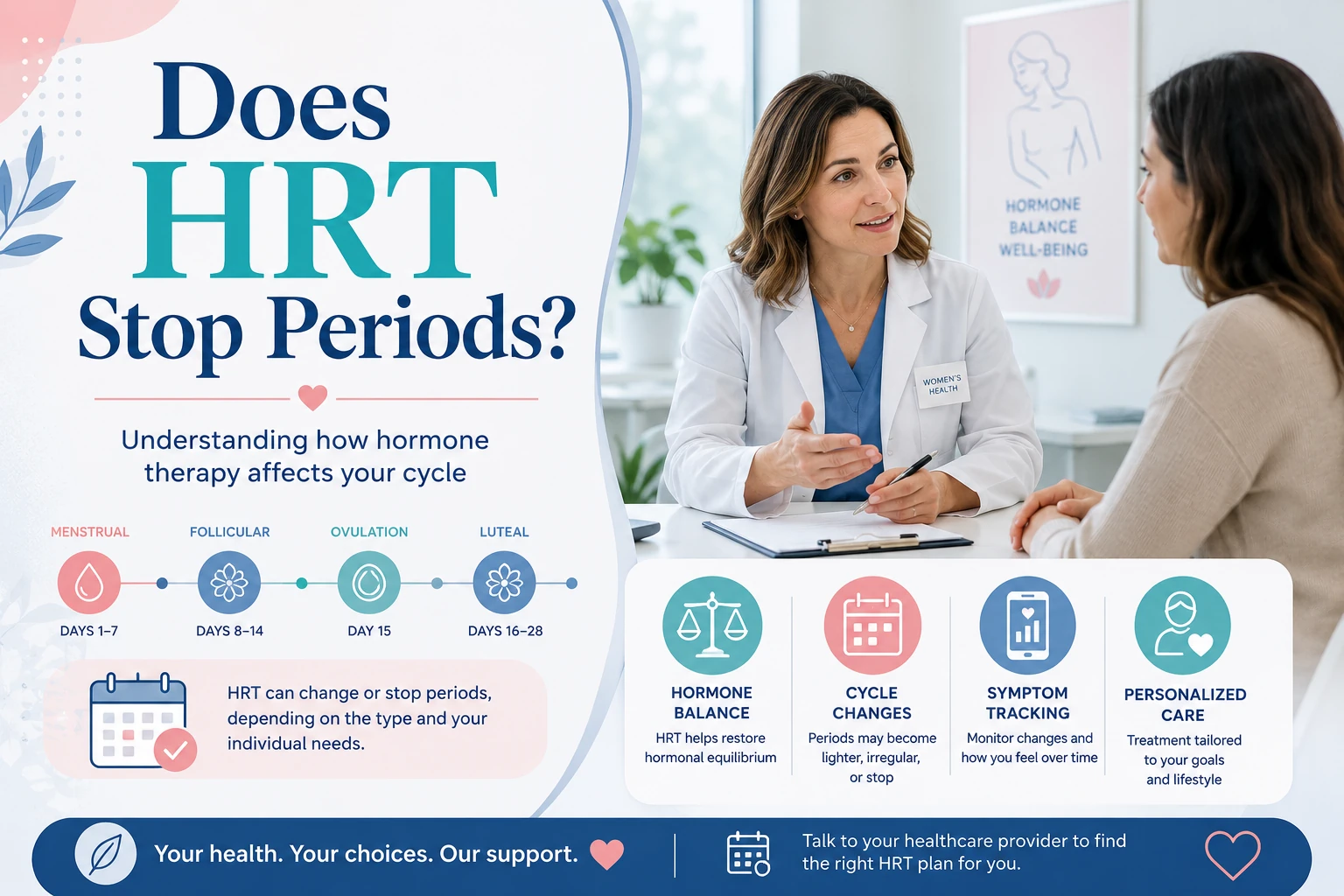
Does HRT Stop Periods?

Whether HRT stops your periods depends on the type you’re prescribed.

Cyclical HRT still produces a monthly withdrawal bleed, while continuous combined HRT usually stops periods over the course of several months.

Bleeding patterns vary from person to person, and working with a provider who checks your hormone levels regularly makes the transition easier to predict.


SEE IF HRT IS RIGHT FOR YOU


Does HRT Stop Periods?

Hormone replacement therapy can stop your periods, but it depends entirely on the type you’re prescribed.

Continuous combined HRT is designed to stop monthly bleeding over time, while cyclical HRT is designed to produce a regular withdrawal bleed that looks and feels like a period.

Your provider chooses between the two based on where you are in the menopause transition.

If you’re one of the many women asking this question, you’re probably already dealing with hot flashes, night sweats, mood swings, or sleep trouble, and wondering what hormone therapy will do to your cycle on top of everything else.

It’s a fair question, since bleeding on HRT often doesn’t behave the way your periods used to.

A “period” on HRT isn’t actually a period in the biological sense.

Your ovaries aren’t releasing an egg or building up and shedding a uterine lining the way they did before menopause.

Any bleeding you experience is a direct response to the hormones in your prescription, which is why the pattern changes so much depending on how those hormones are dosed.


SEE IF HRT IS RIGHT FOR YOU


How Different Types of HRT Affect Your Periods

Most HRT prescriptions fall into one of two categories, and each one affects your cycle in a completely different way.

Cyclical (Sequential) HRT and Withdrawal Bleeds

Cyclical HRT, also called sequential HRT, gives you estrogen every day and adds progesterone for around 12 to 14 days of each month.

When the progesterone stops, your uterine lining sheds, which causes a withdrawal bleed that looks a lot like a period.

This approach is usually reserved for women who are still perimenopausal or who are within the first year of menopause.

The added progesterone isn’t just there to manage timing, either.

Progesterone protects the lining of your uterus from overgrowing, which lowers the risk of endometrial cancer in women who still have a uterus.

Continuous Combined HRT and Period Cessation

Continuous combined HRT gives you both estrogen and progesterone every day, with no break in between.

Because your uterine lining never gets a chance to build up the way it does with cyclical dosing, most women eventually stop bleeding altogether.

This type is generally reserved for women who are already a year past their last period, since starting it too early tends to cause more irregular bleeding rather than less.


Can You Start HRT While You Still Have Periods?

Yes.

Plenty of women start hormone therapy during perimenopause, while their periods are still showing up, just less predictably than before.

In that situation, providers typically reach for cyclical HRT so the treatment works alongside your remaining natural cycle instead of fighting against it.

Continuous combined HRT usually isn’t the right starting point if you’re still getting periods, because it tends to cause more breakthrough bleeding while your ovaries are still producing some hormones of their own.

Cyclical HRT gives your body a more predictable rhythm to follow while your natural cycle winds down.

As your periods become further apart and eventually stop on their own, most providers will talk with you about switching to continuous combined HRT.

There’s no fixed date this has to happen.

It depends on your symptoms, your bleeding pattern, and how your labs look at follow-up visits.


How Long Does It Take for HRT to Stop Your Periods?

For most women on continuous combined HRT, bleeding patterns take about three to six months to settle down, and periods often stop completely within the first year.

Spotting or light breakthrough bleeding during those early months is common and usually isn’t a sign anything is wrong.

Everyone’s timeline looks a little different.

Some women notice their bleeding taper off within a couple of months, while others see gradual improvement over three to six months before things fully settle.

Your dose, your starting point in menopause, and your individual hormone metabolism all play a role.

If you’re still bleeding heavily or unpredictably well past the six month mark, that’s a good reason to check in with your provider rather than waiting it out on your own.


What Counts as Normal Bleeding on HRT?

Light spotting, occasional breakthrough bleeding, and irregular timing are all considered normal during the first six to twelve months of continuous combined HRT, especially if you started less than a year after your last natural period.

Bleeding is usually only a concern if it’s very heavy, lasts several days, or shows up well after your periods had already stopped.

Breakthrough bleeding in the first year of continuous combined HRT typically doesn’t need to be investigated unless it’s unusually heavy, since your body is still adjusting to a steady hormone level instead of the ups and downs it used to have.

Once you’re a year or more past your last period and your bleeding has settled, any new bleeding is worth mentioning to your provider, even if it’s light.

It’s usually nothing serious, but it’s the kind of change worth ruling other causes out for.


Why Am I Still Bleeding on Continuous HRT?

If you’ve been on continuous combined HRT for a while and you’re still seeing regular bleeding, a few things are usually behind it.

The most common cause is a dose imbalance between your estrogen and progesterone, since too much estrogen relative to progesterone can keep stimulating your uterine lining.

Adjusting the ratio, rather than stopping HRT altogether, usually resolves it.

Starting continuous combined HRT too close to your last natural period is another common reason, since your body may still be producing enough of its own hormones to interfere with the steady dose you’re taking.

Missed doses, inconsistent patch placement, or a gel that isn’t fully absorbing can also throw things off.

Less often, bleeding comes from something unrelated to HRT entirely, like fibroids or polyps.

That’s part of why any new or changing bleeding pattern is worth a conversation with your provider instead of guesswork.


Bioidentical Hormone Therapy and Your Menstrual Cycle

Bioidentical hormones, which are structurally identical to the estrogen and progesterone your body makes naturally, affect your periods the same general way other forms of HRT do.

Cyclical dosing still produces a withdrawal bleed, and continuous dosing is still designed to stop periods over time.

The real difference is in how closely the dose can be customized and monitored, not in whether your periods stop.

Because bioidentical hormones can be compounded into different strengths and combinations, providers have more room to fine-tune your prescription around your actual hormone optimization goals and bloodwork, rather than relying on a single standard dose.

That flexibility is often what makes the difference between bleeding that settles quickly and bleeding that lingers.


How Prime Medicine Personalizes Hormone Replacement Therapy for Women

Every woman’s hormone levels, symptoms, and menstrual history are different, which is exactly why we don’t start anyone on hormone therapy without a full picture of what’s actually going on in her body first.

We see this play out every week with the women we treat across Corona del Mar and the rest of Orange County.

We build every hormone replacement therapy for women plan around a detailed review of your medical history and symptoms, followed by bloodwork that measures where your estrogen, progesterone, and other key hormones actually stand.

From there, we map out a plan around your numbers and your goals, whether that means starting cyclical dosing while you’re still perimenopausal or moving toward a continuous regimen once your periods have stopped.

That plan isn’t static.

We recheck your labs and adjust your hormone balancing plan at follow-up visits, so if your bleeding pattern isn’t settling the way it should, we can fine-tune your dose instead of leaving you to wait it out.

Our providers walk you through what to expect at each step, so you’re never left guessing whether what you’re experiencing is normal.


CONTACT US


When to Call Your Doctor About Bleeding on HRT

Call your provider if you’re soaking through protection every hour or two, passing large clots, bleeding for more than seven days straight, or experiencing bleeding along with severe pain.

You should also reach out if new bleeding starts after your periods have already stopped for a year or more, since that pattern is worth checking even though it’s often not serious.

It’s easy to talk yourself out of calling, especially when you’ve already been told some bleeding is normal on HRT.

But a quick check-in costs you very little, and it’s the fastest way to find out whether your dose needs adjusting or whether something else is going on.

Most bleeding changes on HRT settle down with time and the right dose, and staying on hormone therapy long term is safe for many women when it’s monitored properly.

The bigger takeaway is that you don’t have to figure out what’s normal on your own.

If you’re in Corona del Mar, Newport Beach, or elsewhere in Orange County and trying to figure out what your periods will do on hormone therapy, PRIME Medicine can walk you through a plan built around your own bloodwork instead of a generic protocol.


SCHEDULE A CONSULTATION


FAQs: Does HRT Stop Periods

Will my periods stop right away when I start HRT?

No. Most women don’t see their periods stop right away, even on continuous combined HRT. It typically takes a few months for your body to adjust, and some bleeding or spotting during that window is common.

Is it normal to bleed more on HRT at first?

Yes, some irregular or heavier bleeding in the first few months of HRT is common, especially if you started less than a year after your last natural period. It usually settles as your body adjusts to a steady hormone level.

Can I get pregnant while on HRT if my periods haven’t stopped?

It’s possible, especially during perimenopause, when your ovaries may still be releasing eggs occasionally. Standard HRT isn’t a reliable form of contraception, so talk with your provider about a separate method if pregnancy is a concern.

Does stopping HRT bring your periods back?

If you stop HRT before you’ve reached natural menopause, your periods may return, since your body may still be producing its own hormones. If you’re already past menopause, stopping HRT typically doesn’t restart periods, since your ovaries are no longer cycling.

What’s the difference between a withdrawal bleed and a real period?

A real period happens when your ovaries release an egg and your body sheds a uterine lining that built up during ovulation. A withdrawal bleed on HRT happens because your hormone dose changes, not because you ovulated, even though the bleeding can look similar.

Should heavy bleeding on HRT worry me?

Heavy bleeding, soaking through protection within an hour or two, or bleeding with large clots is worth calling your provider about. It doesn’t always mean something serious, but it’s not something to just wait out on your own.