An alcoholic beverage sitting on a bench

Tirzepatide and Alcohol: Can You Drink on Mounjaro?

Medically reviewed by Dr. April Foster, DO, board-certified family medicine physician.

You can drink alcohol while taking tirzepatide (brand names Mounjaro and Zepbound), but it increases risks like nausea, low blood sugar, pancreatitis, and dehydration. 

Most experts recommend limiting or avoiding alcohol while on this medication.

Let’s break down how tirzepatide and alcohol interact, and how you can still get the most out of your treatment.


GET HELP WITH YOUR TIRZEPATIDE TREATMENT


How Tirzepatide Works and Why Alcohol Matters


Tirzepatide is a dual GIP and GLP-1 receptor agonist. 

It helps control blood sugar, slow digestion, and curb appetite, making it effective for type 2 diabetes and weight loss.

Alcohol also affects digestion, blood sugar, and the pancreas. 

When combined, these effects can overlap and intensify. 

Both tirzepatide and alcohol slow gastric emptying, leading to more nausea or vomiting. 

Tirzepatide lowers glucose while alcohol can spike or crash it. 

Both also stress the pancreas, raising the risk of inflammation and pancreatitis.

Even though there’s no direct “drug–alcohol” interaction, the risks stack up quickly.


Risks of Mixing Tirzepatide and Alcohol


If you’re wondering about tirzepatide and alcohol or Mounjaro and alcohol, here are the main concerns:

  • Worsened GI upset: nausea, vomiting, diarrhea
  • Hypoglycemia: alcohol can lower blood sugar, especially dangerous if you’re on insulin or other meds
  • Pancreatitis: both alcohol and tirzepatide increase risk
  • Dehydration and electrolyte imbalance: from vomiting plus alcohol’s diuretic effect
  • Weight loss interference: alcohol adds calories and can lower your resolve with food choices


Research and Evidence


One study found people taking GLP-1 medications (including tirzepatide) reported fewer binge-drinking episodes and less alcohol overall.

Databases warn alcohol may worsen glucose control and recommend limiting it, especially in people with diabetes or pancreatitis risk.

So while some people notice reduced cravings, alcohol use on tirzepatide still comes with health risks.


Safer Drinking Tips on Tirzepatide


If you choose to drink, here are practical steps to lower risk:

  • Eat before drinking to prevent low blood sugar
  • Limit intake, generally one drink per day for women, two for men (if your provider approves)
  • Choose low-sugar drinks like dry wine or spirits with sugar-free mixers
  • Hydrate with water between alcoholic drinks
  • Check blood sugar before and after drinking
  • Skip alcohol if you have pancreatitis, very high triglycerides, or uncontrolled diabetes


GET THE MOST OUT OF YOUR TREATMENT


Table: Tirzepatide vs. Alcohol Risks


Effect Tirzepatide Impact Alcohol Impact Combined Risk
Digestion Slows gastric emptying Slows gastric emptying Higher nausea, vomiting
Blood sugar Lowers glucose Raises or lowers glucose Dangerous swings, hypoglycemia
Pancreas May trigger inflammation Can cause pancreatitis Greater pancreatitis risk
Hydration Neutral Dehydrating Risk of dehydration, dizziness
Weight loss Helps reduce appetite & weight Adds empty calories Slower progress, setbacks


Mounjaro and Alcohol: Any Difference?


Mounjaro is simply the brand name for tirzepatide. 

The safety guidance is the same: while moderate drinking isn’t absolutely forbidden, it can worsen side effects and interfere with results.


Key Takeaway


While you can drink on tirzepatide, alcohol makes side effects worse and can undermine the benefits of your treatment. 

If you drink, keep it moderate, eat beforehand, hydrate, and monitor your blood sugar. 

For some people, avoiding alcohol completely is the safer choice.

At PRIME Medicine, we help patients navigate tirzepatide, weight loss, and lifestyle changes safely. 

If you’re unsure about alcohol on Mounjaro, or want personalized guidance, our team is here to help.


SCHEDULE A CONSULTATION


FAQs


Can you drink alcohol when taking tirzepatide?
Yes, but it comes with added risks. Alcohol can increase side effects like nausea and vomiting, raise the chance of low blood sugar, and put extra stress on the pancreas. Most healthcare providers recommend limiting or avoiding alcohol while using tirzepatide.

What not to do on tirzepatide?
You should avoid heavy drinking, skipping meals, or overeating fatty foods since these can make side effects worse. It’s also important not to stop or adjust your dose without guidance from your doctor.

Does tirzepatide reduce alcohol cravings?
Some studies suggest GLP-1 medications like tirzepatide may lower alcohol cravings and reduce intake, but the evidence is still early and results vary from person to person.

Can you drink alcohol on Mounjaro?
Mounjaro is the brand name for tirzepatide, so the guidance is the same. Drinking alcohol while on Mounjaro isn’t completely forbidden, but it increases risks like low blood sugar and pancreatitis.

What is the difference between tirzepatide vs Mounjaro?
There is no difference. Tirzepatide is the generic drug name, and Mounjaro is one of its brand names. Both terms refer to the same medication.

What is the best weight loss injection?
There isn’t a single “best” weight loss injection for everyone. Medications like tirzepatide, semaglutide, and other GLP-1 receptor agonists have shown strong results, but the right choice depends on your health needs and should be decided with your doctor.

Share the Post:

Facebook
Twitter
LinkedIn
X

Related Posts

Does HRT Make You Look Younger?

Hormone replacement therapy can measurably improve skin thickness, collagen, and hair thinning, backed by real clinical data rather than before-and-after photos alone.

It also affects body composition in both men and women.

HRT is not a substitute for cosmetic procedures, and results depend on your hormone levels, timing, and overall health.

The honest answer: HRT can help you look more like yourself again, not younger than you’ve ever been.

You’ve started looking in the mirror and noticing things you didn’t expect this early: thinner hair at your part, skin that doesn’t bounce back the way it used to, a waistline that shifts no matter how you eat.

If you’re searching does HRT make you look younger, you’re not imagining the changes, and you’re not alone in wondering whether hormone therapy can actually do something about them.

At PRIME Medicine in Corona del Mar, patients across Orange County, from Newport Beach to Irvine, ask this question every week.

The honest answer involves real data, not just testimonials, and it’s more specific than a simple yes or no.


SEE IF HRT IS RIGHT FOR YOU


Does HRT Make You Look Younger?

Yes, in measurable ways.

Hormone replacement therapy can increase skin collagen and thickness, slow hair thinning, and improve body composition, because estrogen and testosterone directly regulate the tissues responsible for those changes.

The effect is gradual and restorative rather than a dramatic transformation, and it works best when hormone levels, not just symptoms, guide the dose.

In one widely cited study of 30 postmenopausal women who had used hormone therapy for an average of 18 years, most credited their hormone use for skin that looked better than their peers’, though the researchers noted this reflected belief rather than a measured clinical outcome.

That gap between what people believe and what’s actually been measured is exactly why the next few sections matter.

There is real data on skin, hair, and body composition, and it tells a more specific story than before-and-after photos ever could.


How Hormones Shape the Way You Age

Estrogen, progesterone, and testosterone do more than regulate your cycle or your mood.

They also control collagen production, oil gland activity, hair follicle cycling, and where your body stores fat.

When levels decline, whether from menopause, andropause, or other hormonal shifts, the tissues that depend on them change too.

Estrogen in particular keeps the collagen-building cells in your skin active and keeps skin hydrated.

Once estrogen drops, skin collagen declines by about 2.1% and skin thickness by about 1.13% every year after menopause, a steady loss that adds up fast over a decade.

Testosterone plays a parallel role in muscle mass, fat distribution, and bone density for both men and women, even though women naturally have much less of it.

A drop in either hormone can show up as low estrogen symptoms long before it ever shows up as a formal diagnosis on a lab report.

The goal of hormone therapy isn’t to flood your body with hormones.

It’shormone balancing: restoring levels to a range your tissues actually recognize, based on bloodwork rather than guesswork.


Can HRT Improve Your Skin?

Yes.

Estrogen therapy has been shown in clinical studies to increase skin collagen by up to 6.49% in six months and skin thickness by up to 30% over a year, while also improving hydration and texture.

The amount of improvement depends on the type of estrogen, the dose, and how long you’d been postmenopausal before starting.

A 2024 review of dermatologic changes during menopause found that skin aging accelerates sharply once estrogen drops, affecting thickness, elasticity, oil production, and wound healing all at the same time.

Hormone therapy is one of the few interventions shown to measurably slow or partially reverse several of those changes at once.

Collagen and Elasticity

Collagen is the structural protein that keeps skin firm.

Without enough estrogen, your body makes less of it and breaks down what’s already there faster.

One trial found that six months of oral estrogen increased skin collagen by 6.49%, while a longer-term study of women treated with estradiol and testosterone for two to ten years found collagen content nearly 48% higher than in untreated women of the same age.

A separate year-long, placebo-controlled trial found that oral estrogen therapy increased dermal thickness by 30%, though the effect varied by delivery method.

Patches and gels tended to produce smaller gains, in the 7% to 15% range, which is part of why personalized hormone replacement therapy for women accounts for delivery method, not just dose.

Hydration and Texture

Estrogen also regulates oil production and the skin’s ability to hold onto water, which is why dry, tight-feeling skin is such a common complaint during perimenopause and menopause.

Low-dose topical estrogen has been shown to improve collagen, hydration, and skin thickness with far less systemic absorption than oral hormone therapy, which is why some patients see benefit from pairing systemic HRT with a topical approach rather than relying on one or the other.


Does HRT Help With Hair Thinning?

Often, yes, though the evidence is still developing.

Estrogen helps keep hair in its growth phase longer and improves how firmly it’s anchored in the follicle, so restoring estrogen levels can slow thinning in postmenopausal women.

It works best as a protective measure started early, not as a way to regrow hair that’s already lost.

A small clinical study tracked postmenopausal women using hormone therapy over six months and found their frontal hairline score improved along with how firmly hair was anchored in the follicle, a sign that fewer hairs were sitting in the shedding phase.

A 2025 review in Maturitas looked at the broader hormonal picture behind menopausal hair loss and noted that estrogen decline, not aging on its own, is a major driver of hair thinning in women, which is one reason hormone levels are worth checking before trying topical treatments alone.


What About Body Shape and Weight?

Yes, hormone levels directly affect where your body stores fat and how much muscle you can build or keep.

Low testosterone in men, and low estrogen in women, is linked to more fat around the midsection and less lean muscle, and restoring those levels through hormone therapy has been shown to shift that balance back.

In men with low testosterone, replacement therapy has been shown to increase fat-free mass and muscle size.

In a randomized trial of obese men on a reduced-calorie diet, those who also received testosterone treatment lost weight almost entirely as fat, while men on the same diet without it lost both fat and muscle.

Women see a related shift once estrogen declines.

Menopausal hormone therapy has been shown to influence body composition and metabolic parameters, helping offset the move toward abdominal fat storage that tends to follow estrogen loss.


Bioidentical HRT vs. Traditional HRT: Does It Matter for Appearance?

Bioidentical hormones are structurally identical to the estrogen, progesterone, and testosterone your body already makes, while traditional hormone therapy sometimes uses synthetic versions or hormones sourced differently.

For appearance specifically, there’s no strong evidence that the bioidentical label alone changes your results.

What matters more is the dose, the delivery method (oral, patch, cream, or pellet), and whether your levels are actually being tracked and adjusted over time.

At PRIME Medicine, bioidentical hormone replacement therapy is paired with cellular-level testing rather than a standard starting dose for everyone, since two women with the same symptoms can have very different lab numbers underneath them.

That’s also true for men.

Hormone replacement therapy for men, dosed to actual testosterone and estradiol levels rather than a standard protocol, tends to produce steadier, more predictable changes in skin and body composition than dosing based on symptoms alone.


How Long Before You Notice a Difference?

Most people notice skin hydration and texture improvements within four to eight weeks, while collagen, hair, and body composition changes typically take three to six months to become visible.

Full results can take closer to a year, and consistent use matters more than the specific hormone or delivery method.

Hormones work at the cellular level, which is slower than a topical cream but more durable.

How long HRT takes to work depends on your starting hormone levels, how long you’d been in deficit, and your age when you start treatment, which is also why benefits of HRT after 65 can look different from benefits in someone who started hormone therapy in their late 40s.


What HRT Can’t Do

Hormone therapy restores what hormone decline took away.

It doesn’t erase sun damage, change bone structure, or override genetics, and it isn’t a substitute for sunscreen, sleep, or strength training.

The Menopause Society notes that hormone therapy’s approved benefits center on symptom relief, bone protection, and quality of life, not cosmetic transformation, even though appearance changes are a welcome side effect for many patients.

If you’re also dealing with fine lines, volume loss, or skin texture issues that predate your hormone changes, hormone therapy alone may not get you all the way there.

That’s where natural aesthetics treatments like PRP and collagen-stimulating procedures can work alongside hormone therapy rather than instead of it.


How PRIME Medicine Approaches Hormone Therapy for a More Youthful Look

At PRIME Medicine in Corona del Mar, we don’t start with a prescription pad.

We start with bloodwork, because two patients with the same complaint about their skin or energy can have completely different hormone profiles underneath.

Our integrative team of naturopathic and medical doctors builds your hormone plan around your actual lab numbers, not a standard starting dose.

For men, that often means testosterone replacement therapy dosed to a target range rather than a symptom checklist.

For women, it means weighing estrogen, progesterone, and testosterone together, since treating one hormone in isolation rarely gives you the full picture.

We also know hormone therapy works best alongside the right testing.

Checking hormone levels at the right time and knowing when your dose needs adjusting can be the difference between a treatment that works and one that just sits in your medicine cabinet.

Patients throughout Orange County, from Newport Beach to Huntington Beach and Irvine, come to us because they want a plan built around their own biology, not a generic prescription.

If you’re ready to find out what your hormones are actually doing and what that means for how you look and feel, PRIME Medicine is here to help you figure it out.


SCHEDULE A CONSULTATION


FAQs: Does HRT Make You Look Younger

Does HRT really make your skin look younger?

Yes, to a measurable degree. Clinical studies show increases in skin collagen and thickness with estrogen therapy, though results vary by dose, delivery method, and how long you’d been in hormonal decline before starting treatment.

How long does HRT take to show visible results?

Hydration and texture often improve within four to eight weeks. Collagen, hair, and body composition changes usually take three to six months, with continued improvement over the first year.

Can HRT help with hair thinning during menopause?

It can help slow hair thinning for many women, especially when started earlier in the menopause transition, though it works better as a protective measure than as a way to regrow hair that’s already lost.

Does testosterone therapy change how men look as they age?

Yes. Testosterone replacement therapy has been shown to increase lean muscle mass and reduce fat in men with low testosterone, which affects overall body shape and composition over time.

Is bioidentical HRT different from regular HRT for appearance?

Not dramatically on its own. Dose, delivery method, and whether your treatment is adjusted based on lab testing matter more for appearance results than the bioidentical label by itself.

Can HRT replace cosmetic procedures like Botox or fillers?

No. Hormone therapy addresses tissue-level changes like collagen and hydration, but it doesn’t change bone structure or erase deep wrinkles the way injectables or other cosmetic procedures can. Many patients use both together for the most complete results.

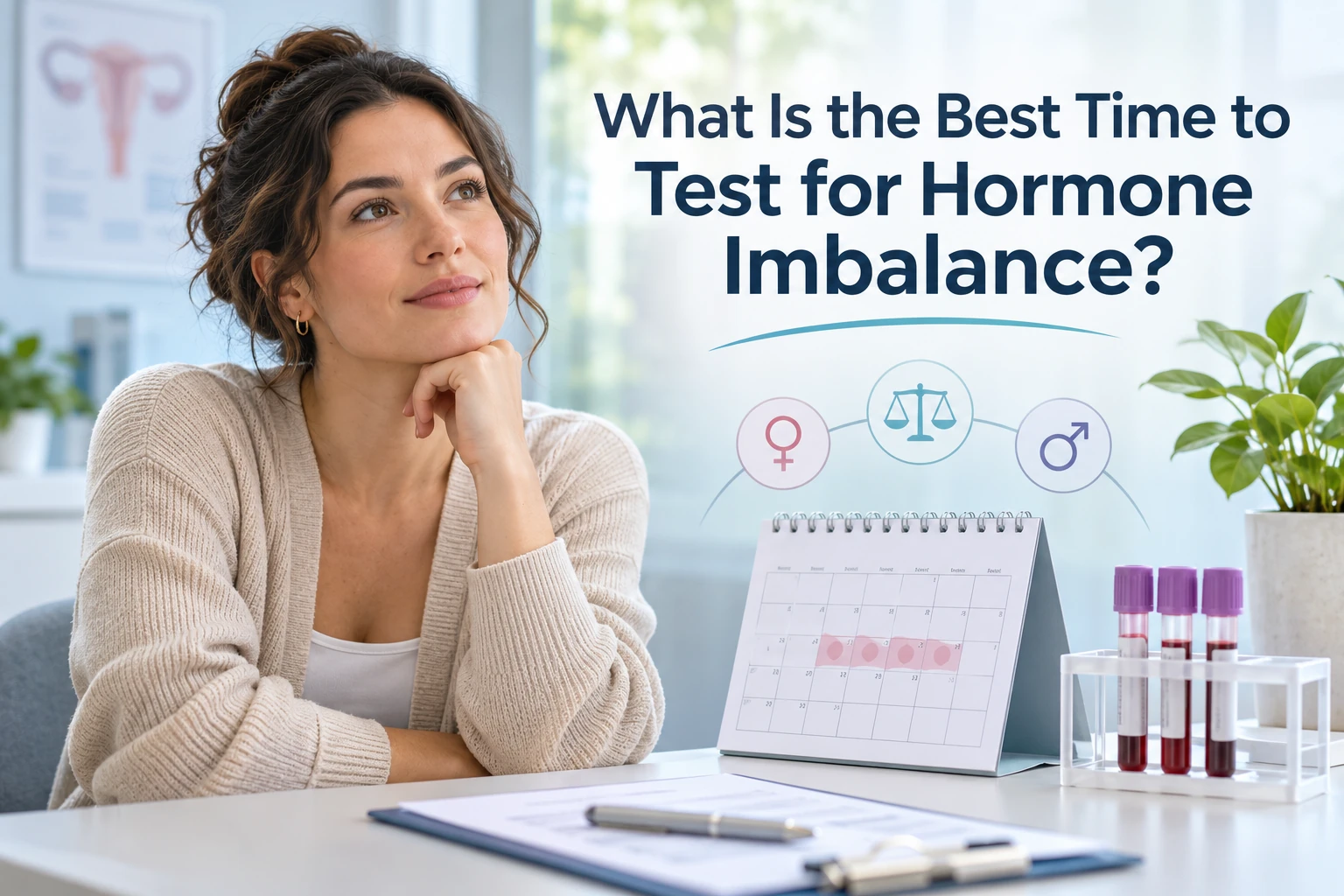
What Is the Best Time to Test for Hormone Imbalance?

The best time to test for hormone imbalance depends on which hormone you’re checking.

Testosterone and cortisol should be drawn in the morning, between 7 and 10 a.m.

Female reproductive hormones like FSH, LH, and estradiol are most accurate on cycle days 2 through 5, while progesterone needs to wait until about a week before your period.

Getting the timing wrong is one of the most common reasons a hormone panel comes back “normal” even when symptoms say otherwise.

If you’ve ever gotten a hormone panel back that said everything was fine, even though you felt exhausted, foggy, or just not like yourself, timing may be the reason.

Hormones aren’t static numbers.

They rise and fall by the hour and by the day, and a blood draw taken at the wrong moment can hide a real imbalance behind a technically normal result.

This guide breaks down exactly when to test each major hormone, why the timing matters so much, and what to do if your cycle is irregular or you’ve already gone through menopause.


GET HELP BALANCING YOUR HORMONES 


Why Timing Changes Your Hormone Test Results

Hormones follow predictable daily and monthly rhythms, and testing outside those windows can produce a result that looks normal on paper but misses what’s actually happening in your body.

Cortisol and testosterone follow a 24-hour circadian pattern, while estrogen, progesterone, FSH, and LH follow the roughly monthly rhythm of the menstrual cycle.

Cortisol is a good example of how dramatic this swing can be.

Levels peak shortly after waking and are typically drawn between 7 and 10 a.m., when they’re highest, then drop by roughly 50% by late afternoon.

A sample drawn at 4 p.m. can look low even in someone with perfectly healthy adrenal function, simply because that’s when cortisol is supposed to be lower.

The same logic applies to reproductive hormones, just on a monthly scale instead of a daily one.

Estradiol suppresses FSH, so testing FSH on the wrong cycle day can mask a problem that would show up clearly on day 3.

Timing isn’t a minor detail here.

It’s often the difference between a result your provider can actually use and one that sends you home with no answers.


What Time of Day Should You Test Testosterone and Cortisol?

Testosterone and cortisol should both be tested in the morning, ideally between 7 and 10 a.m., because that’s when circulating levels are at their daily peak.

Testing later in the day can produce results 20% to 30% lower than a morning draw, which can make a normal level look low or mask an actual deficiency.

Testosterone follows a tight circadian rhythm that peaks shortly after waking and declines steadily as the day goes on.

The Endocrine Society’s clinical practice guideline specifically recommends morning blood draws, taken between 7 and 10 a.m., to get an accurate reading.

This matters for both men being evaluated for low testosterone and women with symptoms of androgen imbalance.

Cortisol behaves the same way.

Mayo Clinic Laboratories collects morning cortisol specimens between 6 and 10:30 a.m. for this exact reason.

If you’re being evaluated for adrenal fatigue, burnout, or unexplained weight changes, an afternoon cortisol draw simply won’t give your provider the information they need.


When During Your Menstrual Cycle Should You Test Female Hormones?

Female reproductive hormones need to be tested on specific cycle days to be meaningful.

FSH, LH, and estradiol are typically drawn on cycle days 2 through 5, using the first day of full bleeding as day 1, while progesterone is tested about a week before your expected period to confirm ovulation actually happened.

Testing FSH, LH, and Estradiol (Cycle Days 2-5)

Early in the cycle, estradiol is naturally low, which lets FSH and LH show their true baseline levels without interference.

Research tracking hormone levels across the natural menstrual cycle confirms this early window is when these three hormones are most stable and easiest to interpret together.

Testing even a few days later can throw off the results, since rising estradiol starts suppressing FSH before ovulation.

A high FSH reading on day 3 is a meaningful signal about ovarian reserve.

The same number on day 10 tells you almost nothing.

Testing Progesterone (Mid-Luteal Phase)

Progesterone peaks in the mid-luteal phase, roughly five to seven days after ovulation, which lands around day 21 in a textbook 28-day cycle.

But not every cycle is 28 days, so counting backward from your next expected period is more reliable than counting forward from day 1.

Testing progesterone too early or too late in the cycle is one of the most common reasons women are told their levels are “fine” despite symptoms of low progesterone, like difficulty sleeping, anxiety before their period, or short luteal phases.

If you have symptoms of low estrogen alongside irregular cycles, both hormones often need to be evaluated together rather than in isolation.

What If Your Cycle Is Irregular or You’re Not Having Periods?

If your cycles are unpredictable or absent, cycle-day testing isn’t possible in the usual sense, so your provider will typically order a broader panel at a single visit rather than timing around ovulation.

This is common with conditions like polycystic ovary syndrome, which the CDC estimates affects a meaningful share of women between the ages of 20 and 49 in the United States.

In these cases, a single comprehensive draw, paired with symptom tracking over a few weeks, usually gives a clearer picture than chasing a specific cycle day that may never arrive on schedule.


Does Thyroid Testing Depend on Timing Too?

Thyroid testing is less sensitive to time of day than testosterone or cortisol, but morning testing is still preferred, and fasting is not required for a standard TSH test.

The bigger timing issue with thyroid testing isn’t the clock.

It’s supplements.

Biotin, a common ingredient in hair, skin, and nail supplements, can interfere with the lab equipment used to measure thyroid hormones, producing a falsely low TSH and falsely high T4 or T3.

The American Thyroid Association recommends stopping biotin supplements for at least 72 hours before a thyroid panel, longer if your dose is 10,000 micrograms or more.

Thyroid issues are also far more common than most people realize.

The same organization notes that roughly 1 in 8 women will develop a thyroid disorder in her lifetime, and as many as 60% of people with a thyroid condition don’t know they have one.


What About Testing Hormones During Perimenopause or After Menopause?

Perimenopause makes timing especially tricky, because hormone levels can swing from a “normal” reading to a clearly menopausal one within the same week.

A single FSH or estradiol draw during perimenopause often reflects that specific day more than it reflects your overall hormonal status.

This doesn’t mean testing is pointless during this stage.

It means the result needs to be interpreted alongside your symptoms, not treated as the final word on its own.

Many women going through this transition benefit from hormone support strategies that are adjusted over time as levels continue to shift, rather than from chasing one perfect lab value.

After menopause, hormone levels settle into a more consistent, low pattern, which actually makes testing more straightforward than it was during perimenopause.

At that point, timing matters less than making sure the full picture, including thyroid and adrenal function, is being looked at together.


How PRIME Medicine Approaches Hormone Testing in Orange County

Getting hormone testing right takes more than ordering a panel.

It takes knowing which hormones to test, when to schedule the draw, and how to read the result in the context of your symptoms and history.

That combination is exactly what our team at PRIME Medicine builds every treatment plan around.

Our specialty testing goes beyond a standard primary care panel, looking at the full hormonal picture rather than a single marker in isolation.

Licensed naturopathic doctors and medical doctors work together here, which means your results get reviewed from both a conventional and a functional medicine lens before any treatment is recommended.

If testing points to a genuine imbalance, we offer hormone replacement therapy for women and hormone replacement therapy for men, along with dedicated testosterone replacement therapy for men and women dealing with low androgen symptoms.

Every plan is built around your actual lab timing and results, not a generic protocol.

If you’re searching for answers in Orange County, our providers take a functional medicine approach that looks for root causes rather than just matching a lab value to a prescription.

That’s often what separates a hormone panel that actually changes how you feel from one that just confirms what you already suspected.


CONTACT US


5 Mistakes That Throw Off Your Hormone Test Results

Even with the right test ordered, a few common mistakes can quietly skew your results and lead to a misleading “normal” reading.

  • Testing at the wrong time of day: An afternoon testosterone or cortisol draw can read 20% to 30% lower than a morning sample, even in someone with healthy hormone production.
  • Not tracking your actual cycle day: Assuming ovulation happens on day 14 when your cycles run longer or shorter can push progesterone and estradiol testing off by a week or more.
  • Taking biotin supplements beforehand: High-dose biotin can distort thyroid results for days after your last dose, even if you feel fine.
  • Skipping fasting instructions: Some panels, like insulin or glucose markers often ordered alongside hormones, do require fasting, even though thyroid tests generally don’t.
  • Testing only once and stopping there: A single snapshot can miss a pattern that only shows up when levels are tracked over two or three cycles.


How to Prepare for a Hormone Test

Preparing for a hormone test means scheduling it at the right time, pausing any interfering supplements, and following your lab’s specific fasting instructions.

A little preparation goes a long way toward getting a result that actually reflects what’s happening in your body.

Book morning appointments whenever testosterone, cortisol, or thyroid markers are involved, ideally before 10 a.m.

If you’re tracking a menstrual cycle, note your start date in a calendar or app so you can count forward or backward accurately instead of guessing.

Pause biotin and other high-dose B-vitamin supplements for at least three days beforehand, and ask your provider directly whether your specific panel requires fasting, since this varies depending on which markers are included.

It also helps to write down your symptoms, and when they tend to show up, before your appointment.

A provider reading your results alongside a clear symptom timeline can catch patterns that the lab values alone won’t reveal.


How Often Should You Retest Your Hormones?

Most people being evaluated for a suspected imbalance should retest within 6 to 12 weeks of starting any treatment, then move to retesting every 3 to 6 months once levels stabilize.

Hormones that are actively being treated need closer monitoring than ones that are simply being watched.

If you’re on hormone therapy and your dose was recently adjusted, retesting sooner, rather than waiting for your next annual physical, helps confirm the new dose is actually working before months pass.

This is a common question for anyone wondering whether their current HRT dose needs to change, since symptoms alone don’t always line up neatly with lab numbers.

For anyone not yet on treatment, retesting every 6 to 12 months is usually enough, unless new symptoms show up sooner and warrant a closer look.


SCHEDULE A CONSULTATION


FAQs: What Is the Best Time to Test for Hormone Imbalance

What is the single best time of day to test hormones?

There isn’t one single best time for every hormone. Testosterone and cortisol are most accurate between 7 and 10 a.m., while female reproductive hormones depend on your menstrual cycle day rather than the clock.

Can I test my hormones if my periods are irregular?

Yes. Your provider will usually order a broader panel at a single visit instead of timing the draw to a specific cycle day, since predicting ovulation isn’t reliable with irregular cycles.

Does fasting affect hormone test results?

It depends on the panel. Standard thyroid tests generally don’t require fasting, but markers like insulin or glucose that are often ordered alongside hormone panels usually do.

Why did my hormone test come back normal even though I have symptoms?

This often happens when the test was drawn at the wrong time of day or the wrong cycle day, which can mask a real imbalance behind a technically normal number. Retesting at the correct time frequently tells a different story.

Should men get their hormones tested too?

Yes. Testosterone naturally declines with age, and morning testing between 7 and 10 a.m. gives the most accurate picture for men experiencing fatigue, low libido, or mood changes.

How soon should I retest after starting hormone therapy?

Most people retest 6 to 12 weeks after starting or adjusting treatment, then shift to every 3 to 6 months once levels have stabilized.


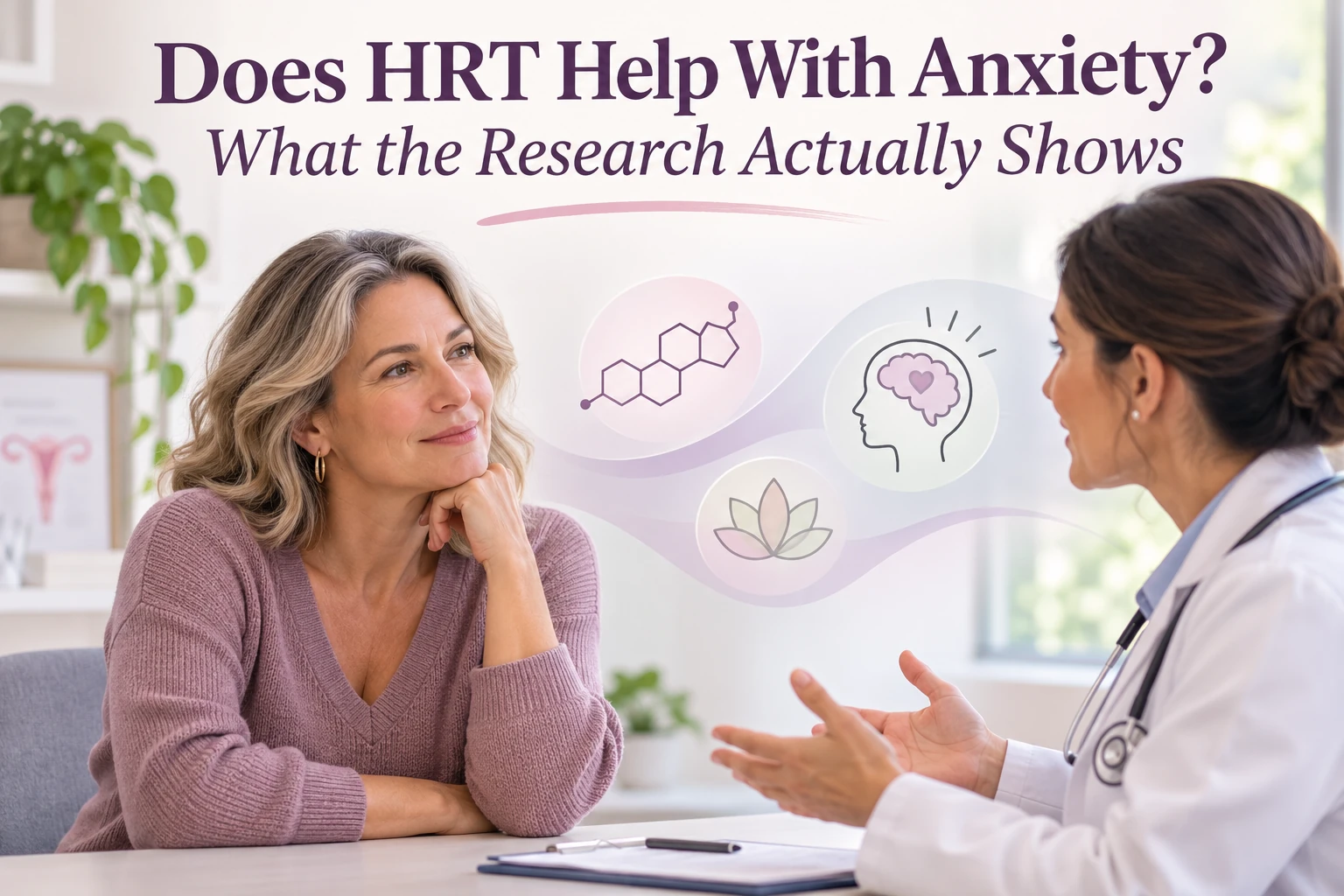
Does HRT Help With Anxiety?

HRT can ease anxiety when it’s driven by hormone swings, especially estrogen and progesterone shifts in perimenopause.

Research is mixed overall, but symptomatic women often see modest, real relief within weeks to a few months.

It works best alongside the right dose, delivery method, and a provider who checks whether your anxiety is actually hormone related.

If you’ve typed does HRT help with anxiety into a search bar at 2 a.m., you already know the feeling isn’t just in your head.

Hormone replacement therapy sits at the center of one of the most debated questions in menopause care, and for good reason.

Some studies show real relief.

Others show no difference at all.

The truth is that the answer depends on where your anxiety is coming from, which is why hormone replacement therapy for women usually starts with figuring out what’s actually driving your symptoms rather than guessing.


SEE IF HRT IS RIGHT FOR YOU


Can Hormones Really Affect Your Anxiety Levels?

Yes.

Estrogen and progesterone both act directly on the parts of your brain that control fear and calm, including serotonin activity and the amygdala.

When these hormones swing or drop sharply during perimenopause, anxiety can appear even in people who have never struggled with it before.

Estrogen helps keep serotonin, the chemical most closely tied to steady mood, running smoothly, and it also acts on the amygdala, the brain’s fear center.

Progesterone works differently.

Its breakdown products bind to GABA receptors, the same calming pathway used by anti-anxiety medication.

Somewhere between 15 and 50 percent of women going through perimenopause and menopause report real anxiety symptoms, a wide range that reflects how differently each person’s body responds to shifting hormone levels.

Researchers tracking anxiety disorders in perimenopausal women globally have found that the burden of anxiety in this group has been climbing since 1990 and could rise more than 40 percent by 2035 if current trends continue.


What Does the Research Say About HRT and Anxiety?

The honest answer is that researchers are still working this out.

A systematic review presented to The Menopause Society looked at seven studies covering more than 1,200 women directly treated with hormone therapy, plus observational data from close to 175,000 more.

The conclusion was nuanced: hormone therapy did not consistently reduce anxiety across the board, but it did show modest benefits for perimenopausal and early postmenopausal women who already had noticeable symptoms.

Oral estrogen showed the most promise in that review, though other research complicates the picture.

A separate analysis found that the effect of HRT on anxiety is less clear than its effect on hot flashes or sleep, and that hormone therapy may work better for women who went through surgical menopause than those who reached menopause naturally.

Dosage, delivery method, and how close someone is to their final period all seem to change the outcome.

That inconsistency isn’t a reason to write off HRT.

It’s a sign that anxiety during menopause has more than one cause, and hormones are only part of the story for some women.


How Does HRT Calm Anxiety Symptoms?

HRT calms anxiety mainly through two pathways.

Estrogen helps stabilize serotonin and tone down the brain’s fear response, while progesterone breaks down into compounds that bind to GABA receptors, the same calming system targeted by anti-anxiety medication.

Restoring both hormones can quiet the physical edge that drives a lot of menopausal anxiety.

Estrogen and the Fear Response

When estrogen drops unevenly, the amygdala can become more reactive, making ordinary stress feel bigger than it should.

Low estrogen rarely shows up as anxiety alone.

It tends to travel with a cluster of other symptoms of low estrogen, including hot flashes, brain fog, and disrupted sleep, each of which can make anxiety feel worse.

Progesterone and GABA Receptors

Progesterone’s main calming effect comes from allopregnanolone, a compound your body makes as progesterone breaks down.

It binds to GABA receptors in the brain, slowing down overactive nerve signals and promoting a sense of calm.

Because this same pathway also encourages drowsiness, restoring progesterone often improves sleep too, and better sleep tends to lower anxiety on its own.


How Long Does It Take HRT to Ease Anxiety?

Most people notice some easing of anxiety within a few weeks of starting HRT, though it usually takes about three months for the full effect to settle in.

How long HRT takes to work depends on your dose, your delivery method, and how closely your anxiety is tied to hormone levels in the first place.

Real-world data backs up that timeline.

One study tracking women before and after starting hormone therapy found that 62.3 percent initially scored in the severe range for mood symptoms, a number that dropped to 24.6 percent after about four and a half months of treatment.

Women with the most severe symptoms at the start saw the biggest improvements.

That study didn’t include an untreated comparison group, so it can’t prove hormone therapy alone caused the change.

Still, a drop that size is hard to ignore, especially paired with how many women report feeling calmer within the first few weeks.


Can HRT Make Anxiety Worse Before It Gets Better?

Yes, for some people.

Starting HRT can trigger a short adjustment period where anxiety temporarily spikes, especially if the dose is too high, too low, or the delivery method doesn’t suit your body.

This usually settles within a few weeks as your levels stabilize.

Common triggers include dosage imbalance, the adjustment period itself, added life stress, and poor sleep, all of which can amplify anxiety independently of whether HRT is actually helping.

That overlap is part of why the research on HRT and anxiety is so mixed.

It’s genuinely hard to separate hormone effects from everything else happening in someone’s life at the same time.

If anxiety spikes rather than eases after you start treatment, it’s often a sign of needing a higher dose or a different formulation, not a reason to stop treatment altogether.


Is Your Anxiety Actually Hormone Related?

Not all anxiety is caused by hormones, so HRT won’t resolve anxiety rooted in stress, trauma, or a standalone anxiety disorder.

The clearest sign your anxiety is hormone related is timing: it tends to rise and fall alongside your cycle changes, hot flashes, or other classic perimenopause symptoms.

Guessing based on symptoms alone only goes so far, since anxiety can look identical whether it’s hormone driven or not.

The most reliable way to know for certain is through specialty hormone testing that measures where your estrogen and progesterone actually sit, rather than relying on how you feel on any given day.


CONTACT US


What If HRT Doesn’t Fully Resolve Your Anxiety?

HRT was never meant to be a complete treatment for an anxiety disorder, and no major health authority recommends using it as one on its own.

When anxiety doesn’t improve, or only improves partially, combining hormone therapy with talk therapy, exercise, or anti-anxiety medication tends to work better than relying on any single approach.

Duration matters too.

There’s no fixed timeline for how long menopausal anxiety lasts, since it depends on your hormone trajectory, lifestyle, and mental health history.

For women who decide to stay on HRT long term, that choice is usually driven by bone health, heart health, and quality of life altogether, not mood alone.


How PRIME Medicine Approaches Hormone-Related Anxiety

At PRIME Medicine, we don’t start by assuming anxiety is hormonal, and we don’t assume it isn’t either.

We start by testing.

Our providers build hormone balancing plans around your actual lab results, not a standard dose everyone gets handed on day one.

If your anxiety is tied to shifting estrogen and progesterone, we adjust dose and delivery method until your levels, and how you feel, actually line up.

If it isn’t, we’ll tell you that too, and help you find the right next step instead of leaving you on a treatment that isn’t working.

Our team includes providers who specialize in exactly this kind of individualized hormone care, with Orange County locations designed to make ongoing monitoring easy rather than another thing to squeeze into your week.

So does HRT help with anxiety?

For many women whose anxiety is tied to hormone shifts, yes, often in a real and measurable way.

For anxiety rooted in something else, it’s only one piece of the puzzle.

PRIME Medicine can help you figure out which situation you’re actually in, so you’re not guessing with your own mental health.


SCHEDULE A CONSULTATION


FAQs: Does HRT Help With Anxiety

Does HRT help with anxiety during perimenopause specifically?

Perimenopause is when HRT tends to help anxiety the most, since this is when estrogen and progesterone swings are often the sharpest. Research shows modest benefits are more likely in perimenopausal and early postmenopausal women who already have noticeable symptoms, compared to women further past menopause.

Can HRT cause anxiety instead of helping it?

It can, usually temporarily. Starting HRT or adjusting your dose can cause a short window of increased anxiety while your body adapts, especially if the dose or delivery method isn’t quite right yet. This typically settles within a few weeks.

How long before I notice less anxiety on HRT?

Many women notice some improvement within a few weeks, though it usually takes about three months to feel the full effect. Results depend on your dose, delivery method, and how closely your anxiety is tied to hormone levels.

Is HRT alone enough to treat an anxiety disorder?

No. HRT isn’t designed or recommended as a standalone treatment for an anxiety disorder. It works best for anxiety tied to hormone changes, and often performs best alongside therapy, lifestyle changes, or medication when anxiety has other causes.

Does it matter if I take oral or transdermal HRT for anxiety?

It can. Some research suggests oral estrogen shows the most consistent benefit for anxiety, while other studies find that differences between delivery methods depend on the individual. A provider can help match the formulation to your symptoms and health history.

Will my anxiety come back if I stop HRT?

If your anxiety was closely tied to hormone levels, it can return when those levels drop again after stopping HRT. This is one reason some women choose to stay on hormone therapy long term, guided by their overall health goals rather than anxiety alone.