
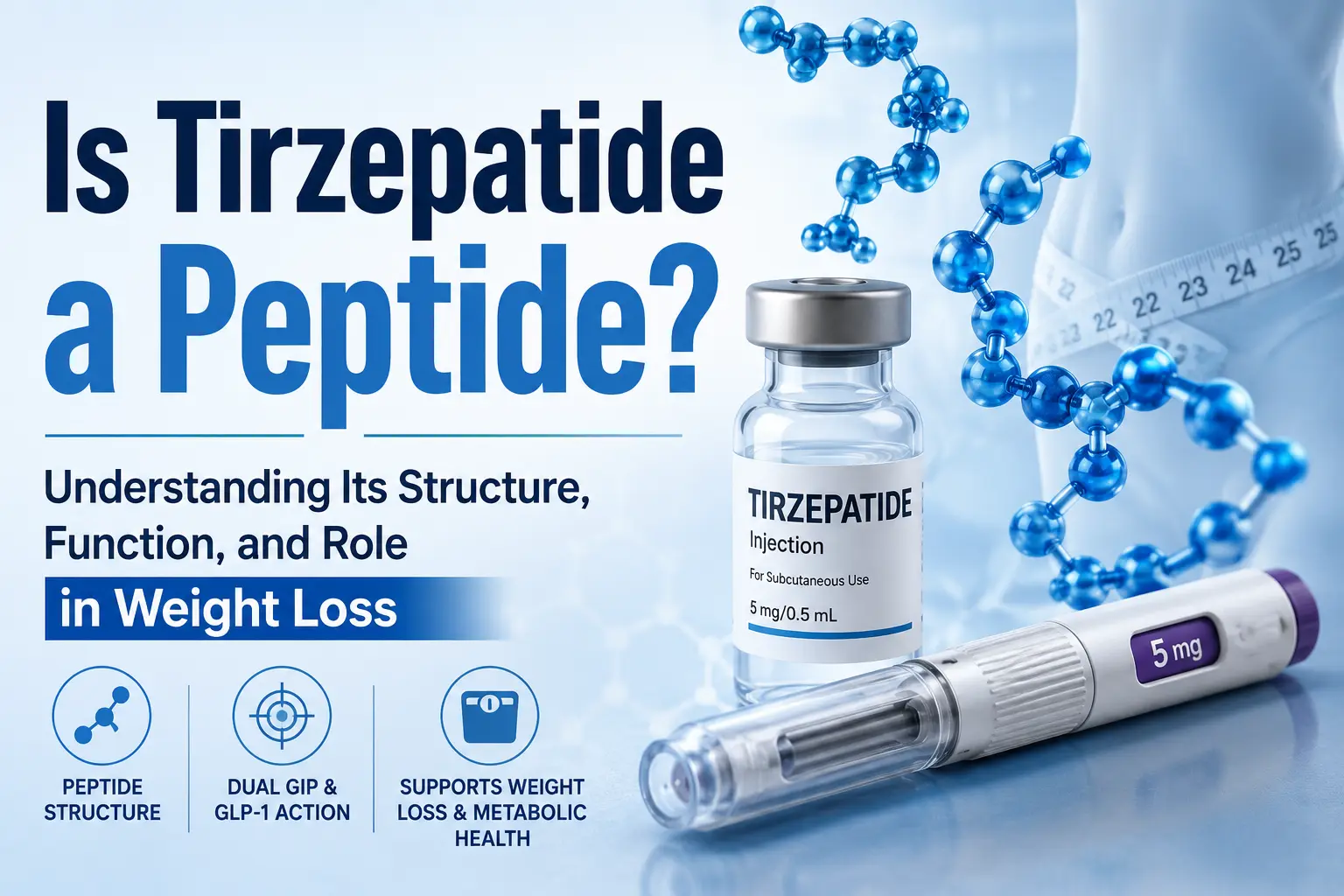
If you’ve been researching weight loss treatments, metabolic health, or peptide therapy, you’ve probably come across the question: Is tirzepatide a peptide?
The answer is yes.
Tirzepatide is a synthetic peptide medication made from a chain of amino acids that mimics naturally occurring hormones involved in appetite regulation, blood sugar control, and metabolism.
While tirzepatide is widely known for supporting weight loss and metabolic health, many people don’t realize that its effectiveness is directly related to its peptide structure.
Understanding what a peptide is and how tirzepatide works can help clarify why this medication has become such an important advancement in metabolic medicine.
In this guide, you’ll learn what peptides are, why tirzepatide is classified as a peptide, how it works in the body, and how it compares to other peptide therapies and weight loss medications.
SEE HOW TIRZEPATIDE CAN HELP YOUR WEIGHT LOSS JOURNEY
Is Tirzepatide a Peptide? The Short Answer
Yes, tirzepatide is a peptide.
Tirzepatide is a synthetic peptide composed of 39 amino acids.
It was specifically designed to mimic the actions of naturally occurring hormones that help regulate appetite, insulin secretion, blood sugar levels, and energy balance.
Because it is made from amino acids linked together by peptide bonds, tirzepatide meets the scientific definition of a peptide.
Its structure allows it to interact with specific receptors involved in metabolic health and weight regulation.
What Is Tirzepatide?
Tirzepatide is a medication that belongs to a class of drugs known as dual GIP and GLP-1 receptor agonists.
Unlike traditional GLP-1 medications that activate a single hormone pathway, tirzepatide works by targeting two important metabolic hormones:
- Glucose-dependent insulinotropic polypeptide (GIP)
- Glucagon-like peptide-1 (GLP-1)
These hormones play a role in:
- Appetite control
- Hunger signaling
- Blood sugar regulation
- Insulin production
- Energy utilization
- Metabolic function
By activating both pathways, tirzepatide helps support a more comprehensive metabolic response than medications that target GLP-1 receptors alone.
What Is a Peptide?
Peptides are short chains of amino acids linked together by peptide bonds.
Amino acids are often called the building blocks of proteins.
The primary difference between peptides and proteins is their size.
Peptides contain fewer amino acids, while proteins are generally larger and more complex.
Peptides naturally occur throughout the body and act as signaling molecules that help cells communicate with one another.
They regulate countless biological processes, including:
- Metabolism
- Growth
- Tissue repair
- Hormone production
- Appetite regulation
- Immune function
Many hormones are peptides, including:
- Insulin
- Glucagon
- Oxytocin
- GLP-1
- Growth hormone-releasing hormones
Because peptides can target specific receptors and pathways, researchers frequently use them to develop therapies designed to support particular physiological functions.
Why Is Tirzepatide Considered a Peptide?
Tirzepatide is classified as a peptide because of both its structure and function.
Structurally, tirzepatide consists of a sequence of 39 amino acids connected through peptide bonds.
Functionally, it behaves like naturally occurring peptide hormones by interacting with receptors that regulate metabolism, appetite, and insulin secretion.
Unlike many traditional medications that are synthesized from small chemical compounds, peptide medications are designed to mimic biological messengers already found within the body.
This peptide-based design allows tirzepatide to communicate with specific receptors and trigger targeted metabolic responses.
How Tirzepatide Works in the Body
The effectiveness of tirzepatide comes from its ability to activate two hormone pathways involved in metabolic regulation.
GLP-1 Receptor Activity
GLP-1 is a hormone released by the digestive system after eating.
When GLP-1 receptors are activated, the body may:
- Feel fuller sooner
- Stay satisfied longer
- Slow stomach emptying
- Improve insulin secretion
- Reduce appetite
These effects can help decrease calorie intake and support blood sugar management.
GIP Receptor Activity
Tirzepatide also activates receptors for glucose-dependent insulinotropic polypeptide, commonly known as GIP.
GIP plays a role in:
- Glucose metabolism
- Insulin release
- Energy utilization
- Nutrient processing
Researchers believe the addition of GIP activity may contribute to the enhanced metabolic effects seen with tirzepatide.
Why Dual Receptor Activation Matters
Most medications in this category activate only GLP-1 receptors.
Tirzepatide’s dual-action mechanism allows it to engage both GIP and GLP-1 receptors simultaneously.
This broader approach helps influence multiple pathways involved in hunger, satiety, insulin response, and overall metabolic function.
Is Tirzepatide a GLP-1 Peptide?
Not exactly.
Tirzepatide does activate GLP-1 receptors, but it is not considered a traditional GLP-1 receptor agonist because it also activates GIP receptors.
This distinction is important because tirzepatide works through two complementary hormone pathways instead of one.
For that reason, many experts classify tirzepatide as a dual GIP and GLP-1 receptor agonist rather than simply a GLP-1 medication.
Tirzepatide Peptide Structure Explained
One of the reasons tirzepatide has attracted so much attention is its sophisticated peptide design.
Scientists engineered tirzepatide to mimic naturally occurring incretin hormones while remaining active in the body for extended periods.
Its molecular structure includes modifications that help:
- Increase stability
- Extend half-life
- Resist rapid breakdown
- Support once-weekly administration
- Maintain receptor activity between doses
Without these structural modifications, the peptide would be cleared from the body much more quickly and require significantly more frequent dosing.
This engineered design is one of the key reasons tirzepatide can provide sustained metabolic effects throughout the week.
Is Tirzepatide Considered Peptide Therapy?
Many patients searching for tirzepatide also wonder whether it falls under the category of peptide therapy.
Technically, the answer is yes.
Because tirzepatide is a peptide-based medication, many healthcare providers include it within broader discussions about peptide therapy.
However, peptide therapy is a broad term that can include many different compounds with different purposes.
Some peptide therapies focus on:
- Recovery and healing
- Growth hormone support
- Muscle development
- Hormone optimization
- Anti-aging strategies
Tirzepatide is unique because it primarily focuses on metabolic health, appetite regulation, and weight management.
How Tirzepatide Differs From Other Peptides
Not all peptides work the same way.
Different peptides target different biological systems and produce different effects.
Although these compounds are all peptides, they are designed to influence very different biological processes.
Tirzepatide vs Semaglutide
Tirzepatide and semaglutide are often compared because both are peptide-based medications used to support weight management and metabolic health.
However, they work differently.
Tirzepatide
- Activates both GIP and GLP-1 receptors
- Targets two metabolic pathways
- Supports appetite regulation and metabolic function
- Classified as a dual receptor agonist
Semaglutide
- Activates GLP-1 receptors only
- Targets a single metabolic pathway
- Supports appetite regulation and blood sugar control
- Classified as a GLP-1 receptor agonist
Both medications are peptides, but tirzepatide’s dual-receptor activity makes its mechanism of action distinct.
Why Are Peptides Used for Weight Loss?
Many people searching for weight loss peptides are surprised to learn that hormones involved in hunger and metabolism are naturally occurring peptides.
Researchers often develop peptide-based medications because peptides can interact with highly specific receptors throughout the body.
In the case of tirzepatide, its peptide structure allows it to communicate directly with pathways involved in:
- Appetite control
- Satiety signaling
- Insulin response
- Glucose regulation
- Energy metabolism
This targeted activity is one reason peptide-based therapies have become increasingly important in the field of metabolic medicine.
Benefits of Tirzepatide’s Peptide Structure
The peptide design of tirzepatide offers several unique advantages.
Targeted Receptor Activity
Peptides can be engineered to interact with specific receptors, allowing for highly targeted biological effects.
Biological Compatibility
Because peptides mimic naturally occurring hormones, they work alongside existing physiological pathways.
Longer Duration of Action
Structural modifications help tirzepatide remain active for extended periods, supporting convenient once-weekly dosing.
Dual Hormone Support
Its unique peptide structure allows it to activate both GIP and GLP-1 receptors simultaneously.
Metabolic Regulation
The combination of targeted receptor activity and prolonged action helps support appetite regulation and metabolic health.
Who May Be a Candidate for Tirzepatide?
Tirzepatide may be appropriate for adults seeking medical support for weight management or metabolic health concerns.
A healthcare provider can evaluate factors such as:
- Current health status
- Medical history
- Weight loss goals
- Existing medications
- Metabolic conditions
The best treatment approach will depend on an individual’s specific health needs and goals.
SEE IF TIRZEPATIDE IS RIGHT FOR YOU
Final Thoughts: Is Tirzepatide a Peptide
So, is tirzepatide a peptide?
Yes.
Tirzepatide is a synthetic peptide composed of 39 amino acids that was engineered to mimic naturally occurring hormones involved in metabolism, appetite regulation, and blood sugar control.
Its peptide structure enables it to activate both GIP and GLP-1 receptors, making it different from traditional GLP-1 medications and many other peptide therapies.
Whether you’re researching peptide therapy for weight loss, or learning more about metabolic health, understanding that tirzepatide is a peptide helps explain how it works and why it has become such an important tool in modern metabolic medicine.
FAQs: Is Tirzepatide a Peptide
Is tirzepatide considered a peptide?
Yes, tirzepatide is considered a peptide because it is made from a chain of 39 amino acids linked together by peptide bonds. Its structure allows it to mimic naturally occurring hormones involved in metabolism, appetite regulation, and blood sugar control.
What type of peptide is tirzepatide?
Tirzepatide is a synthetic peptide and a dual GIP and GLP-1 receptor agonist. It was engineered to activate two hormone pathways that help regulate hunger, insulin release, and metabolic function.
Is tirzepatide a GLP-1 peptide?
Tirzepatide acts on GLP-1 receptors, but it is not solely a GLP-1 peptide. Unlike traditional GLP-1 medications, tirzepatide also activates GIP receptors, giving it a dual-action mechanism.
Why is tirzepatide called a peptide?
Tirzepatide is called a peptide because it consists of amino acids connected by peptide bonds. This structure fits the scientific definition of a peptide and enables it to function similarly to naturally occurring peptide hormones.
How does tirzepatide help with weight loss?
Tirzepatide helps regulate appetite and feelings of fullness by activating GIP and GLP-1 receptors. These effects can help reduce calorie intake and support healthy weight management when combined with lifestyle changes.
What is the difference between tirzepatide and semaglutide?
Both tirzepatide and semaglutide are peptide-based medications, but tirzepatide activates both GIP and GLP-1 receptors, while semaglutide targets only GLP-1 receptors. This difference gives tirzepatide a unique mechanism of action.
Are all weight loss peptides the same?
No. Weight loss peptides can work through different pathways in the body. Some target appetite regulation and metabolism, while others focus on growth hormone production, recovery, or body composition. Tirzepatide specifically targets GIP and GLP-1 receptors to support metabolic health and weight management.
Can tirzepatide be used for metabolic health?
Yes, tirzepatide was designed to support metabolic health by helping regulate blood sugar levels, insulin response, appetite, and energy balance. A healthcare provider can determine whether it may be appropriate based on an individual’s health goals and medical history.