
If you’ve been prescribed tirzepatide, one of the most common questions is straightforward but important: what’s the best time to take it?
Morning or night?
Weekday or weekend?
With food or on an empty stomach?
GET THE MOST OUT OF YOUR TIRZEPATIDE TREATMENT
Quick answer
The best time to take tirzepatide is any time of day you can consistently repeat once a week.
There is no single “perfect” hour.
Most people choose a time based on their routine and how their body responds to the medication, especially when it comes to side effects like nausea or fatigue.
Below is a clear, practical guide to help you choose a dosing schedule that fits your life and feels sustainable long term.
Best time of day to take tirzepatide
Tirzepatide is taken once weekly and can be injected at any time of day.
Morning and evening dosing are both acceptable.
What matters most is consistency.
Taking your injection on the same day each week helps maintain steady medication levels and makes it easier to remember your dose.
Once you’ve chosen a weekly schedule, the “best” time of day depends on how you feel after injections.
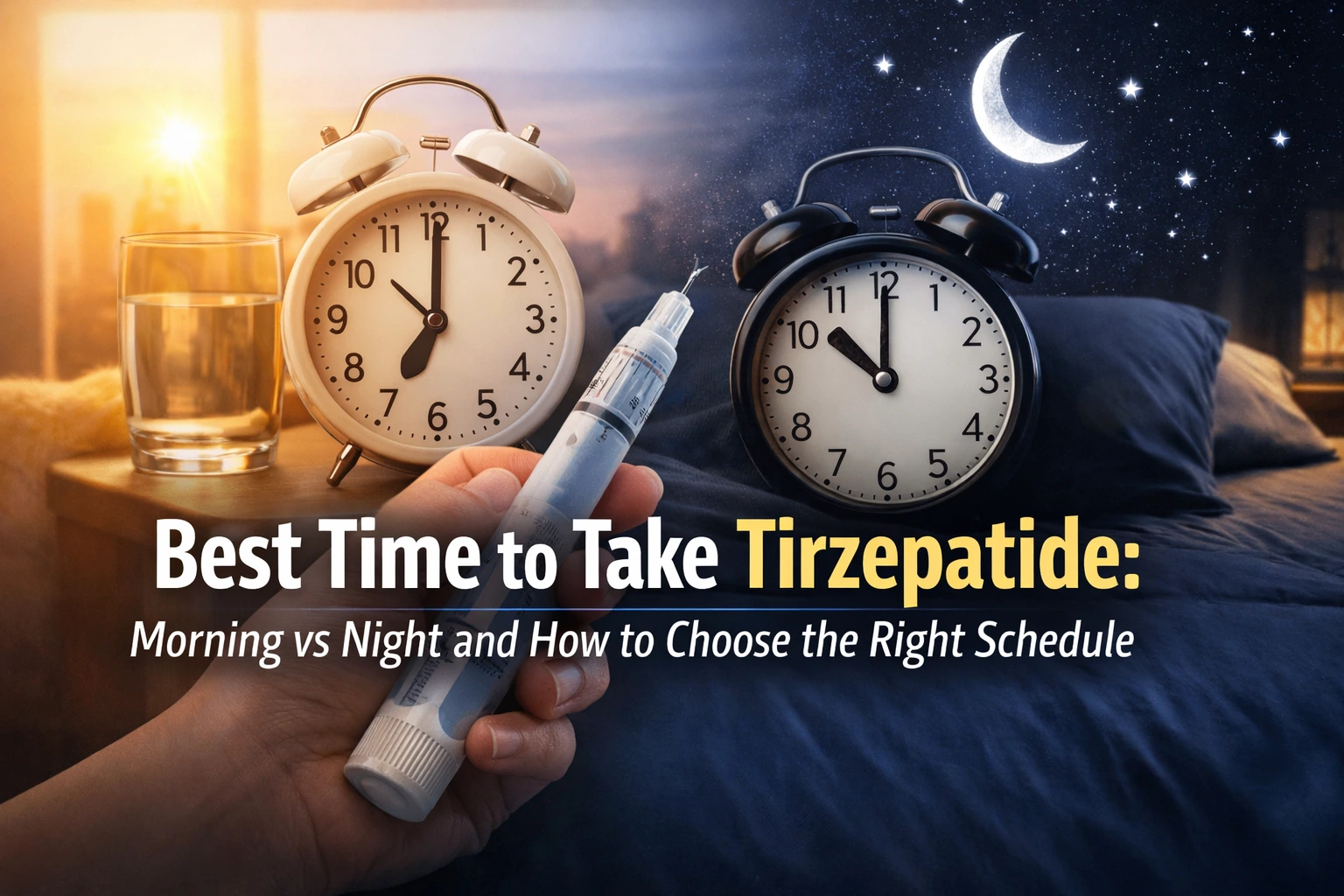
Morning vs night: which timing works better?
Let’s take a look at which time of day typically works best for tirzepatide:
Taking tirzepatide in the morning
Some people prefer morning injections because:
- It fits neatly into an established routine
- Any side effects happen during waking hours
- Appetite control begins earlier in the day
Morning dosing can work well if you don’t experience much nausea or fatigue after injections.
Taking tirzepatide at night
Others choose evening or bedtime injections because:
- Nausea or stomach discomfort may occur while sleeping
- Fatigue is less disruptive overnight
- It’s easier to remember after work or before bed
If side effects tend to hit within the first several hours after your injection, nighttime dosing often feels more manageable.
If you’re unsure: Try one approach for two to three weeks before deciding whether to switch.
When should I inject tirzepatide during the week?
There’s no medically required “best” day of the week.
The ideal day depends on your lifestyle and goals.
If weekends are hardest for eating
Some people inject midweek so appetite control is strongest heading into the weekend.
If side effects slow you down
If you tend to feel tired or nauseated the day after your dose, choosing a day before a lighter schedule or a day off can help.
If structure helps with consistency
Others prefer a fixed weekday or weekend day because it’s easier to remember, such as Monday morning or Sunday night.
The key is choosing a day you can repeat weekly without stress.
Do you need to take tirzepatide with food?
Tirzepatide does not need to be taken with food.
You can inject it before eating, after eating, or on an empty stomach.
That said, some people find that:
- Eating a small, protein-rich meal beforehand reduces nausea
- Avoiding large or heavy meals around injection time feels better
This comes down to comfort rather than effectiveness.
Can you change your tirzepatide injection day or time?
Yes, you can change your injection day or time if needed.
The main rule is spacing: there must be at least 72 hours (3 days) between doses.
As long as that rule is followed, adjusting your schedule is generally safe.
This flexibility can be helpful if your routine changes, you’re traveling, or you’re trying to better manage side effects.
What if you miss a dose?
If you miss a dose of tirzepatide:
- If it’s been 4 days or less, take the missed dose as soon as you remember
- If it’s been more than 4 days, skip that dose and resume your regular schedule
Do not take two doses close together to make up for a missed injection.
How side effects can influence injection timing
Your experience with side effects often guides the best dosing time.
- Nausea: Many people prefer evening injections so discomfort occurs overnight
- Fatigue: Night dosing or injecting before a lighter day can help
- Digestive changes: Staying hydrated and keeping a consistent schedule matters more than the exact hour
If side effects persist or worsen, timing changes alone may not be enough, and a medical check-in is important.
How to choose the best tirzepatide dosing schedule for you
A simple way to decide:
- Pick a day of the week you can remember
- Choose morning or night based on how you tolerate injections
- Stick with that schedule for a few weeks
- Adjust only if side effects or lifestyle changes make it necessary
Small, thoughtful adjustments often make tirzepatide easier to stay on long term.
Medical guidance can make timing easier
At PRIME Medicine, tirzepatide treatment is guided by medical providers who help patients personalize details like dosing schedules, side effect management, and long-term adherence.
Having clinical support can be especially helpful during dose increases or when routines change.
Bottom line: Best Time to Take Tirzepatide
The best time to take tirzepatide isn’t about a specific hour on the clock.
It’s about choosing a weekly schedule you can stick to, adjusting based on how your body feels, and staying consistent.
Morning or night can both work well when the timing fits your life.
FAQs: Best Time to Take Tirzepatide
Is it better to take tirzepatide at night?
Taking tirzepatide at night can be helpful for some people, especially if they experience nausea or fatigue after injections. Nighttime dosing may allow those side effects to occur while sleeping. However, morning dosing works just as well for others. The better option is the one you can stick to consistently each week.
How do I get the best results from tirzepatide?
The best results come from consistent weekly dosing, following your prescribed dose schedule, prioritizing protein intake, staying hydrated, and maintaining regular movement. Results also tend to improve when tirzepatide is paired with realistic eating habits rather than extreme restriction.
What should you avoid while taking tirzepatide?
Many people find it helpful to avoid very large meals, greasy or fried foods, and overeating, especially early in treatment or after dose increases. Drinking too little water can also worsen side effects like constipation or nausea.
Is it better to eat before or after tirzepatide?
Tirzepatide does not need to be taken with food. Some people feel better eating a small, protein-rich meal beforehand, while others prefer injecting on an empty stomach. The best approach is the one that minimizes nausea for you.
Will tirzepatide affect sleep?
Tirzepatide does not directly affect sleep for most people, but side effects such as nausea or fatigue can influence how you feel at night. If sleep disruption occurs, adjusting injection timing or meal choices may help.
How long does it take to lose 20 lbs on tirzepatide?
Weight loss timelines vary widely. Studies show some people lose 20 pounds in a few months, while others take longer. Factors include starting weight, dose progression, eating habits, activity level, and how your body responds to the medication.
How can I speed up weight loss while on tirzepatide?
Focusing on protein intake, strength training, daily movement, adequate sleep, and hydration can support weight loss. Avoiding extreme calorie restriction often leads to better, more sustainable results.