
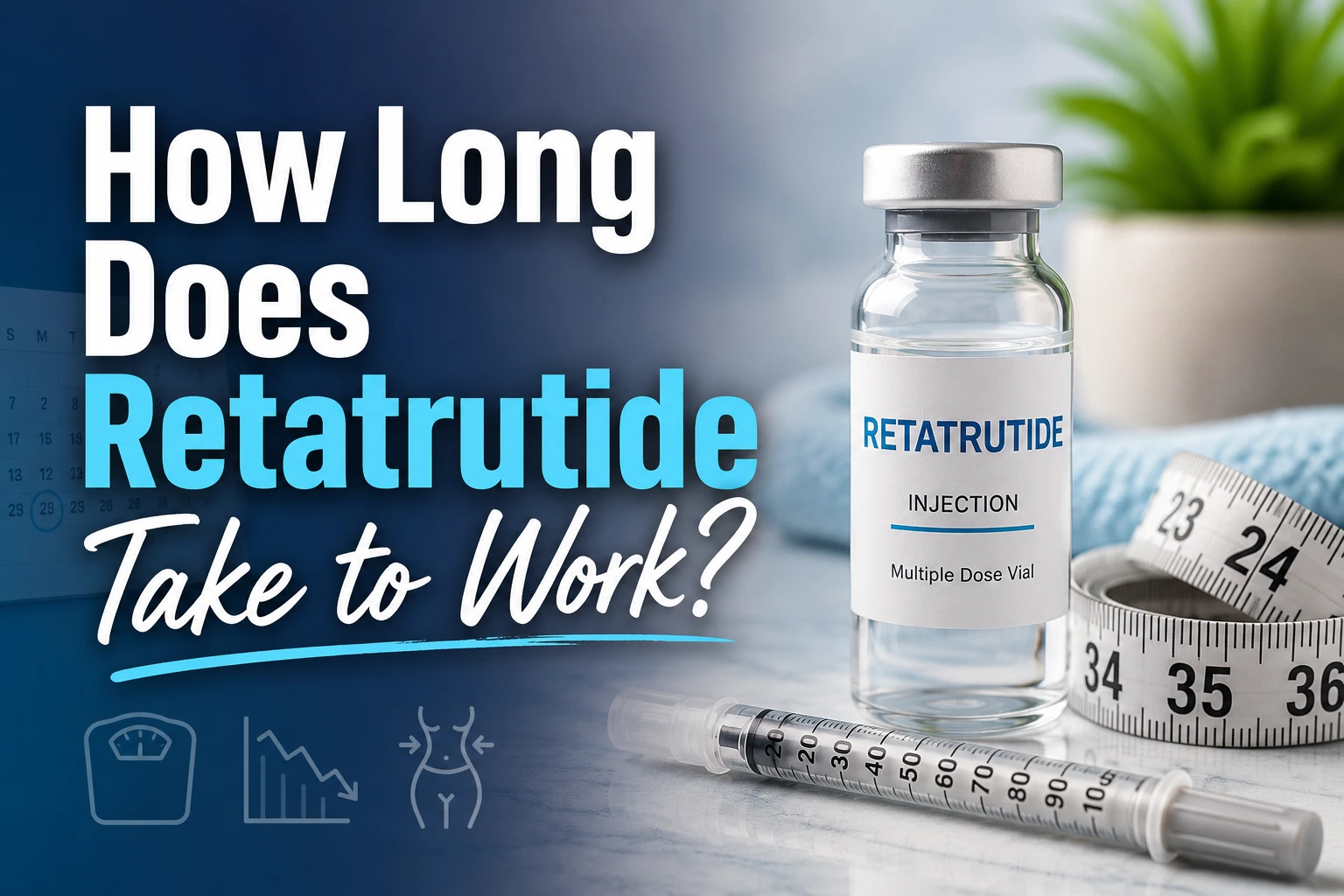
Featured image for an article titled "How Long Does Retatrutide Take to Work?" showing a person measuring their waist and tracking weight loss progress alongside a medical weight management theme, with a calendar and timeline graphics representing week-by-week results and appetite suppression milestones. The overlaid text reads, "How Long Does Retatrutide Take to Work?"

How Long Does Retatrutide Take to Work?

Most people begin noticing appetite suppression within 1 to 2 weeks of starting retatrutide.

Measurable weight loss often starts within 2 to 4 weeks, while more significant results typically become noticeable after 8 to 12 weeks of consistent treatment.

Studies show the most substantial weight loss usually occurs over several months as dosage increases and healthy lifestyle habits become established.

If you’ve recently started retatrutide and aren’t seeing dramatic changes yet, that’s normal.

Appetite changes often happen before weight loss, and the full effects tend to build gradually over time.


SEE IF RETATRUTIDE IS RIGHT FOR YOU


How Does Retatrutide Work?

Retatrutide is designed to help regulate appetite, food intake, blood sugar levels, and energy balance.

It works by targeting multiple hormone pathways involved in hunger and metabolism.

These pathways help:

  • Reduce hunger signals
  • Increase feelings of fullness
  • Slow stomach emptying
  • Improve blood sugar control
  • Support long-term fat loss

Unlike crash diets or short-term solutions, retatrutide works gradually.

The goal is to help create sustainable changes in eating habits and calorie intake that can lead to long-term weight loss.

Many people find that food cravings become easier to manage and portion sizes naturally decrease as treatment progresses.


When Does Retatrutide Start Working?

Technically, retatrutide begins working shortly after administration.

However, the timeline for noticeable effects varies.

The first signs that retatrutide is working often include:

  • Reduced appetite
  • Feeling full sooner during meals
  • Less interest in snacking
  • Fewer cravings
  • Improved portion control

For many people, these changes begin within the first one to two weeks.

It’s important to understand that appetite suppression and weight loss are not the same thing.

Even if the medication is already helping control hunger, it may take additional time for those changes to translate into visible weight loss.


How Long Does It Take Retatrutide to Reduce Appetite?

Appetite suppression is often the earliest benefit people notice.

First Few Days

Some individuals experience:

  • Less frequent hunger
  • Reduced cravings
  • Feeling satisfied with smaller meals

Others may notice little change initially, particularly if they’re starting on a lower dose.

Week 1

During the first week, many people begin noticing:

  • Improved control around food
  • Less desire to snack
  • Reduced emotional eating
  • Fewer cravings for high-calorie foods

Week 2

By week two, appetite suppression often becomes more consistent.

Common experiences include:

  • Longer periods between meals without hunger
  • Easier portion control
  • Reduced food noise
  • Better adherence to healthy eating habits

This is often the stage where patients realize they’re eating less without feeling deprived.


How Long Does It Take Retatrutide to Cause Weight Loss?

Weight loss generally lags behind appetite suppression.

Most people begin seeing measurable changes on the scale within 2 to 4 weeks.

However, the speed of weight loss depends on several factors, including dosage, calorie intake, physical activity, sleep quality, and individual metabolism.

Some individuals lose weight relatively quickly during the first month, while others experience more gradual progress.

Neither experience is necessarily better.

Sustainable weight loss often occurs steadily rather than dramatically.


Retatrutide Week-by-Week Timeline

One of the most common questions patients ask is what they should expect week by week.

While individual results vary, the following timeline offers a realistic overview.

Week 1: Early Appetite Changes

During the first week, your body begins adjusting to treatment.

You may notice:

  • Mild appetite suppression
  • Increased fullness after meals
  • Reduced cravings
  • Smaller portion sizes

Weight loss is typically minimal during this stage.

Week 2: Hunger Becomes Easier to Manage

By week two, appetite control often becomes more noticeable.

Many people report:

  • Less interest in food
  • Reduced snacking
  • Better portion control
  • Improved dietary consistency

Some early weight loss may begin to occur.

Weeks 3-4: First Noticeable Weight Changes

By the end of the first month, many individuals begin seeing measurable progress.

Common experiences include:

  • Consistent appetite suppression
  • Improved eating habits
  • Reduced calorie intake
  • Early fat loss

Some people notice their clothes fitting differently before significant scale changes occur.

Month 2: Building Momentum

The second month is often when results become more encouraging.

You may experience:

  • Continued weight reduction
  • Better energy levels
  • Improved mobility
  • Reduced waist circumference
  • Increased confidence

Healthy habits often feel easier to maintain because hunger is no longer driving food choices as strongly.

Month 3: More Visible Results

By the third month, changes may become more apparent.

Many individuals notice:

  • More significant weight loss
  • Improved body composition
  • Better physical endurance
  • Greater motivation to stay consistent

This is often when family members and friends begin noticing visible changes.

Months 4-6: Significant Progress

Longer-term treatment frequently produces the most dramatic outcomes.

Potential benefits include:

  • Continued fat loss
  • Better metabolic health
  • Improved body composition
  • Greater long-term weight management success

This stage often reflects the cumulative effect of months of consistent treatment and healthy lifestyle choices.


Does Your Dose Affect How Fast Retatrutide Works?

Yes.

Dosage can have a major impact on how quickly you notice results.

Many treatment plans begin with a lower starting dose that gradually increases over time.

This approach helps minimize retatrutide side effects while allowing the body to adjust.

Because of this gradual increase, some people feel discouraged during the first few weeks and wonder why retatrutide isn’t working.

In reality, they may still be in the early stages of treatment.

As dosage increases, many patients experience:

  • Stronger appetite suppression
  • Better portion control
  • Increased weight loss
  • More noticeable results

Patience during the titration process is often important.


What Factors Affect How Fast Retatrutide Works?

Not everyone experiences the same timeline.

Several factors influence how quickly results appear.

Starting Weight

Individuals with higher starting body weights may notice larger early changes.

Diet Quality

Retatrutide can help reduce hunger, but food choices still matter.

A diet rich in protein, vegetables, fiber, and whole foods may help support better outcomes.

Exercise Habits

Regular physical activity can help increase calorie expenditure, improve body composition, and preserve muscle mass during weight loss.

Sleep

Poor sleep can affect hunger hormones and slow progress.

Stress Levels

Chronic stress may influence eating behaviors and make weight management more challenging.

Individual Biology

Age, genetics, hormone levels, metabolic health, and medical history can all affect how someone responds.


Why Retatrutide May Not Be Working Yet

If you’ve been taking retatrutide for a few weeks and don’t feel like it’s working, you’re not alone.

Several reasons may explain slower-than-expected results.

You’re Still on a Starting Dose

Beginning doses are often intended to help your body adjust gradually rather than maximize weight loss immediately.

Appetite Changes Are Happening Before Weight Loss

Many people notice reduced hunger before they notice changes on the scale.

Water Weight Is Masking Fat Loss

Temporary fluctuations in fluid retention can hide progress.

You’re Expecting Results Too Quickly

Many patients hope to lose a significant amount of weight within the first week or two.

While rapid results are possible, most meaningful weight loss occurs over months rather than days.

Lifestyle Factors Need Improvement

Nutrition, exercise, sleep, and stress management still play important roles in overall success.


Does Retatrutide Work Faster Than Semaglutide or Tirzepatide?

Many people researching weight loss treatments compare retatrutide with semaglutide and tirzepatide.

The reality is that every person responds differently.

Some individuals experience appetite suppression quickly regardless of which treatment they use.

Others require more time before noticing meaningful changes.

Factors such as:

can have just as much influence on results as the medication itself.

The best treatment is often the one that helps you maintain consistent progress over time.


How to Get the Best Results From Retatrutide

If you want to maximize your results, focus on building healthy habits alongside treatment.

Prioritize Protein

Protein helps support muscle maintenance and promotes fullness.

Stay Hydrated

Proper hydration can support energy levels and help manage appetite.

Strength Train

Resistance training can help preserve lean muscle mass during weight loss.

Get Enough Sleep

Aim for 7 to 9 hours of quality sleep each night.

Manage Stress

Reducing stress can improve overall health and make weight management easier.

Stay Consistent

The people who achieve the best results are often the ones who remain consistent, even when progress feels slow.


How PRIME Medicine Can Help With Tirzepatide

At PRIME Medicine, we understand that successful weight management involves more than simply taking a medication.

That’s why we create personalized retatrutide treatment plans designed around each patient’s unique goals, lifestyle, and health history.

Our team provides ongoing guidance, monitoring, and support to help patients build sustainable habits while working toward meaningful weight loss and improved overall health.

Whether you’re just beginning your weight loss journey or looking for a more effective long-term strategy, we’re here to help you take the next step with confidence.


CONTACT US


Final Thoughts: How Long Does Retatrutide Take to Work

So, how long does retatrutide take to work?

Most people begin noticing appetite suppression within 1 to 2 weeks, measurable weight loss within 2 to 4 weeks, and more significant results within 8 to 12 weeks.

Long-term success often becomes increasingly noticeable over several months of consistent treatment.

The most important thing to remember is that retatrutide works gradually.

Appetite changes usually happen first, followed by steady improvements in weight and body composition.

Staying patient, following your treatment plan, and maintaining healthy lifestyle habits can help you achieve the best possible results over time.


SCHEDULE A CONSULTATION


FAQs: How Long Does Retatrutide Take to Work

Does retatrutide work right away?

Retatrutide begins working in the body shortly after administration, but most people do not notice immediate weight loss. Many users start experiencing reduced appetite, increased fullness, or fewer cravings within the first one to two weeks, while weight loss often takes several weeks to become noticeable.

How much weight can I lose in 4 weeks on retatrutide?

Weight loss during the first four weeks varies significantly from person to person. Factors such as starting weight, dosage, diet, activity level, and individual metabolism all play a role. Some people may lose a few pounds during the first month, while others experience more gradual progress as the medication builds in their system.

How to get the best results from retatrutide?

To maximize results, combine retatrutide with healthy lifestyle habits. Focus on eating enough protein, staying hydrated, exercising regularly, getting adequate sleep, and following your treatment plan consistently. Building sustainable habits alongside treatment can help support long-term weight loss and overall health.

Does retatrutide burn fat?

Retatrutide helps support fat loss by reducing appetite, increasing fullness, and making it easier to maintain a calorie deficit. While it does not directly “burn fat” like a stimulant, it can help create the conditions that allow the body to use stored fat for energy over time.

How long is the cycle of retatrutide?

There is no universal retatrutide cycle length. Treatment duration varies based on individual goals, weight loss progress, and recommendations from a healthcare provider. Many people remain on treatment for several months or longer to support ongoing weight management and metabolic health.

How do you feel on retatrutide?

Many users report feeling less hungry, more satisfied after meals, and more in control of their eating habits. Some people also notice improved energy and motivation as they lose weight. However, experiences vary, and some individuals may experience temporary digestive side effects, particularly when starting treatment or increasing dosage.

What are the benefits of retatrutide?

Retatrutide may offer several potential benefits for individuals pursuing weight loss and improved metabolic health. Many users experience reduced appetite, fewer cravings, improved portion control, and increased feelings of fullness after meals. These effects can make it easier to maintain a calorie deficit and achieve sustainable weight loss. Some individuals may also see improvements in blood sugar management, energy levels, and overall health as they lose weight and adopt healthier lifestyle habits.

How do you get retatrutide?

If you’re interested in learning whether retatrutide may be appropriate for your health goals, the first step is to schedule a consultation with a qualified healthcare provider. During your appointment, your provider can review your medical history, discuss your weight loss objectives, and determine whether retatrutide or another treatment option may be suitable for your individual needs. Ongoing medical supervision can help ensure your treatment plan is safe, effective, and tailored to your goals.


Share the Post:

Facebook
Twitter
LinkedIn
X

Leave a Reply

Your email address will not be published. Required fields are marked *

Related Posts

Tirzepatide Diet Plan

Starting tirzepatide can change the way you eat, how hungry you feel, and even which foods your body tolerates best. 

 Many people notice reduced cravings, smaller portion sizes, and earlier fullness after beginning treatment. 

While tirzepatide may support weight loss, following the right tirzepatide diet plan can help improve energy levels, support muscle maintenance, reduce digestive side effects, and make long-term weight management more sustainable. 

Choosing balanced meals with enough protein, fiber, hydration, and nutrient-dense foods may help you get better overall results while feeling your best throughout the process. 


GET HELP WITH YOUR WEIGHT LOSS JOURNEY


What Is the Best Diet While Taking Tirzepatide?

The best diet while taking tirzepatide usually focuses on:

  • high-protein foods
  • fiber-rich carbohydrates
  • healthy fats
  • hydration
  • balanced portions
  • minimally processed meals

Because tirzepatide often reduces appetite, many people naturally eat less food overall.

That makes food quality even more important.

Nutrient-dense meals may help support muscle, energy levels, digestion, and long-term wellness during weight loss.

Most people tend to feel best when prioritizing:

  • lean protein at every meal
  • vegetables and fiber-rich foods
  • smaller portions
  • steady hydration
  • consistent meal timing

Many providers also recommend avoiding extremely restrictive diets while taking tirzepatide.

Eating too little may increase the risk of fatigue, muscle loss, and nutritional deficiencies.


How Tirzepatide Affects Appetite and Eating Habits

Tirzepatide works by targeting hormones involved in appetite and blood sugar regulation.

Many people notice:

  • reduced hunger
  • studies show fewer cravings
  • feeling full faster
  • less interest in snacking
  • smaller meal sizes

Because digestion slows down, large meals and greasy foods may feel heavier or harder to tolerate.

This is one reason many people feel better eating lighter, protein-focused meals while taking tirzepatide.

Some individuals also unintentionally skip meals because appetite drops significantly.

While weight loss is often the goal, consistently under-eating can sometimes contribute to:

  • fatigue
  • muscle loss
  • weakness
  • slower metabolism
  • poor workout recovery

A balanced tirzepatide diet plan focuses on healthy nutrition rather than simply eating as little as possible.


The Main Goals of a Tirzepatide Diet Plan

A good tirzepatide diet plan is designed to support more than just weight loss.

The main goals often include:

  • reducing body fat
  • preserving lean muscle
  • improving fullness and appetite control
  • supporting energy levels
  • reducing digestive side effects
  • supporting metabolism
  • creating sustainable eating habits

Combining tirzepatide with balanced nutrition, hydration, sleep, and exercise may help improve both short-term and long-term results.


GET THE MOST OUT OF YOUR TIRZEPATIDE TREATMENT


Best Foods to Eat on Tirzepatide

Many people tolerate tirzepatide better when meals are balanced, protein-focused, and easier to digest.

Food Category Examples Why It May Help
Lean Proteins Chicken, turkey, eggs, fish, Greek yogurt, tofu, cottage cheese May support fullness, muscle maintenance, and recovery
Fiber-Rich Foods Vegetables, berries, oats, beans, lentils May support digestion and appetite control
Healthy Fats Avocados, nuts, seeds, olive oil May help support balanced nutrition and satiety
Complex Carbohydrates Brown rice, quinoa, sweet potatoes, whole grains May provide steadier energy levels
Hydrating Foods Leafy greens, cucumbers, soups, watermelon May support hydration and digestion

Protein is especially important because rapid weight loss can sometimes contribute to muscle loss if protein intake is too low.


Tirzepatide Foods to Avoid

Certain foods may worsen nausea, bloating, reflux, or digestive discomfort while taking tirzepatide.

Tirzepatide Foods to Avoid Why They May Be Problematic
Fried foods May worsen nausea, bloating, or stomach discomfort
Greasy meals Can feel heavy due to slower digestion
Sugary drinks May increase calorie intake without improving fullness
Ultra-processed snacks Often low in nutrients and protein
Large meals May increase fullness discomfort or nausea
Heavy alcohol intake May worsen dehydration and digestive symptoms
Highly refined carbohydrates May contribute to blood sugar spikes and crashes

Many people feel better eating:

  • smaller portions
  • slower meals
  • lighter foods
  • balanced protein-rich meals
  • high-fiber foods
  • simple meals during nausea episodes


Why Protein Matters on Tirzepatide

One of the most important parts of a tirzepatide diet plan is eating enough protein.

Because appetite often decreases significantly, some people unintentionally lose both fat and lean muscle mass during rapid weight loss.

Protein helps support:

  • muscle preservation
  • metabolism
  • fullness
  • workout recovery
  • strength
  • healthy aging

High-protein foods may also help reduce fatigue and improve satiety throughout the day.

High-Protein Food Approximate Protein
Chicken breast 25-30g per serving
Greek yogurt 15-20g per serving
Eggs 6g per egg
Salmon 20-25g per serving
Cottage cheese 20-25g per cup
Protein shake 20-30g per serving

Many providers recommend including protein with every meal whenever possible.


How Much Protein Should You Eat on Tirzepatide?

Protein needs vary depending on:

  • body weight
  • activity level
  • age
  • muscle mass
  • fitness goals

Many people taking tirzepatide benefit from prioritizing protein intake throughout the day, especially if they are exercising regularly or losing weight quickly.

Protein is often easier to tolerate when spread across multiple smaller meals instead of one large meal.


7-Day Tirzepatide Diet Plan

Let’s lopk at an example 7-day tirzepatide diet plan:

Day 1

Breakfast: Greek yogurt with berries and chia seeds
Lunch: Grilled chicken salad with olive oil dressing
Dinner: Salmon with roasted vegetables
Snack: Protein shake

Day 2

Breakfast: Eggs with spinach and whole grain toast
Lunch: Turkey lettuce wraps with avocado
Dinner: Ground turkey bowl with quinoa and vegetables
Snack: Cottage cheese

Day 3

Breakfast: Protein smoothie with berries and almond milk
Lunch: Tuna salad with mixed greens
Dinner: Chicken breast with sweet potato and broccoli
Snack: Mixed nuts

Day 4

Breakfast: Oatmeal with protein powder and blueberries
Lunch: Grilled shrimp bowl with brown rice
Dinner: Steak with asparagus and salad
Snack: Greek yogurt

Day 5

Breakfast: Cottage cheese with strawberries
Lunch: Chicken soup with vegetables
Dinner: Salmon with quinoa and green beans
Snack: Hard-boiled eggs

Day 6

Breakfast: Protein pancakes with berries
Lunch: Turkey burger lettuce wrap with vegetables
Dinner: Chicken stir-fry with vegetables
Snack: Protein shake

Day 7

Breakfast: Eggs with avocado
Lunch: Grilled chicken Caesar salad
Dinner: White fish with roasted vegetables
Snack: Cottage cheese with cinnamon


Simple Meal Timing Tips While Taking Tirzepatide

Some people feel better eating:

  • smaller meals more frequently
  • protein earlier in the day
  • lighter dinners
  • slower meals with thorough chewing

It may also help to avoid lying down immediately after eating, especially if reflux or nausea occurs.

Because appetite can fluctuate, planning meals ahead of time may help prevent under-eating or poor food choices.


How Many Calories Should You Eat on Tirzepatide?

Calorie needs vary depending on:

  • body size
  • activity level
  • muscle mass
  • metabolism
  • weight loss goals

While tirzepatide often reduces appetite, eating too little may contribute to:

  • low energy
  • muscle loss
  • weakness
  • slower metabolism
  • poor recovery

Many people do better with a moderate calorie deficit instead of severe restriction.

A balanced approach may help improve long-term sustainability and body composition.


Hydration and Electrolytes on Tirzepatide

Hydration is important while taking tirzepatide, especially for people experiencing:

  • nausea
  • constipation
  • diarrhea
  • reduced appetite

Some people unintentionally drink less water because they are eating less overall.

Hydration strategies may include:

  • drinking water consistently throughout the day
  • adding electrolyte drinks when needed
  • eating water-rich foods
  • limiting excessive alcohol intake
Hydration Option Potential Benefits
Water Supports digestion, hydration, and overall health
Electrolyte drinks May help replace fluids and minerals
Broth-based soups May support hydration during nausea
Water-rich fruits and vegetables May contribute to daily fluid intake


How to Prevent Muscle Loss While Taking Tirzepatide

Maintaining muscle mass is an important part of healthy weight loss.

Some strategies that may help include:

  • eating enough protein
  • resistance training regularly
  • avoiding extremely low calorie intake
  • staying hydrated
  • prioritizing sleep
  • maintaining consistent nutrition

Strength training is especially important because it signals the body to preserve lean muscle during weight loss.


Best Exercise Plan While Taking Tirzepatide

Many people see better results when combining tirzepatide with regular movement and resistance exercise.

Exercise Type Potential Benefits
Walking Supports calorie burn and cardiovascular health
Strength training May help preserve lean muscle mass
Cycling Low-impact cardio option
Swimming Joint-friendly full-body exercise
Mobility work Supports flexibility and recovery

Even moderate activity may help improve body composition and support long-term weight maintenance.


What to Eat if Tirzepatide Causes Nausea

Some people experience nausea, especially when starting tirzepatide or increasing dosage.

Foods that may feel easier to tolerate include:

  • crackers
  • toast
  • rice
  • bananas
  • broth-based soups
  • applesauce
  • grilled chicken
  • simple protein shakes

It may also help to:

  • eat smaller meals
  • avoid greasy foods
  • eat slowly
  • stay hydrated
  • avoid overeating

Many people notice nausea improves as the body adjusts.


What Helps Constipation on Tirzepatide?

Constipation can happen because tirzepatide slows digestion.

Some strategies that may help include:

  • drinking more water
  • increasing fiber gradually
  • staying active
  • eating fruits and vegetables
  • including high-fiber foods like oats and beans

Many people also find that consistent hydration helps improve digestion.


Can You Drink Alcohol on Tirzepatide?

Some people choose to drink alcohol while taking tirzepatide, but moderation is important.

Alcohol may:

  • worsen nausea
  • increase dehydration
  • irritate digestion
  • add extra calories
  • affect appetite regulation

Some individuals also notice lower alcohol tolerance while taking tirzepatide.

If drinking alcohol, many providers recommend:

  • staying hydrated
  • avoiding binge drinking
  • eating balanced meals
  • monitoring how your body responds


Why Weight Loss Can Stall on Tirzepatide

Weight loss plateaus can happen even when taking tirzepatide consistently.

Some common reasons include:

  • lower calorie burn after losing weight
  • reduced activity levels
  • loss of muscle mass
  • inconsistent protein intake
  • overeating calorie-dense foods
  • lack of resistance training

Sometimes improving the following may help restart progress.:

  • protein intake
  • hydration
  • exercise
  • sleep
  • meal consistency


GET THE MOST OUT OF YOUR TIRZEPATIDE TREATMENT


How PRIME Medicine Can Help With A Tirzepatide Diet Plan

At PRIME Medicine, personalized weight loss plans like tirzepatide are designed to support long-term wellness and sustainable results.

Medical weight management may include:

  • individualized treatment plans
  • nutrition guidance
  • lifestyle recommendations
  • body composition support
  • ongoing monitoring and adjustments

A personalized approach can help you build healthier habits while working toward your weight loss goals safely and effectively.


SCHEDULE A CONSULTATION


FAQs: Tirzepatide Diet Plan

What do I eat in a day on tirzepatide?

A typical day on a tirzepatide diet plan often includes high-protein meals, fiber-rich foods, healthy fats, and steady hydration. Many people do well with meals like eggs or Greek yogurt for breakfast, lean protein and vegetables for lunch and dinner, and smaller high-protein snacks throughout the day.

Does tirzepatide burn fat or just suppress appetite?

Tirzepatide primarily works by helping regulate appetite, fullness, and blood sugar levels. Reduced calorie intake may contribute to fat loss over time. Many people notice they naturally eat less because they feel fuller faster and have fewer cravings.

Why am I losing weight so fast on tirzepatide?

Some people lose weight quickly on tirzepatide because appetite decreases significantly, leading to lower calorie intake. Reduced cravings, smaller portions, and lifestyle changes may also contribute. In some cases, early weight loss may partly involve water weight in addition to fat loss.

Can tirzepatide help with bodybuilding?

Some individuals use tirzepatide during fat loss phases because it may help reduce appetite and support weight reduction. However, maintaining muscle mass while bodybuilding often requires enough protein intake, resistance training, proper recovery, and adequate calorie consumption. Rapid weight loss without proper nutrition may increase the risk of muscle loss.

What is the best injection for weight loss?

The best weight loss injection varies depending on a person’s health history, goals, metabolism, and medical needs. Different medications work in different ways, and some individuals may respond better to certain treatments than others. A healthcare provider can help determine which option may be most appropriate based on your individual situation.

Does tirzepatide increase metabolism?

Tirzepatide primarily works by helping regulate appetite, fullness, and blood sugar levels. Weight loss often occurs because people naturally eat fewer calories due to reduced hunger and improved portion control. Some research suggests tirzepatide may also influence energy balance and metabolic health, especially when combined with healthy lifestyle habits.

How long does it take tirzepatide to suppress appetite?

Some people notice appetite suppression within the first few days or weeks of starting tirzepatide, while others experience more gradual changes as dosage increases. Reduced cravings, earlier fullness, and smaller portion sizes are common effects many individuals notice during treatment.

Does Semaglutide Suppress Appetite Immediately?

If you are starting semaglutide for weight loss, you may be wondering how quickly it will reduce your appetite.

Some people notice they feel fuller within the first few days after their first injection.

Others may not experience major appetite suppression until several weeks later.

The timeline can vary depending on dosage, metabolism, eating habits, and how the body responds to treatment.

Semaglutide is designed to work gradually over time.

While some individuals feel reduced hunger early on, stronger appetite suppression often develops as the medication builds in the body and dosage increases.

Understanding what is normal during the first few weeks can help set realistic expectations and make the process less frustrating.


SEE HOW SEMAGLUTIDE CAN HELP YOUR WEIGHT LOSS JOURNEY


Does Semaglutide Suppress Appetite Immediately?

Semaglutide can begin affecting appetite fairly quickly for some people, but it does not work instantly for everyone.

Some patients report:

  • Feeling full sooner during meals
  • Reduced interest in snacking
  • Smaller portion sizes naturally
  • Fewer cravings for sweets or fast food
  • Less urge to overeat

These changes can happen within the first few days for certain individuals.

However, many people notice a slower and more gradual shift in appetite over several weeks.

This is common because semaglutide treatment usually starts at a low dose.

The lower starting dose helps reduce side effects while allowing the body time to adjust.

As the dosage gradually increases, appetite suppression often becomes stronger and more noticeable.


How Semaglutide Works for Appetite Suppression

Semaglutide belongs to a class of medications called GLP-1 receptor agonists.

These medications mimic a natural hormone involved in appetite regulation, digestion, and blood sugar control.

Semaglutide may help support weight loss by:

  • Slowing stomach emptying
  • Increasing feelings of fullness
  • Reducing cravings
  • Helping control portion sizes
  • Supporting better appetite regulation

Many people also notice fewer thoughts about food throughout the day.

This is commonly called reducing “food noise.”

Instead of constantly thinking about meals, snacks, or cravings, some individuals feel more mentally in control around food.


How Long Does Semaglutide Take to Suppress Appetite?

The timeline varies from person to person.

Some individuals notice appetite suppression quickly, while others may need several weeks before they feel major changes in hunger or cravings.

Here is a general timeline many patients experience while taking semaglutide:

Timeframe What Some People Notice
First Few Days Mild fullness smaller portions or fewer cravings for some individuals
Weeks 1-4 Gradual appetite suppression and improved portion control
Weeks 5-8 Stronger hunger reduction as dosage increases
2-3 Months More consistent appetite control and weight loss support

Not everyone responds at the same speed.

Some people feel reduced hunger almost immediately, while others notice subtle changes at first that gradually become stronger over time.


SEE IF SEMAGLUTIDE IS RIGHT FOR YOU


What Appetite Suppression Feels Like on Semaglutide

Appetite suppression does not always mean you completely lose your appetite.

For many people, it feels more like:

  • Feeling satisfied faster during meals
  • Staying full longer after eating
  • Less emotional eating
  • Reduced cravings between meals
  • Fewer urges to snack late at night
  • Thinking about food less often

Some individuals also notice that highly processed or sugary foods become less appealing.

Others simply realize they are no longer constantly hungry throughout the day.


Why Some People Do Not Feel Appetite Suppression Right Away

If you do not notice immediate appetite suppression, it does not necessarily mean semaglutide is not working.

Several factors can affect how quickly the medication works.

Low Starting Dose

Most semaglutide treatment plans begin with a lower introductory dose to help minimize digestive side effects such as nausea or bloating.

Because of this, appetite suppression may initially feel mild.

Your Body Needs Time to Adjust

Some individuals respond very quickly while others need several weeks before noticing major appetite changes.

This difference is normal.

Lifestyle and Food Choices

Sleep quality, stress levels, hydration, protein intake, and eating habits can all influence appetite regulation while taking semaglutide.

Individual Metabolism

Hormones, insulin resistance, activity level, and overall metabolic health may also affect how quickly semaglutide suppresses appetite.


Why Am I Still Hungry on Semaglutide?

Many people worry semaglutide is not working if they still feel hungry during the early stages of treatment.

In many cases, this is completely normal.

You may still feel hungry because:

  • Your dosage is still low
  • Your body is adapting to the medication
  • You are not yet at a maintenance dose
  • Your eating habits still need adjustment
  • Stress or poor sleep is increasing hunger hormones

Semaglutide is not meant to completely eliminate hunger.

Instead, it is designed to help regulate appetite and reduce excessive cravings or overeating.

For many people, the effects become stronger with time and dosage adjustments.


Does Semaglutide Reduce Food Cravings and Food Noise?

One of the biggest changes many people notice with semaglutide is a reduction in “food noise.”

Food noise refers to constant thoughts about food, cravings, or urges to snack even when you are not physically hungry.

Many patients report:

  • Less emotional eating
  • Fewer obsessive thoughts about food
  • Reduced late-night cravings
  • Better control around snacks and desserts
  • Less urge to graze throughout the day

For some individuals, this mental shift can feel just as important as the physical appetite suppression itself.


What Can Affect How Fast Semaglutide Works?

Several factors can influence how quickly semaglutide suppresses appetite and supports weight loss.

These may include:

  • Starting dosage
  • Dosage increases over time
  • Diet quality
  • Protein intake
  • Sleep quality
  • Stress levels
  • Physical activity
  • Underlying health conditions

A personalized treatment plan can help improve long-term success and make appetite regulation more manageable.


How Long Does It Take to Lose Weight on Semaglutide?

Some people notice small changes within the first few weeks, especially if appetite suppression develops early.

For others, weight loss becomes more noticeable after:

  • Dosage increases
  • Cravings improve
  • Portion sizes naturally decrease
  • Healthy eating habits become easier to maintain

Weight loss with semaglutide is usually gradual rather than immediate.

Consistency with treatment, nutrition, and lifestyle habits often plays a major role in long-term results.


When to Talk to a Medical Provider

It may help to speak with a medical provider if:

  • Appetite suppression never improves
  • You continue struggling with severe cravings
  • You are unable to tolerate side effects
  • You have concerns about your dosage
  • You are not seeing progress after several weeks
  • You have questions about your treatment plan

A provider can help determine whether adjustments may be needed.


CONTACT US


How PRIME Medicine Can Help With Semaglutide

PRIME Medicine offers personalized medical weight loss programs designed to support long-term health and sustainable results.

Treatment plans may include support for:

  • Semaglutide therapy
  • Appetite management
  • Nutrition guidance
  • Lifestyle changes
  • Metabolic health
  • Long-term weight management

The team at PRIME Medicine works closely with patients to create individualized treatment plans based on their goals, symptoms, and overall health history.


SCHEDULE A CONSULTATION TODAY


FAQ: Does Semaglutide Suppress Appetite Immediately

How quickly does semaglutide curb hunger?

Some people notice reduced hunger within the first few days of starting semaglutide, while others may need several weeks before appetite suppression becomes more noticeable. The timeline can vary depending on dosage, metabolism, eating habits, and how the body responds to treatment.

What happens in the first week on semaglutide?

During the first week on semaglutide, some individuals notice mild appetite suppression, earlier fullness during meals, or fewer cravings. Others may experience little change initially because the starting dose is intentionally low. Mild digestive side effects such as nausea, bloating, or constipation can also occur during the adjustment period.

How fast can you lose 20 pounds on semaglutide?

Weight loss on semaglutide varies from person to person. Studies show some individuals may lose 20 pounds within a few months, while others experience slower progress. Factors like dosage, nutrition, activity level, sleep, and consistency with treatment all affect the rate of weight loss.

What are the first signs of semaglutide working?

Early signs semaglutide may be working can include reduced appetite, smaller portion sizes, fewer cravings, feeling full longer after meals, and less interest in snacking. Some individuals may also notice gradual weight loss within the first several weeks.

How long does semaglutide take to work?

Semaglutide begins working in the body shortly after the first injection, but noticeable changes in appetite and weight loss can take time. Some people experience reduced hunger within the first few days, while others may need several weeks before appetite suppression becomes more noticeable. Weight loss results are usually gradual and often improve as the dosage increases over time.

How long can I stay on semaglutide?

The length of time someone stays on semaglutide depends on their health goals, medical history, weight management needs, and how well they tolerate treatment. Some individuals use semaglutide for several months, while others may continue longer under medical supervision as part of a long-term weight management plan.

What are the side effects of semaglutide?

The most common side effects of semaglutide are digestive symptoms such as nausea, bloating, constipation, diarrhea, vomiting, and stomach discomfort. Some people also experience reduced appetite, fatigue, or mild headaches during the adjustment period. Side effects are often more noticeable when first starting treatment or after dosage increases and may improve over time for many individuals.

Semaglutide and Blood Pressure

Semaglutide is widely used for weight loss and blood sugar management, but many patients also notice changes in their blood pressure while taking it.

For many people, semaglutide may help lower blood pressure as they lose weight and improve their metabolic health.

Others may experience temporary blood pressure fluctuations, dizziness, or symptoms related to low blood pressure during treatment.

If you already have hypertension or take medication for high blood pressure, it is normal to wonder whether semaglutide is safe and how it may affect your cardiovascular health.

The answer depends on several factors, including your current health, medications, hydration, and how your body responds to weight loss.


SEE IF SEMAGLUTIDE IS RIGHT FOR YOU WEIGHT LOSS JOURNEY


What Is Semaglutide?


Semaglutide is a GLP-1 receptor agonist used to help manage type 2 diabetes and support medical weight loss.

It works by mimicking a naturally occurring hormone called glucagon-like peptide-1 (GLP-1), which helps regulate:

  • Appetite
  • Blood sugar
  • Insulin production
  • Digestion
  • Feelings of fullness

While semaglutide is best known for weight loss and diabetes management, researchers have also found that it may improve several cardiovascular risk factors, including blood pressure.


Does Semaglutide Lower Blood Pressure?


For many patients, yes.

Research shows that semaglutide may help lower systolic blood pressure, especially in people with obesity, insulin resistance, metabolic syndrome, or type 2 diabetes.

Some studies have shown that patients taking semaglutide experienced measurable improvements in blood pressure alongside weight loss and improved blood sugar control.

Even modest reductions in blood pressure may benefit long-term cardiovascular health.

Many patients notice gradual improvements over several weeks or months as:

  • Weight decreases
  • Inflammation improves
  • Insulin resistance decreases
  • Cardiovascular strain is reduced

However, results vary from person to person.


Why Semaglutide May Help Lower Blood Pressure


There are several reasons semaglutide may positively affect blood pressure levels.


Weight Loss Reduces Cardiovascular Strain


Excess body weight places added stress on the heart and blood vessels.

As patients lose weight on semaglutide, the cardiovascular system often becomes more efficient, which may help lower blood pressure naturally.

Losing visceral fat around the abdomen may also improve metabolic and cardiovascular health.


Improved Insulin Sensitivity


Insulin resistance is closely connected to high blood pressure and metabolic syndrome.

Semaglutide may help improve insulin sensitivity, which can support healthier blood pressure regulation.


Reduced Inflammation


Chronic inflammation may contribute to hypertension and cardiovascular disease.

Some research suggests GLP-1 medications may help lower inflammatory activity associated with cardiovascular risk.


Healthier Lifestyle Habits


Many patients taking semaglutide also begin making healthier lifestyle changes, including:

  • Eating fewer processed foods
  • Reducing sodium intake
  • Exercising more consistently
  • Drinking more water
  • Improving sleep habits

These changes alone may contribute to lower blood pressure readings.


SEE IF SEMAGLUTIDE IS RIGHT FOR YOU


Can Semaglutide Cause High Blood Pressure?


Although semaglutide is more commonly associated with lowering blood pressure, some patients may notice temporary increases or fluctuations.

This may happen for several reasons.


Dehydration


Semaglutide can reduce appetite and may cause nausea, vomiting, or diarrhea in some patients.

If fluid intake becomes too low, dehydration may affect blood pressure regulation.


Rapid Weight Loss and Metabolic Changes


Significant metabolic changes during rapid weight loss may temporarily affect the cardiovascular system while the body adjusts to:

  • Reduced calorie intake
  • Hormonal changes
  • Fluid shifts
  • Appetite suppression


Medication Interactions


Patients taking blood pressure medication may experience changes as weight loss improves cardiovascular health.

In some cases, medication adjustments may become necessary.


Caffeine and Stimulants


Some patients increase caffeine intake or use fat burners and pre-workout supplements while trying to lose weight.

These products may independently raise blood pressure.


Can Semaglutide Cause Low Blood Pressure?


Yes, especially in patients already taking medication for hypertension.

As semaglutide helps improve metabolic health and promote weight loss, some patients may become more sensitive to their existing blood pressure medications.

This can occasionally cause low blood pressure, also called hypotension.

Symptoms of low blood pressure may include:

  • Dizziness
  • Lightheadedness
  • Fatigue
  • Weakness
  • Blurred vision
  • Feeling faint
  • Rapid heartbeat when standing
  • Difficulty concentrating

Some patients notice these symptoms after standing up quickly or during exercise.

This is one reason regular monitoring during treatment is important.


Blood Pressure Fluctuations on Semaglutide


Some people notice blood pressure changes from day to day while taking semaglutide.

Mild fluctuations are not always dangerous, especially during the early stages of treatment.

The body may still be adapting to:

  • Weight loss
  • Appetite suppression
  • Lower calorie intake
  • Hydration changes
  • Hormonal shifts

However, severe or persistent fluctuations should not be ignored.

You should contact a healthcare provider if you experience:

  • Repeated episodes of dizziness
  • Very high blood pressure readings
  • Fainting
  • Severe headaches
  • Chest pain
  • Shortness of breath
  • Rapid or irregular heartbeat


Semaglutide and Blood Pressure Medication


Many patients wonder whether semaglutide can be safely combined with blood pressure medication.

In many cases, it can.

However, medication adjustments may eventually be needed as weight loss improves blood pressure naturally.

This may apply to medications such as:

  • ACE inhibitors
  • ARBs
  • Beta blockers
  • Calcium channel blockers
  • Diuretics

Some patients eventually require lower doses of blood pressure medication after significant weight loss.

Others continue their medication without changes.

It is important not to stop or adjust blood pressure medication without medical supervision.


Who Should Be Careful When Taking Semaglutide?


Semaglutide may require closer monitoring in patients with:

  • Resistant hypertension
  • Heart disease
  • History of stroke
  • Kidney disease
  • Severe dehydration
  • Cardiovascular complications
  • Frequent dizziness or fainting
  • Multiple blood pressure medications

A personalized treatment plan is important, especially for patients managing both obesity and cardiovascular conditions.


How to Monitor Blood Pressure While Taking Semaglutide


Monitoring your blood pressure at home may help identify trends and detect potential issues early during treatment.

Helpful tips include:

  • Check blood pressure at the same time each day
  • Stay properly hydrated
  • Monitor symptoms after dose increases
  • Keep track of dizziness or fatigue
  • Bring blood pressure readings to appointments
  • Limit excessive caffeine and stimulant use

Patients with hypertension may benefit from more frequent monitoring during the first few months of treatment.


Signs Your Blood Pressure May Be Too Low


Some reduction in blood pressure is beneficial, but blood pressure that drops too low can lead to complications.

Possible warning signs include:

  • Feeling faint
  • Blurred vision
  • Severe fatigue
  • Weakness during physical activity
  • Confusion
  • Nausea
  • Difficulty concentrating

If these symptoms occur, it is important to speak with your healthcare provider.


Can Semaglutide Improve Heart Health?


Research suggests semaglutide may provide cardiovascular benefits beyond weight loss alone.

Some studies have linked semaglutide to improvements in:

  • Blood pressure
  • Blood sugar control
  • Cholesterol levels
  • Inflammation
  • Cardiovascular risk factors

For some patients, these improvements may help reduce the long-term risk of heart-related complications when combined with proper medical care and healthy lifestyle habits.


When to Call a Doctor


You should seek medical attention if you experience:

  • Severe dizziness
  • Fainting
  • Chest pain
  • Shortness of breath
  • Extremely high blood pressure readings
  • Persistent low blood pressure symptoms
  • Severe dehydration
  • Rapid or irregular heartbeat

These symptoms may indicate that treatment adjustments are needed.


CONTACT US


How PRIME Medicine Help With Semaglutide


At PRIME Medicine, treatment plans are personalized based on each patient’s health history, goals, and cardiovascular risk factors.

For patients managing obesity, metabolic conditions, or high blood pressure, careful monitoring during semaglutide treatment can help support safe and effective results.

If you are considering semaglutide and want to understand how it may affect your blood pressure, working with an experienced medical provider can help you determine the best approach for your long-term health.


SCHEDULE A CONSULTATION


FAQs: Semaglutide and Blood Pressure


Does semaglutide lower blood pressure?


Semaglutide may help lower blood pressure in many patients, especially those who are overweight, obese, or living with type 2 diabetes. Weight loss, improved insulin sensitivity, and healthier metabolic function may all contribute to lower blood pressure over time.


Can semaglutide cause high blood pressure?


Although semaglutide is more commonly associated with lowering blood pressure, some people may experience temporary blood pressure fluctuations. Dehydration, rapid weight loss, stress on the body, caffeine intake, and medication interactions may all play a role.


Is semaglutide safe for people with hypertension?


Many people with high blood pressure can safely take semaglutide under medical supervision. In some cases, blood pressure may improve during treatment. However, patients with cardiovascular conditions or those taking multiple blood pressure medications may require closer monitoring.


Should I monitor my blood pressure while taking semaglutide?


Yes, especially if you already have hypertension or take blood pressure medication. Monitoring your blood pressure at home can help identify trends and detect possible issues early during treatment.


Can semaglutide improve heart health?


Research suggests semaglutide may support cardiovascular health by helping improve blood pressure, blood sugar control, inflammation, cholesterol levels, and weight management. These improvements may help lower cardiovascular risk factors in some patients.


What should I avoid while taking semaglutide?


Patients should avoid dehydration, excessive alcohol intake, unregulated weight loss supplements, and excessive stimulant use while taking semaglutide. It is also important to follow medical guidance regarding other medications and lifestyle habits during treatment.